Cedrela mexicana Roem.
Meliaceae.
Common Name: Cedro Amargo, Spanish Cedar
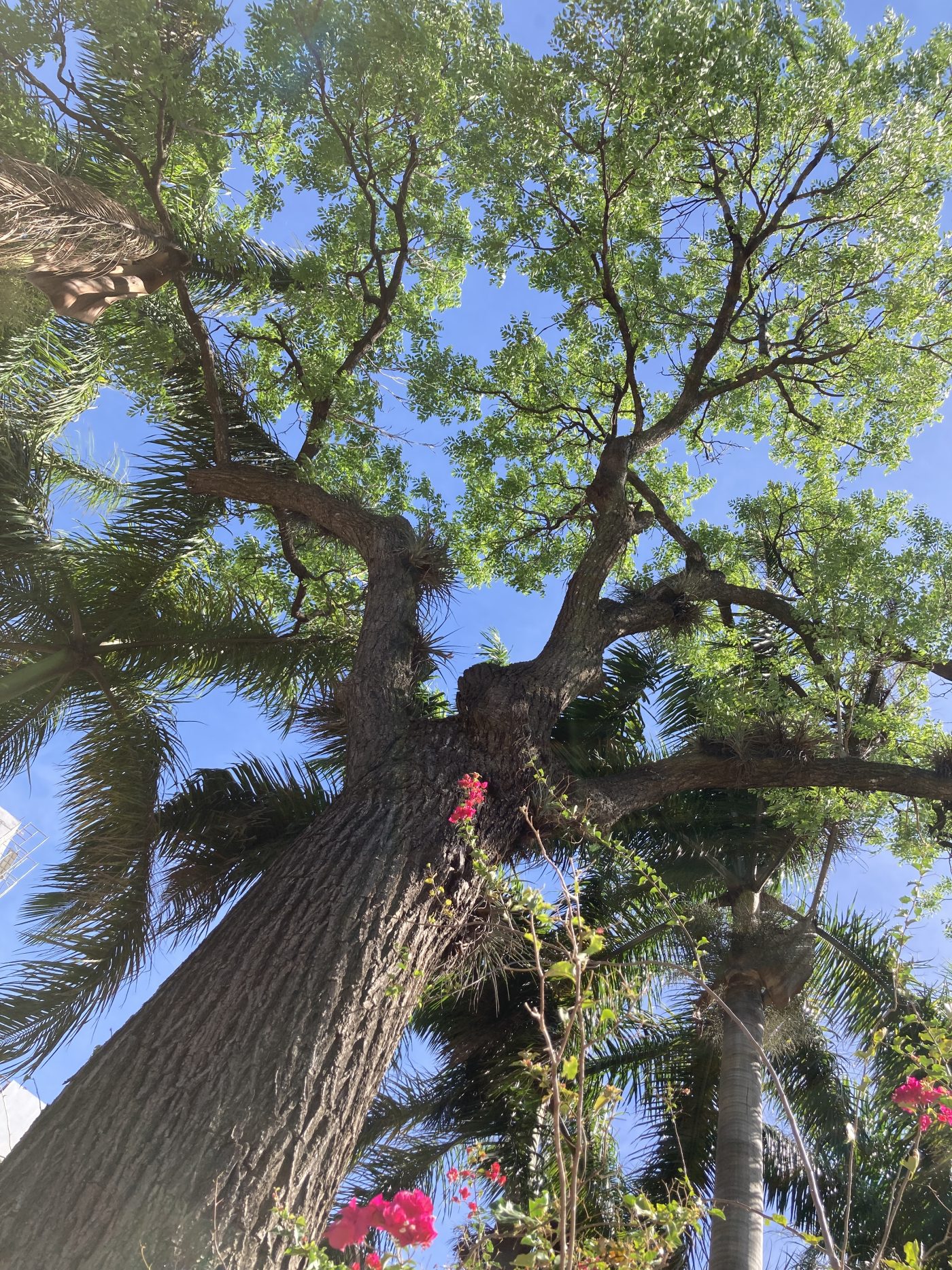
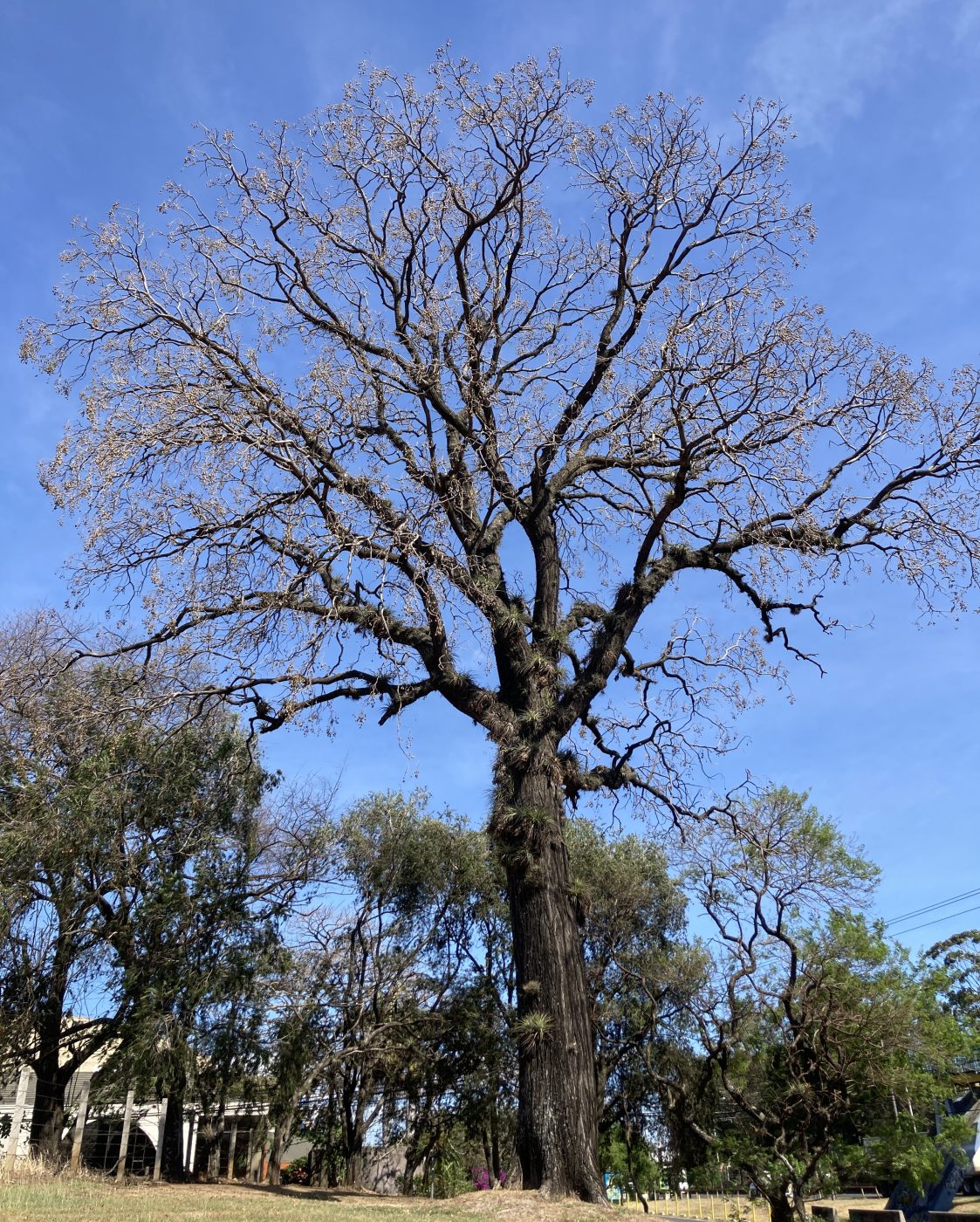
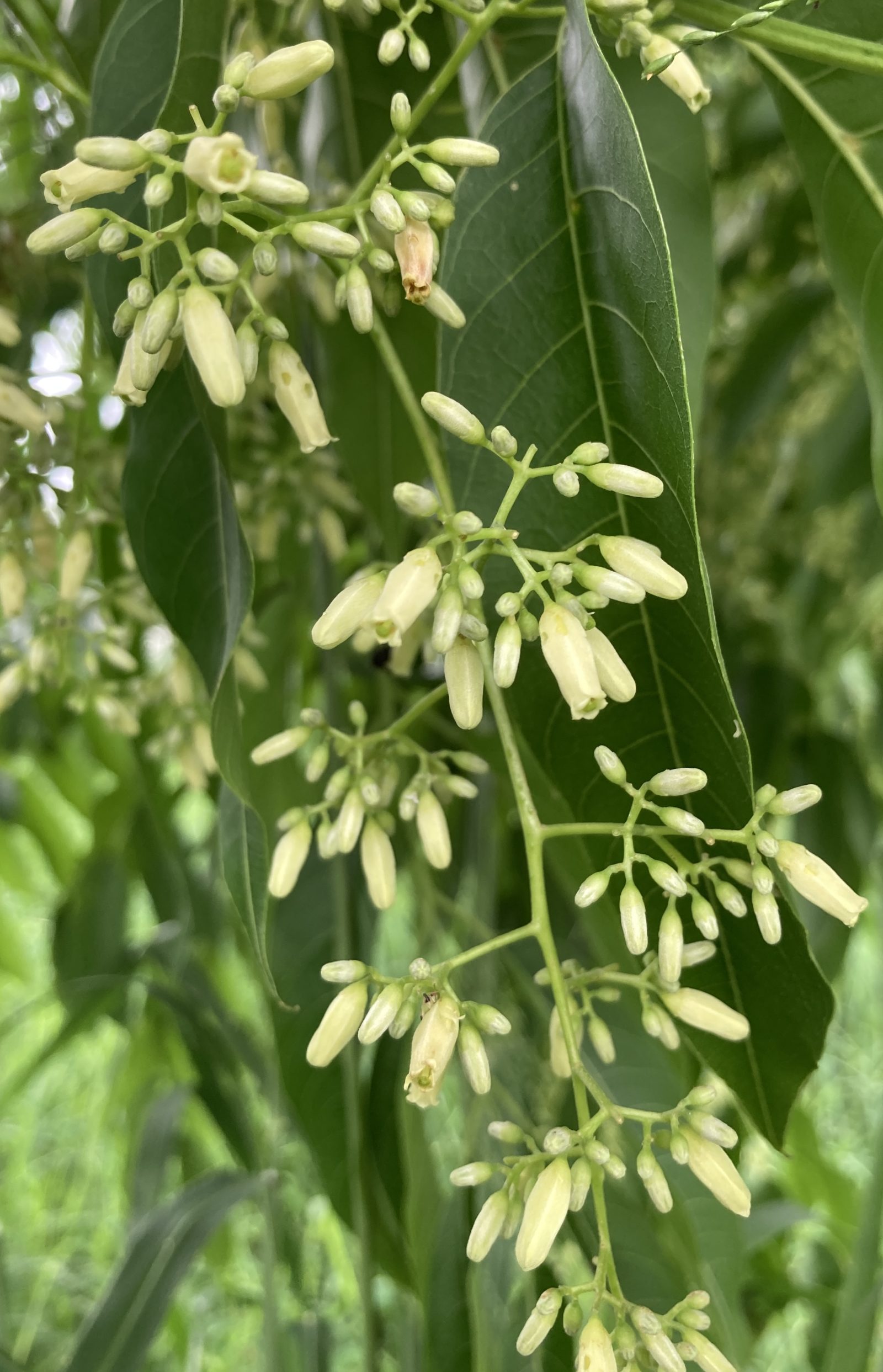
Common, deciduous canopy tree (25-30m) and a fundamental component of Costa Rica’s dry tropical forest habitat. The flowers of this important tree emit a strong, garlic-like fragrence in May and June, while the popular, reddish wood of this species is used widely for furniture, doors, and ceilings.
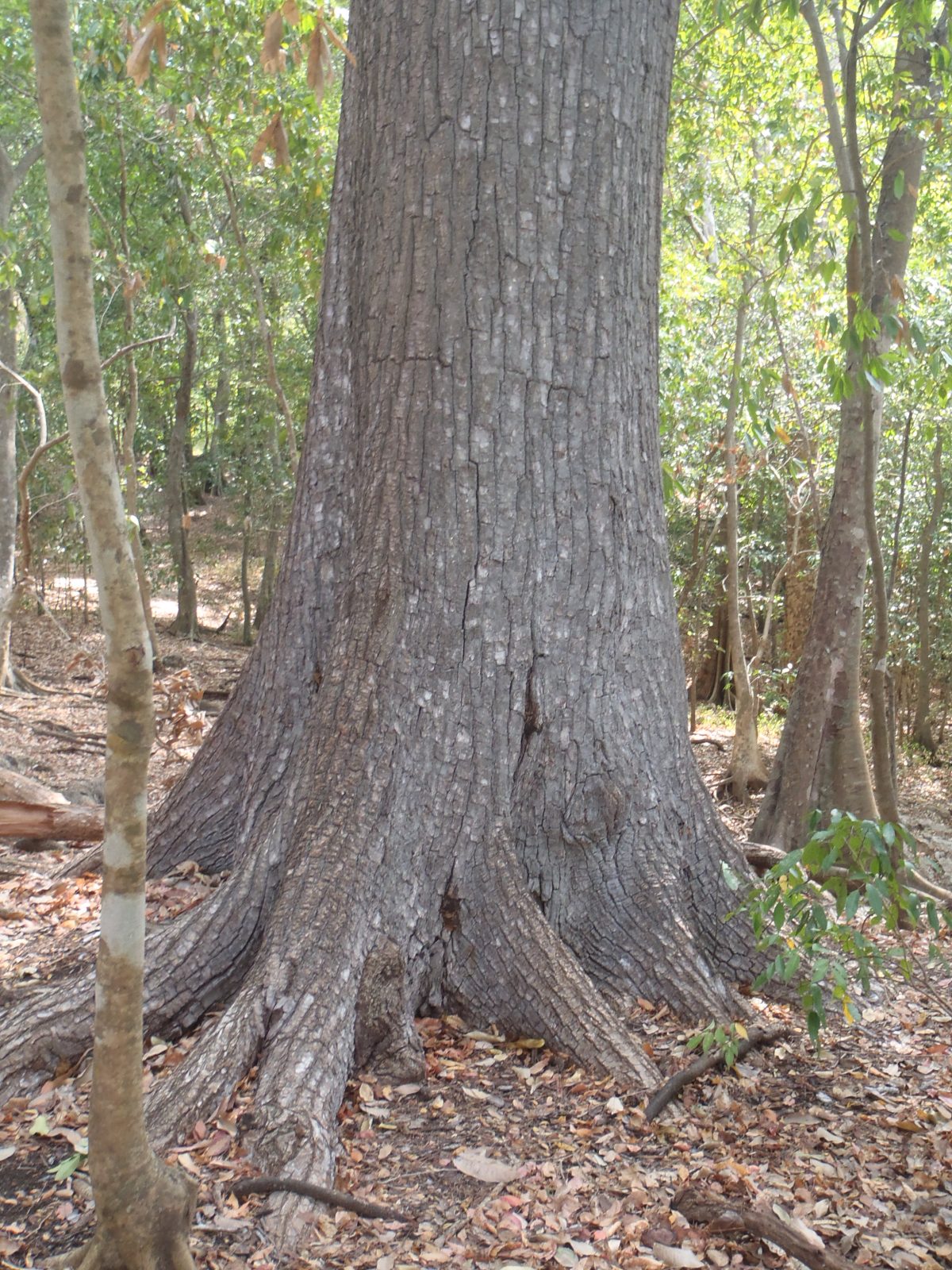
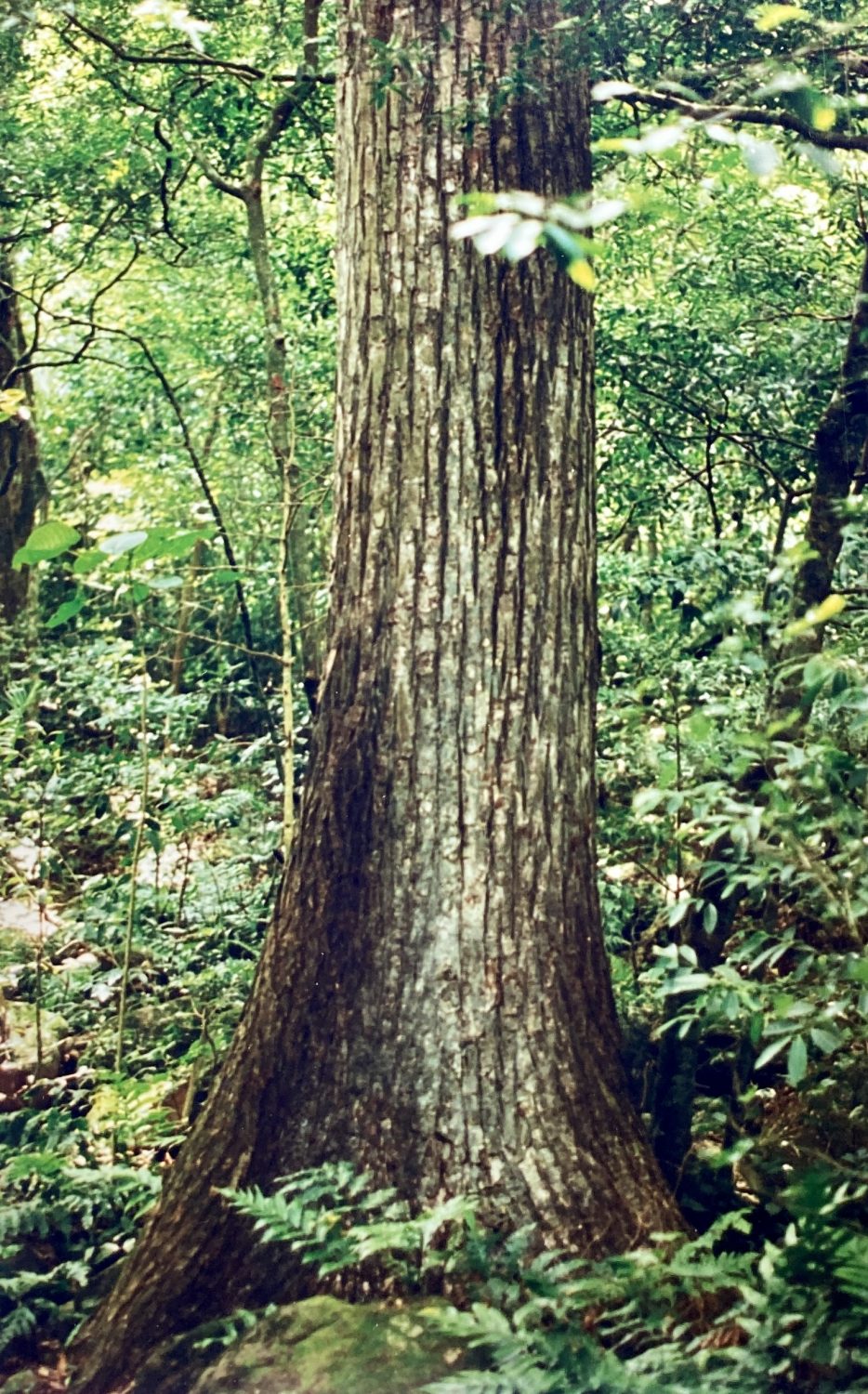
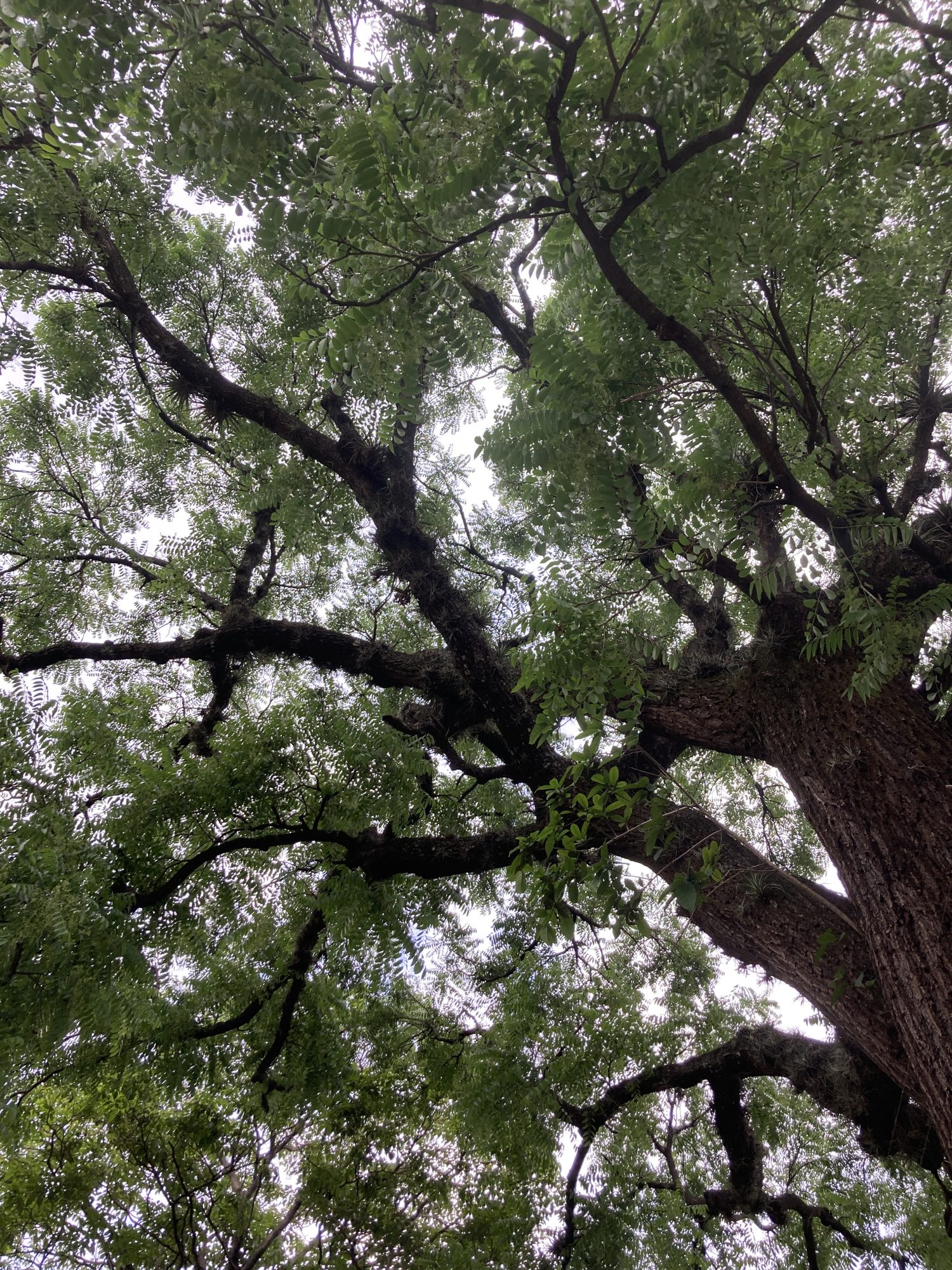
Description: Cedro Amargo has a mostly straight and regular, cylindrical trunk (60cm and up) topped by a full, flowing crown composed of long, sagging leaves. The thick bark ranges in color from grey to brown and is fractured into ridges (or sometimes plates) by deep fractures in its surface. Where the bole enters the ground, short, rounded buttress roots often appear.
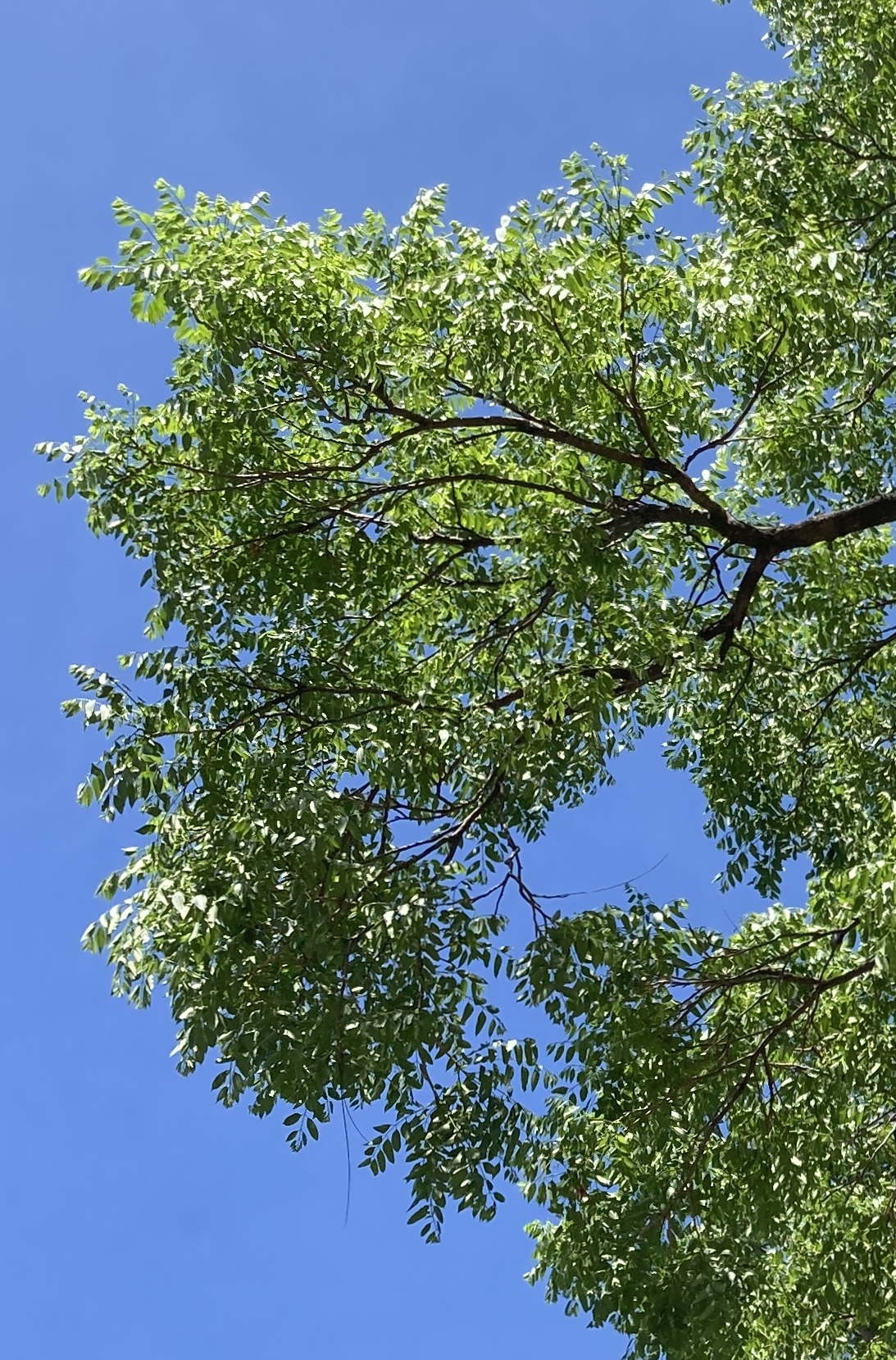
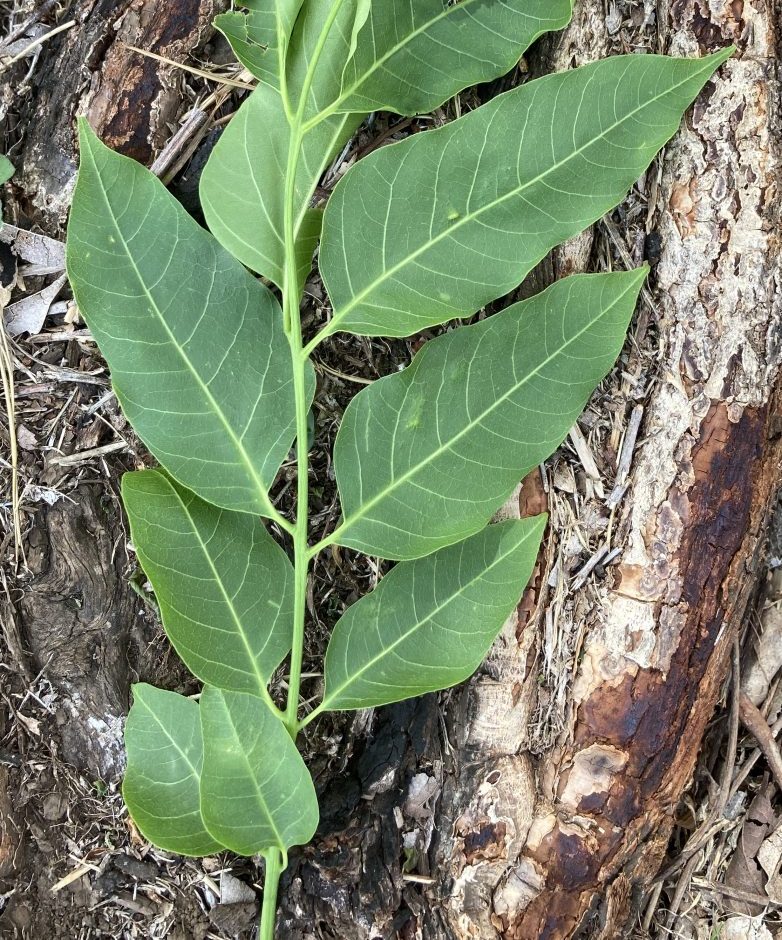
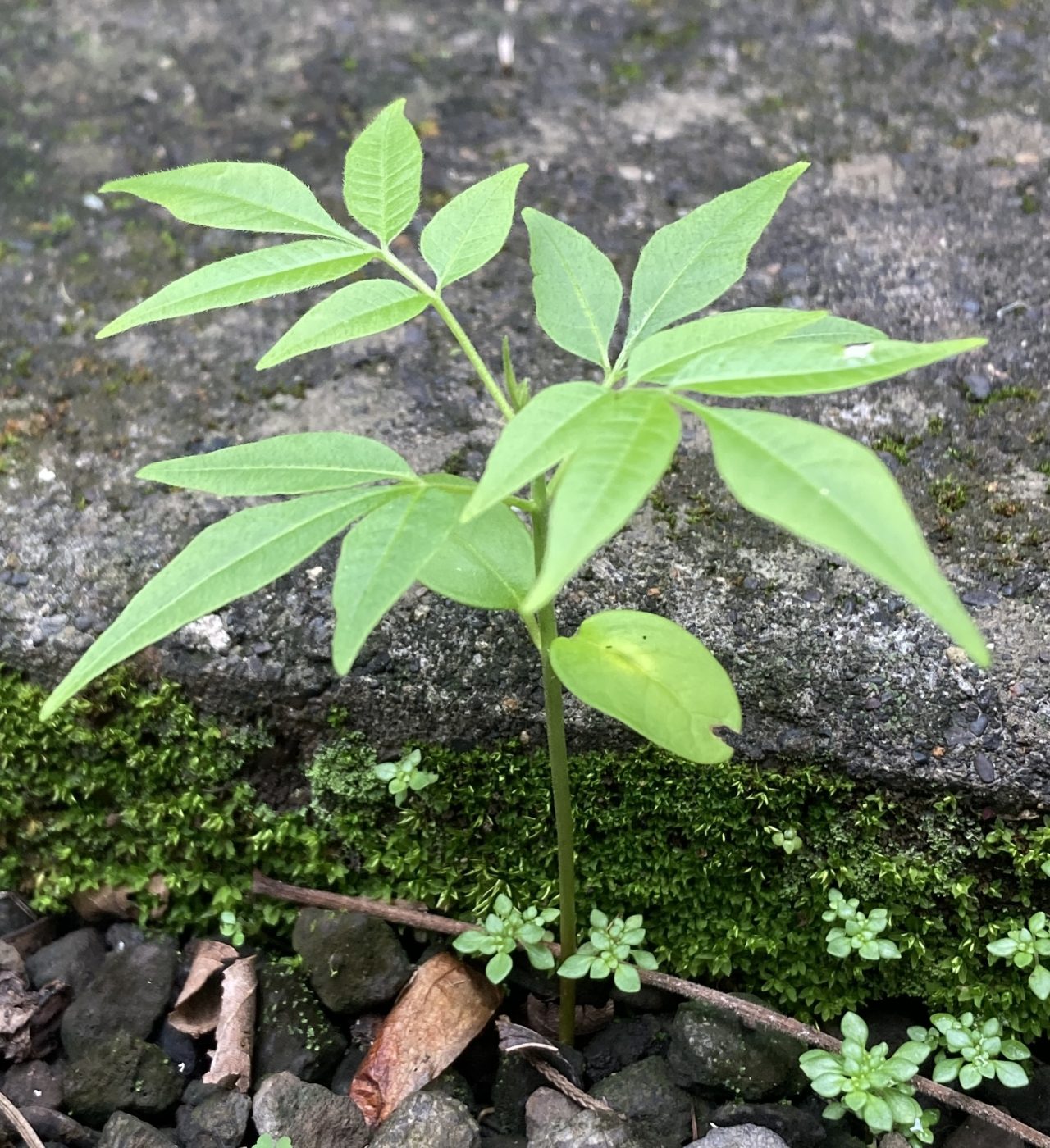
Cedro leaves are paripinnately compound, alternately arranged and very long (30cm). They often droop under their own weight, giving the tree’s crown a somewhat shaggy appearance. Each leaf consists of a variable number (14?) of ovoid leaflets, lanceolate in shape, and with oblique (unequal) bases. Foliage is shed during the early to mid part of the dry season (January-February), and the tree remains bare until the rains return in later April or May.
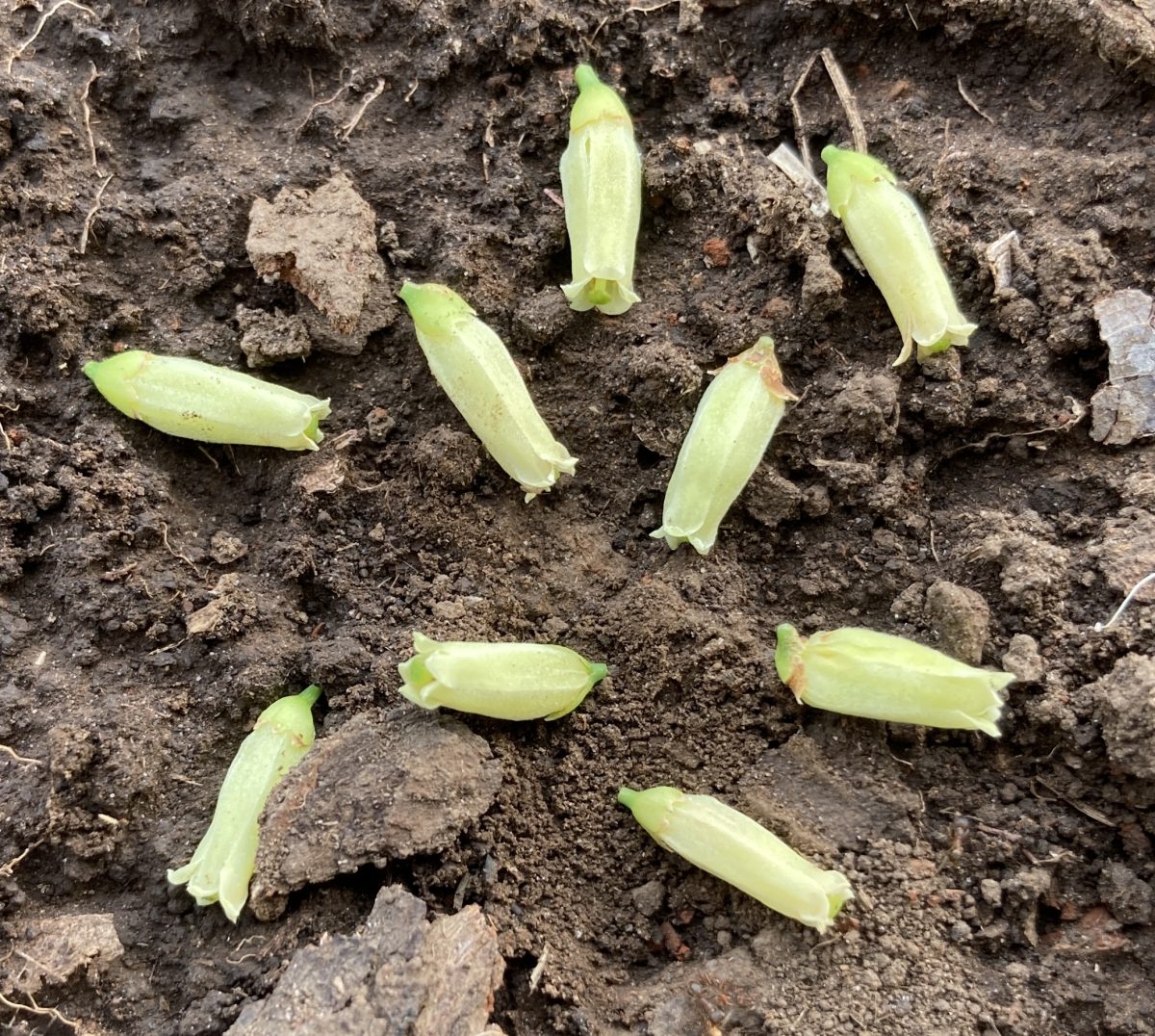
Flowering commences soon after the new foliage expands (May-June). Each pale green blossom (1cm) sports a narrow, tubular corolla made up of 5 petals, a similar number of stamens and a central pistil. Large numbers of flowers are arranged in panicles that grow from leaf axils. They also emit a strong garlic scent that announces their presence to sensitive noses from distances of many tens of meters.
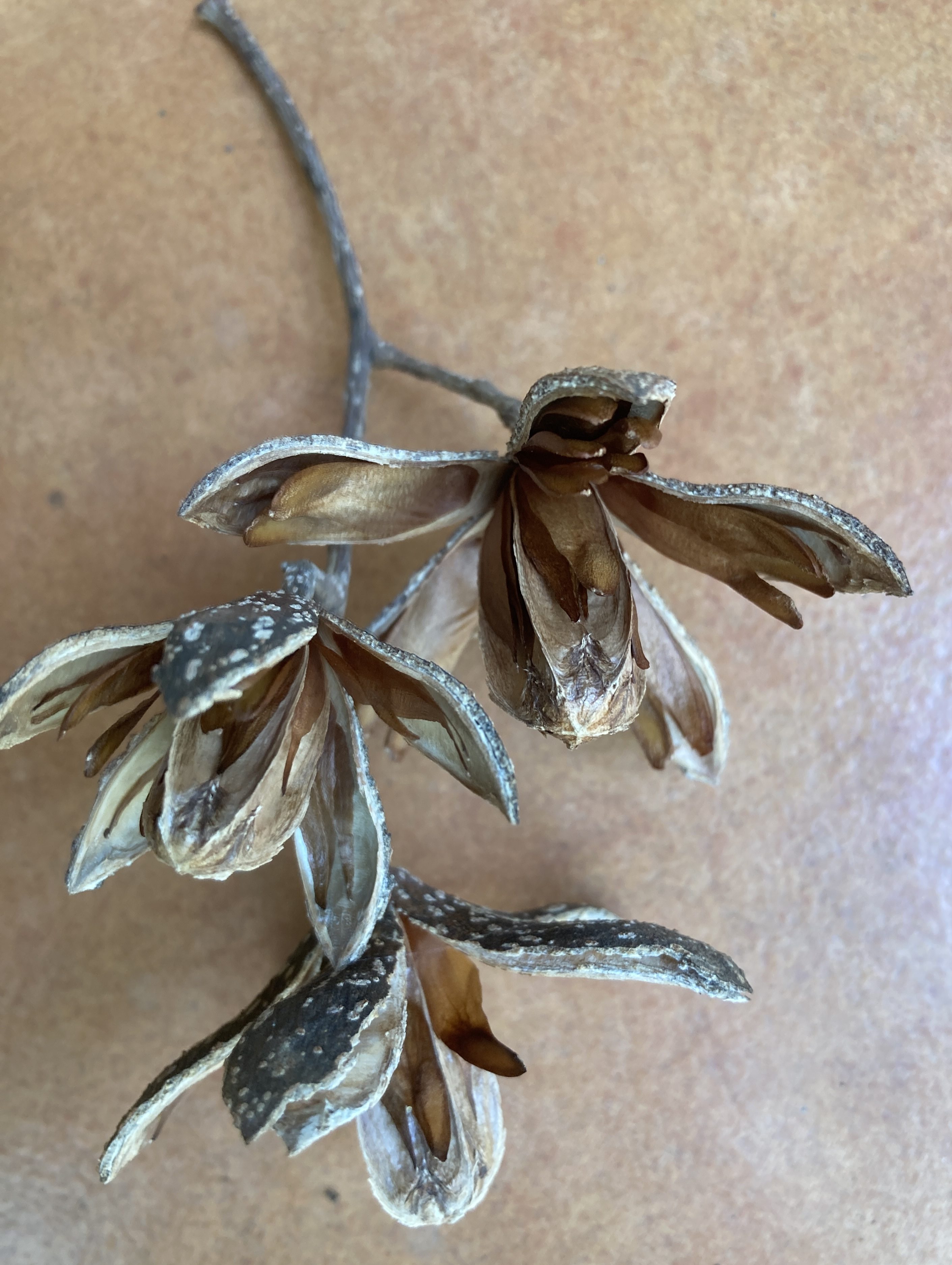
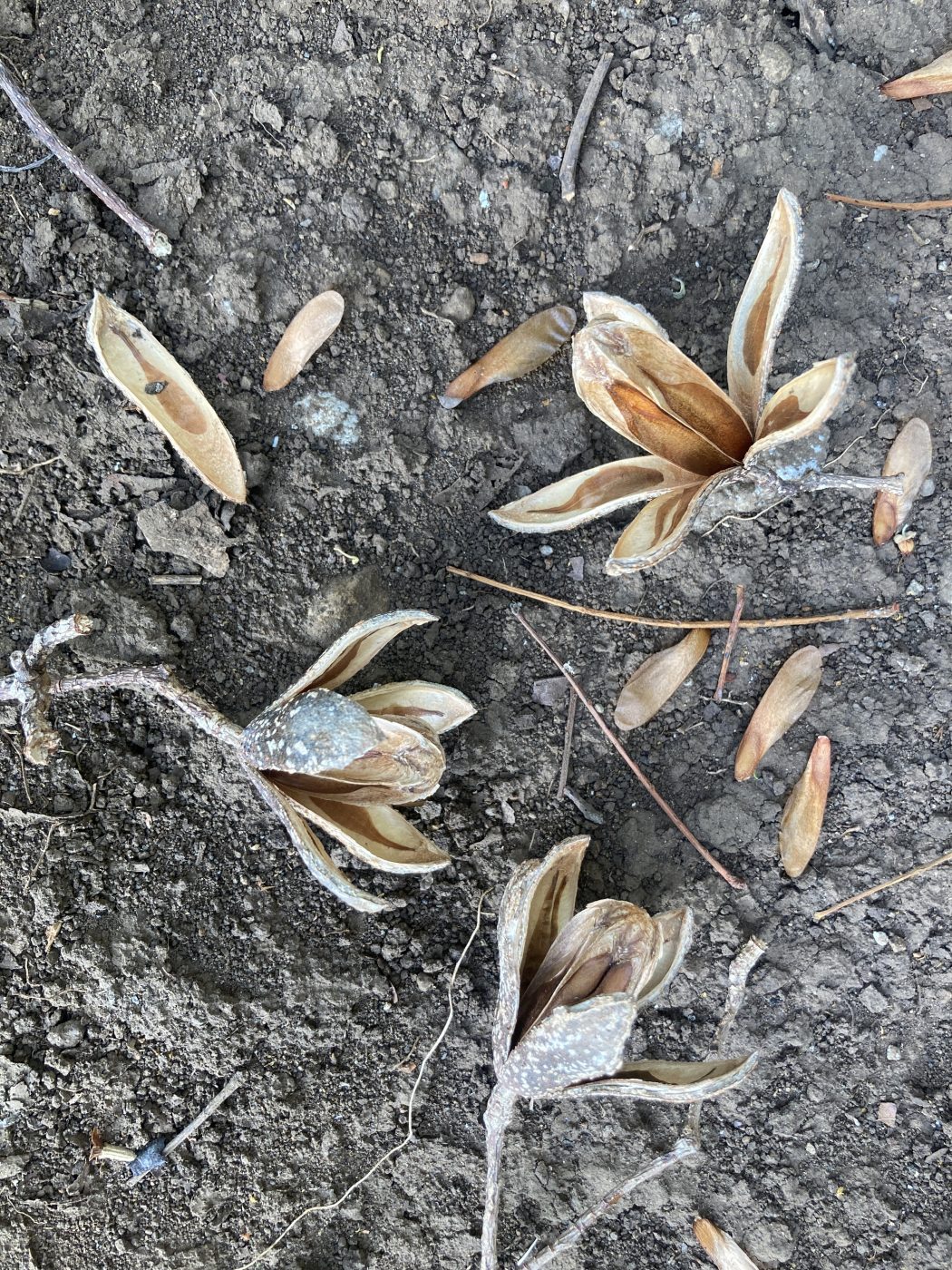
Fruits grow slowly and do not mature until the following dry season (March-April) – nearly a year later! Each is a woody, dehiscent capsule (4cm x 1.5cm) that dries and opens in the hot, summer sun. Resembling a 5-petaled flower (though a stiff, brown one!), the capsules then release scores of light, winged seeds that are dispersed by the strong winds characteristic of this season. Seeds germinate rapidly and readily with the first rains of late April or May.
Similar Species: Though there are many other species of the Cedrela genus present in Costa Rica and that boast similar vegetative characteristics, Cedro Amargo is by far the most abundant of these, at least in the dry tropical forest of the northwestern part of the country. Toona ciliata, also of the Meliaceae family, has very similarly shaped leaves and fruits, but this tree is a scarce, introduced species native to Australia and South Asia (Poveda, 1975)..
Natural History: Like many other (but not all) tree species adapted to a climate with a marked dry season, Cedro trees abandon their leaf cover to save water during the arid, Pacific slope summer months of January through April.
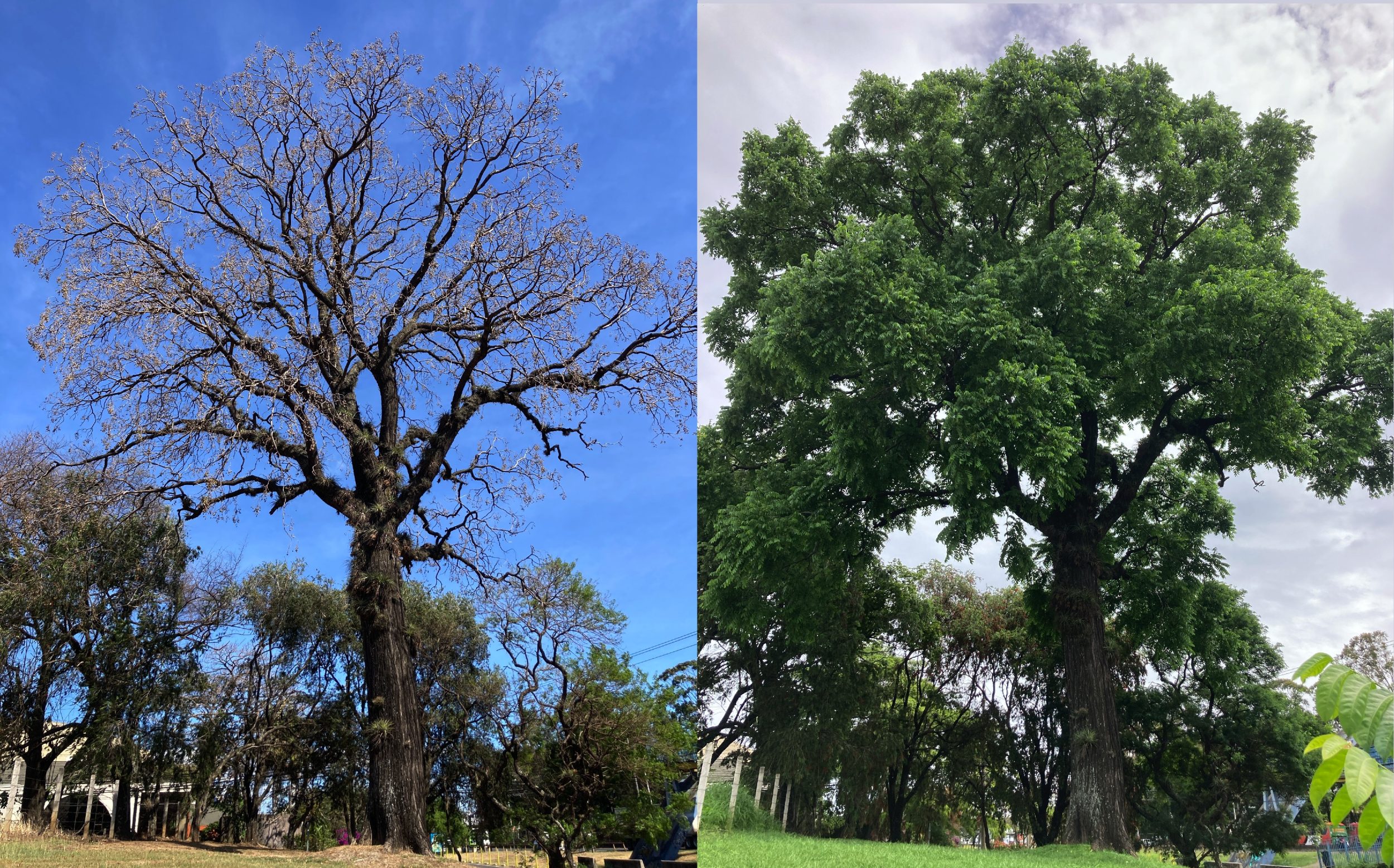
During this same period, Cedro seed capsules open, releasing their winged seeds to potentially be carried great distances by the strong winds typically present during these same months.
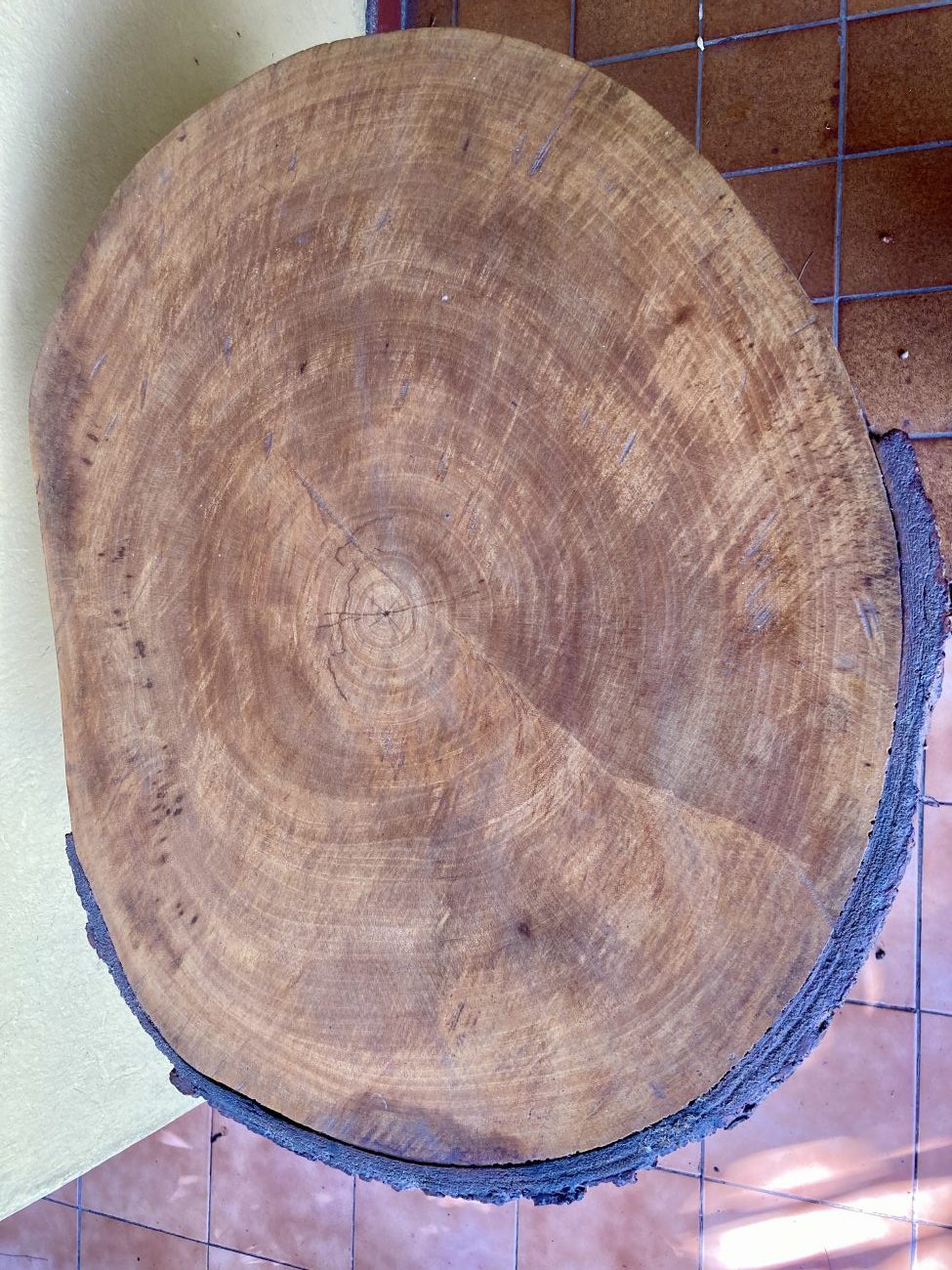
Uses: Cedro Amargo is highly valued for its reddish, rot-resistant wood. It is widely commercially available in Costa Rican hardware stores and is used in housing construction (i.e. doors, ceilings) and furniture. (Poveda, 1975).
Distribution: This tree ranges from Mexico to Argentina and it is present in the Caribbean. In Costa Rica, it reaches its greatest natural abundance in the dry tropical forests of Guanacaste, though it has been planted all over the country.
Images: Tree Tree2 Tree3 Tree4 Trunk Trunk2 Leaf Leaflet Flower Flower Fruit Fruit&Seed Seedling Wood
 Trees of Costa Rica's Pacific Slope