
Rubiaceae
TROMPILLO
Occasional evergreen treelet (2-3 m) associated with the fringe of hardy and resistant vegetation that forms the forest’s natural boundary with the beach – a dry, salty, and generally inhospitable habitat. Trompillo, so named for the short, pointed snout located at one end of the tree’s round fruits, becomes a conspicuous plant in June, when white, pinwheel-shaped flowers adorn its branches.
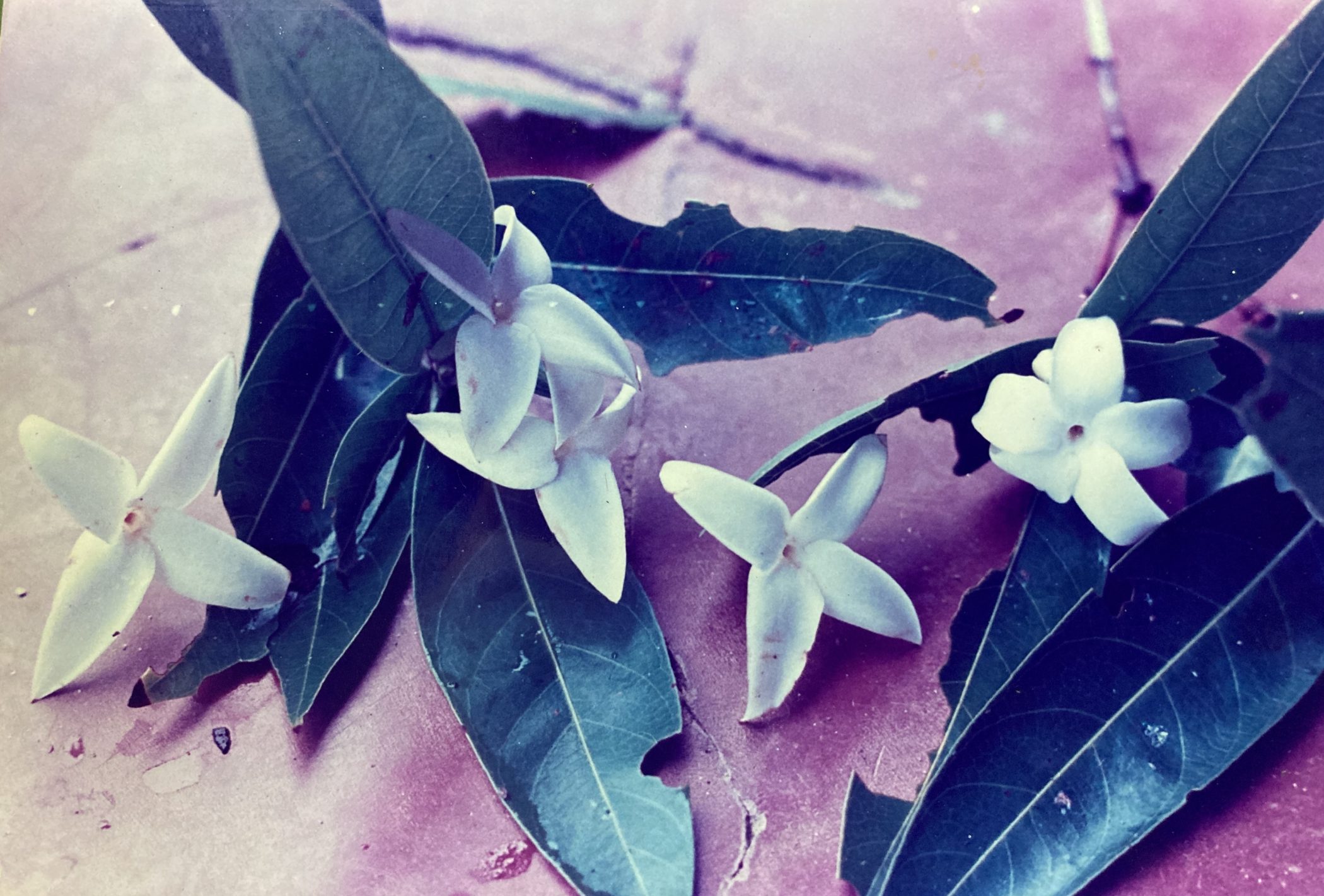
Description: This small tree has a slight trunk (4-5 cm) of ordinary appearance. Trompillo’s tan-colored bark – textured by fine, vertical fissuring – slowly exfoliates in thin, narrow strips. Branches occur along the entire length of the bole and – when adequate sunlight is available – are capable of producing a full, bushy, and opaque crown. Otherwise, trees growing in the forest understory may appear lanky and thin. Trompillo leaves (12-16 cm by 3.5-5 cm) are simple and oppositely arranged. The dark green, glossy-smooth, leathery blades are supported by petioles of moderate length (0.5 cm) and end in well developed drip-tips. Narrowly elliptical in shape, they are much longer than they are wide. Small stipules are present along the twigs at the base of each leaf. Flowers emerge in small, sessile clusters from the branch tips (terminally). Beginning as long, spike-like buds, they soon open into large, white, pinwheel-shaped blossoms (4 cm). Each has four (sometimes five) thick, fleshy petals that are fused along their midsections to form a corolla whose basal portion is tubular. Four long stamens and a central pistil are hidden within this tube. A small, cup-shaped calyx completes the blossom. Flowering periods occur annually and they are well synchronized, extended events. Usually, the first blossoms appear in May and flowering peaks a month later. During July and August, intensity slowly declines but sporadic fertility may continue until December.
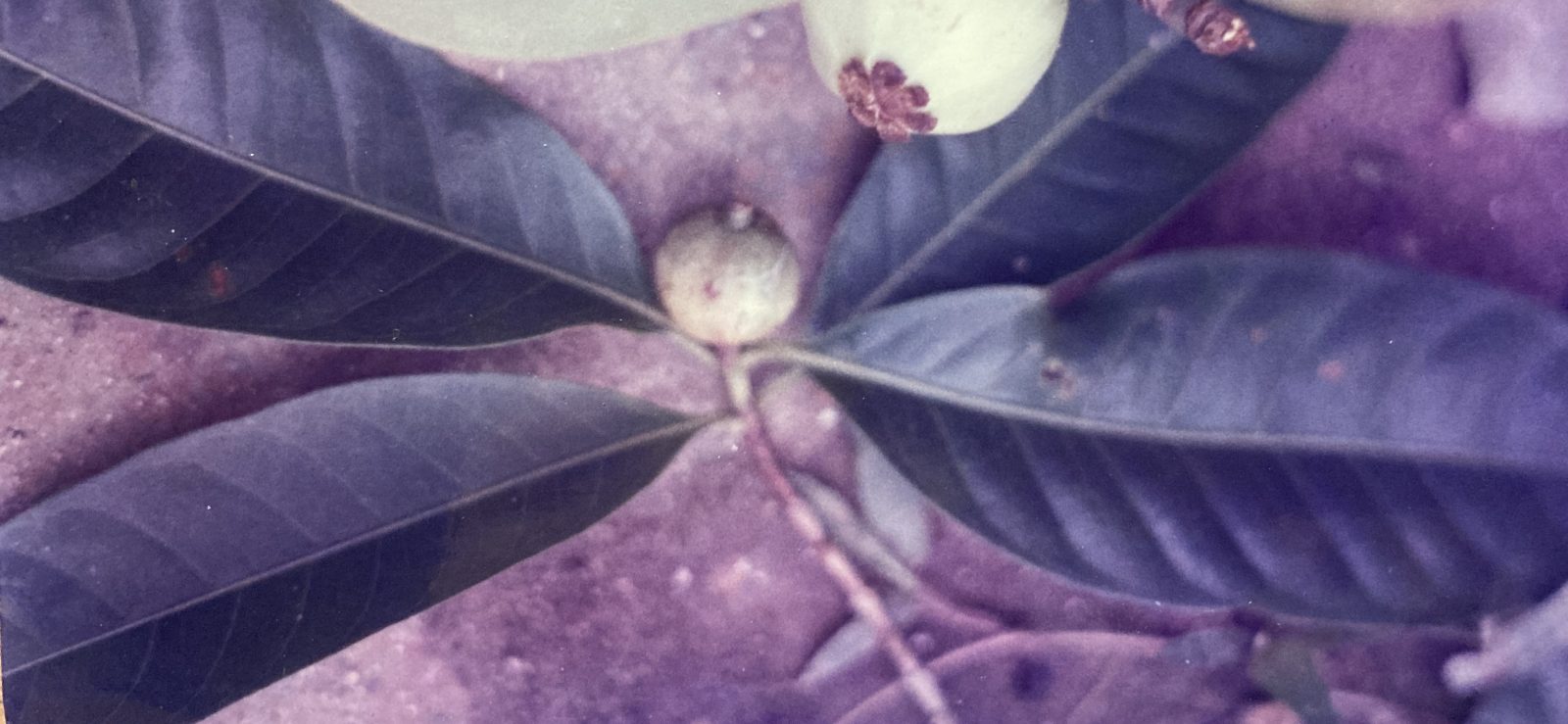
Fruits are often visible by August, appearing in terminal positions on the branches. Each otherwise plain green globe (3 cm) is adorned by a single, distally located, snout-like appendage. Inside, thin, flat, translucent seeds are radially arranged around the orb’s primary axis. Tightly packed, each fruit contains many of these small, incisor-like, structures. During November, December, and January, the fruits mature, turning yellow and slowly disappearing from the trees.
Similar Species: When present (often during three-quarters of the year), Trompillo’s flowers and/or fruits are unmistakable and identifying. Though opposite leaves and flowers with thick petals and long, tubular corollas are typical of most trees in the Rubiaceae family, Trompillo’s blossoms and lance-like foliage are distinctive. Furthermore, this tree’s small stature and it’s tendency to be located along the coastal margin of the forest – open to the sea and to bright sunlight – make it hard to confuse Trompillo with other Manuel Antonio Rubiaceaes – species that are generally confined to the forest interior.
Natural History: Trompillo flowers – with their long, narrow corollas that tend to be shed in the morning – are pollinated by nocturnal moths (Croat, 1978), though probably hummingbirds and butterflies have a role to play as well. Fruits are eaten and seeds dispersed by small, semi-arboreal mammals (opossums, skunks, raccoons). The thick, waxy, water-conserving leaves seen in this species are probably an adaptation to the salty and drought-prone coastal environment.
Uses: Allen (1956) relates that the fruits can be used as small tops.
Distribution: In MANP, Trompillo is a coastal species, found most commonly along the Espadilla Sur beach, though it is also seen growing attached to the bluffs and vertical cliffs of Punta Catedral. In Costa Rica, it is also known from Santa Rosa National Park as well as the Zona Sur (Allen, 1956). It ranges from Mexico to Amazonian Brazil and Bolivia.
 Trees of Costa Rica's Pacific Slope