Bombacopsis quinata (Jacq.) Dugand.
Pochote
Bombacaceae
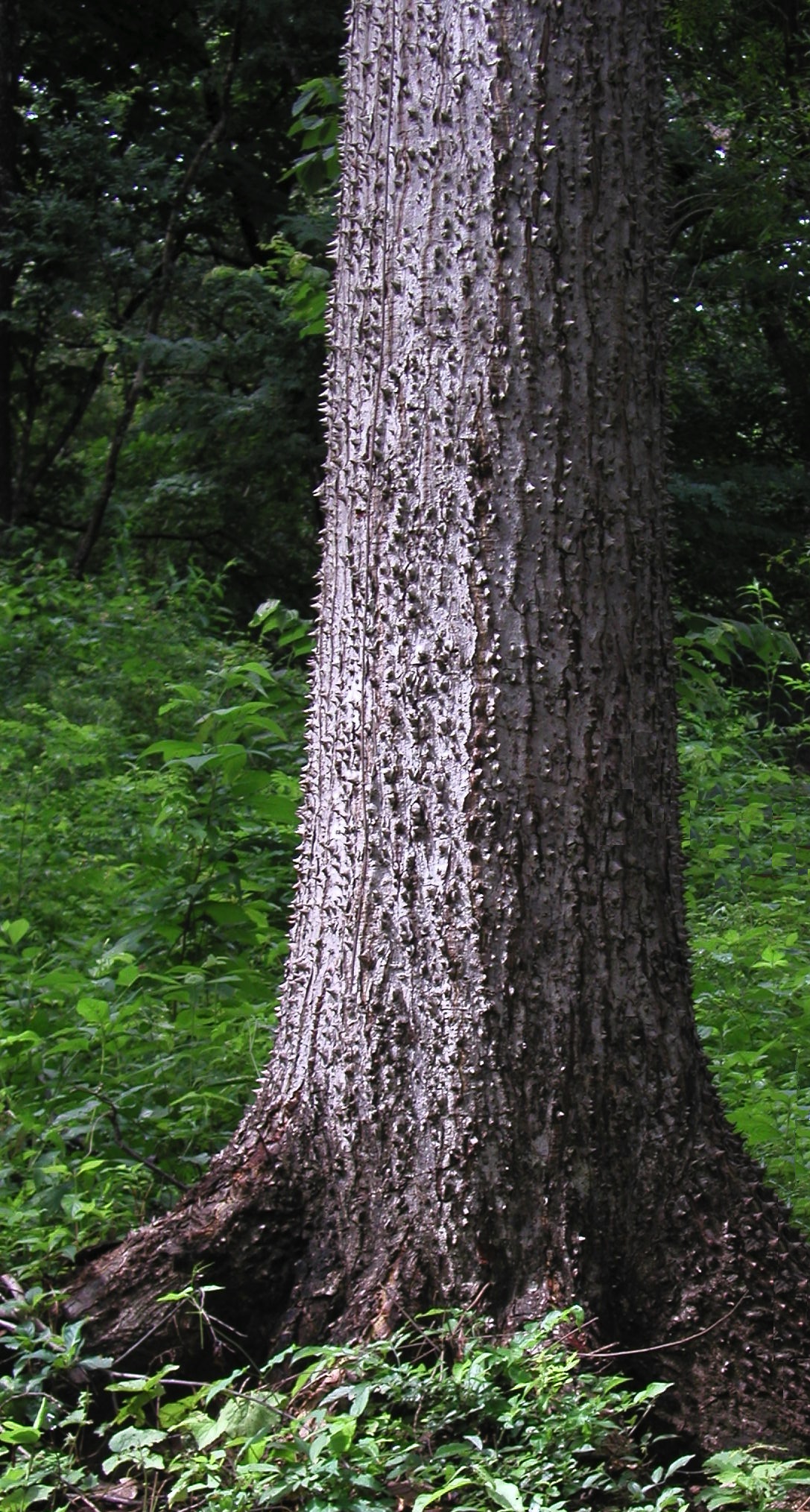
Deciduous canopy tree (25-35m) and easily one of the most characteristic components of Costa Rica’s dry tropical forest habitat. Pochote is notable for its regular, thorny bole, soft rot-resistant wood, and showy, many-anthered flowers.
Description: Pochote trees can sport cylindrical, straight and towering trunks that rise high into the canopy. But, just as often, the boles are bent and angular – the result of shallow soils and damaging high winds in their local environment. Either way, the trees are covered by thick, light gray bark that is contoured by deep and darker vertical fissures and a host of sharp, broad-based thorns. Branches are stout, relatively few, and end in stubby, often angular twigs that support the open, airy crown.
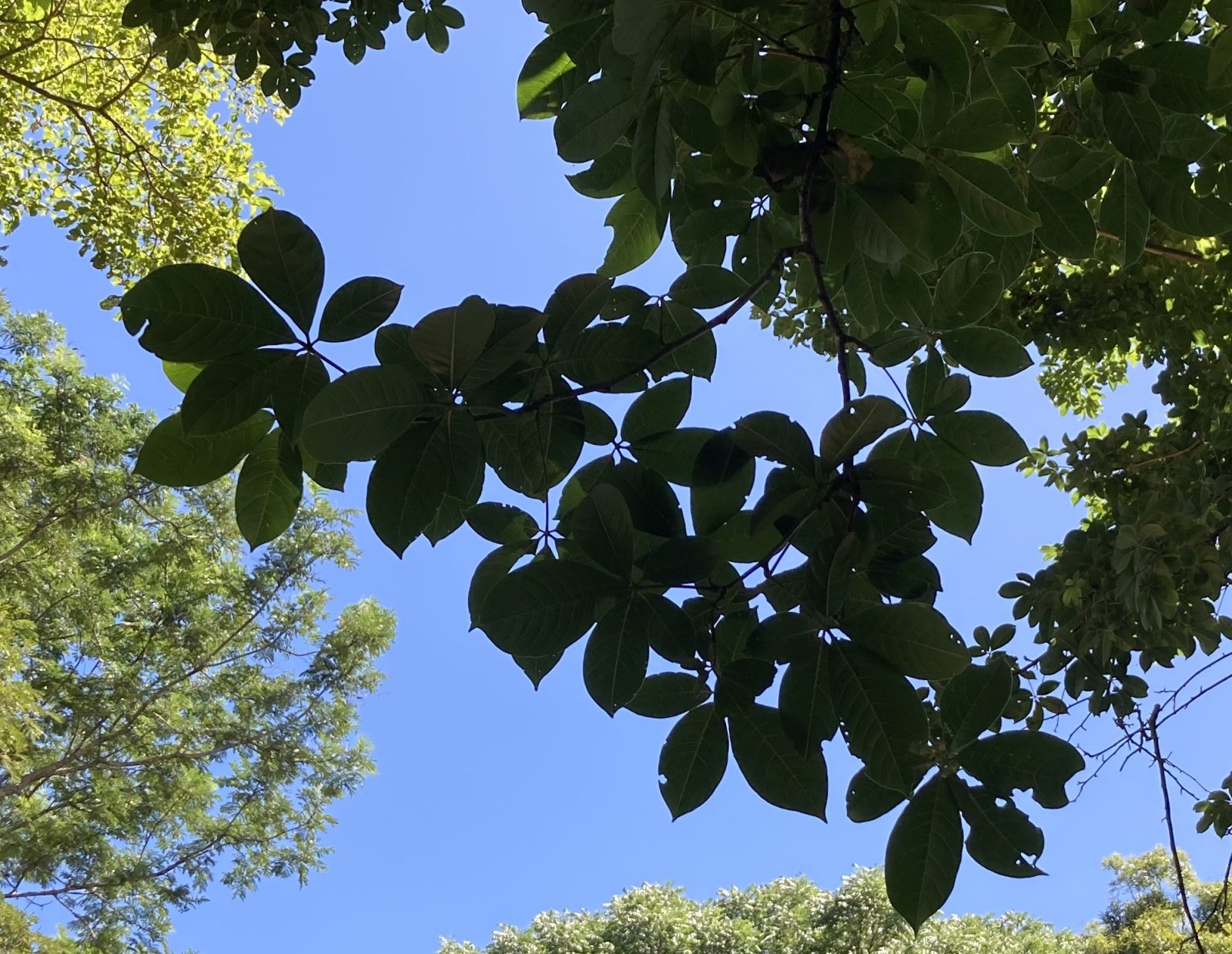
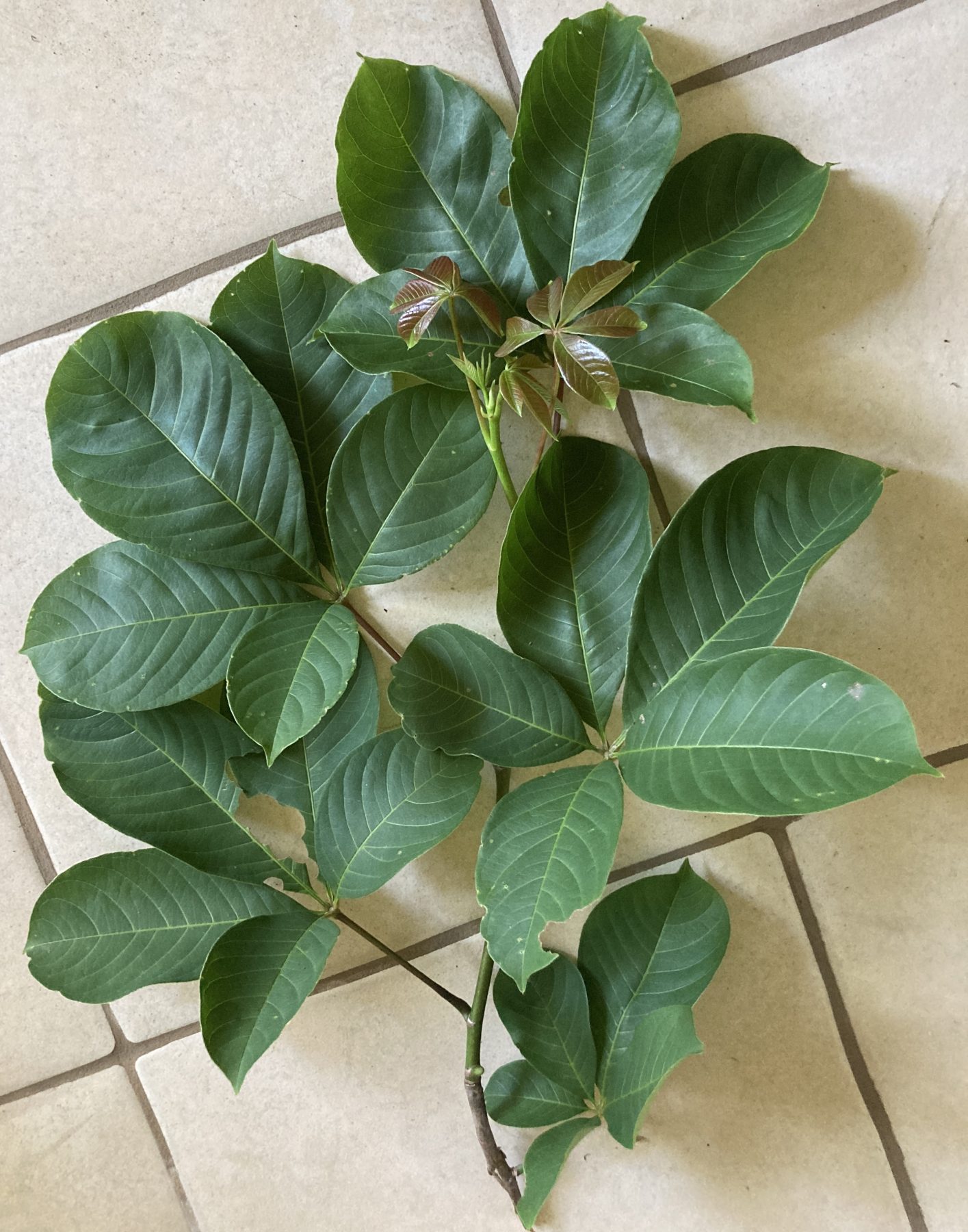
Pochote’s large leaves (27cm x26cm) are alternate and palmately compound, each consisting of five, unequal leaflets. The leaflets are elliptically-shaped, end in distinct drip tips, and become smaller with position approaching the petiole. The thin, papery foliage is shed rapidly at the very start of the dry season (late November – early December) and the trees remain bare until the rains resume (May).
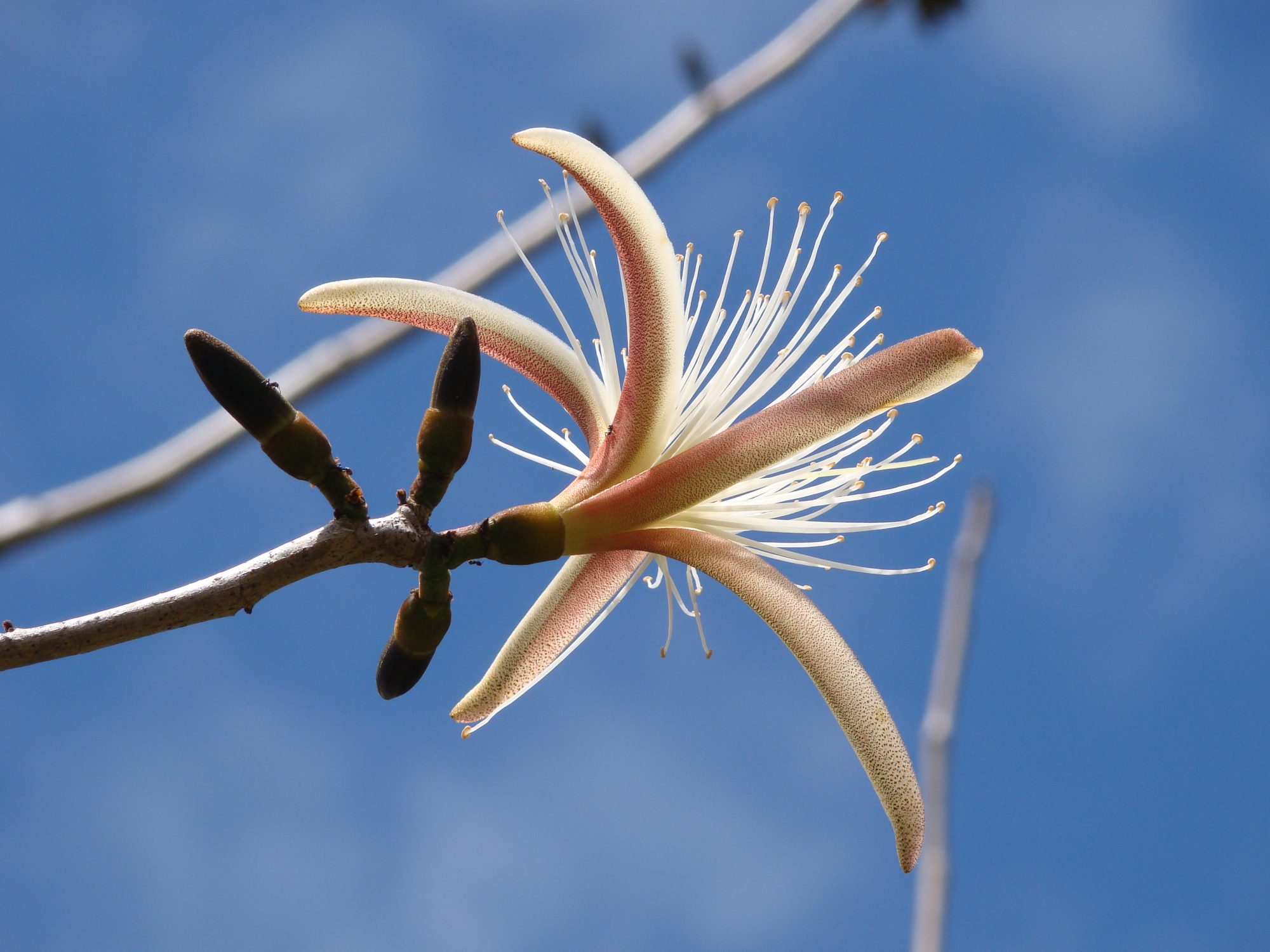
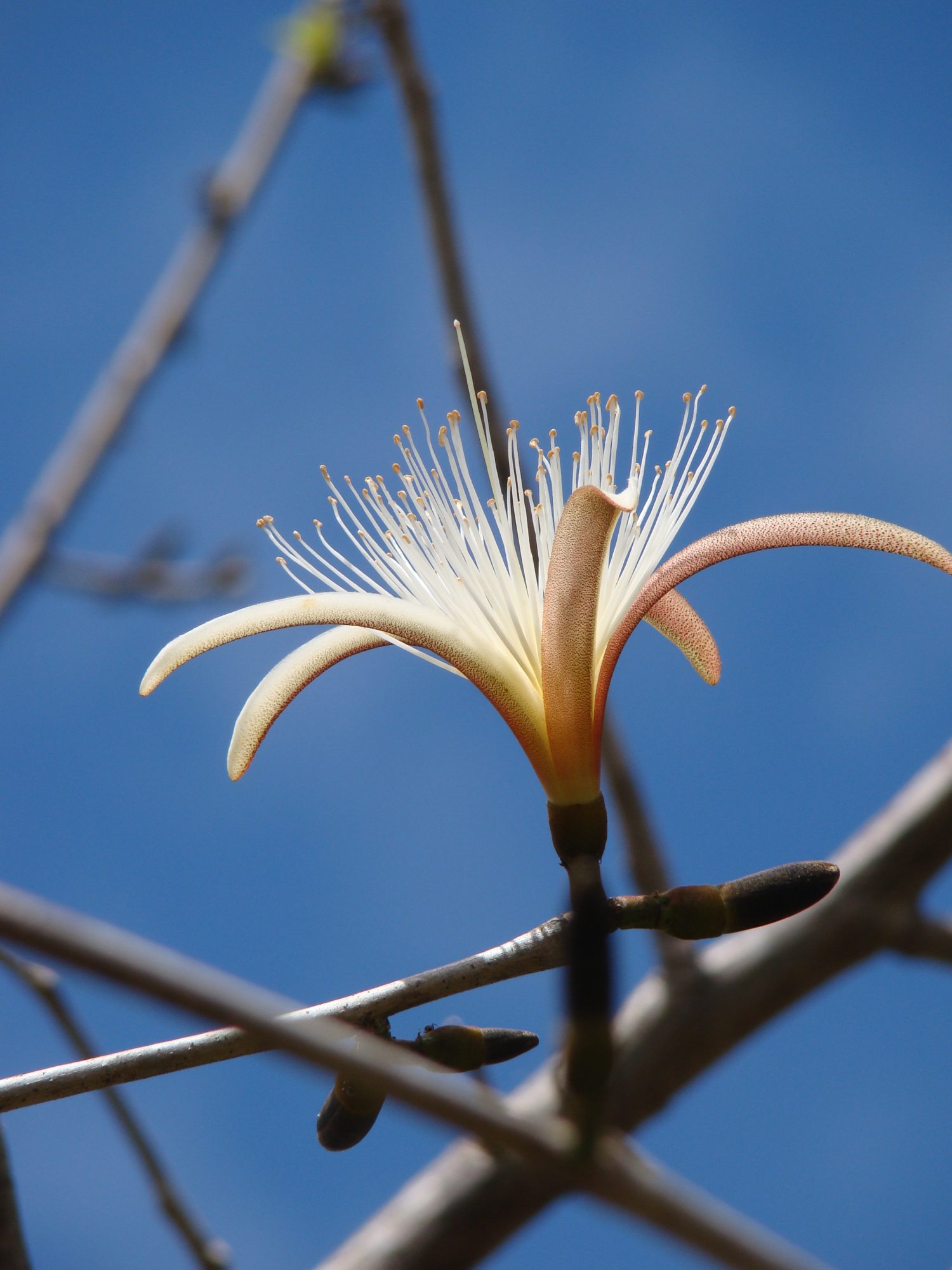
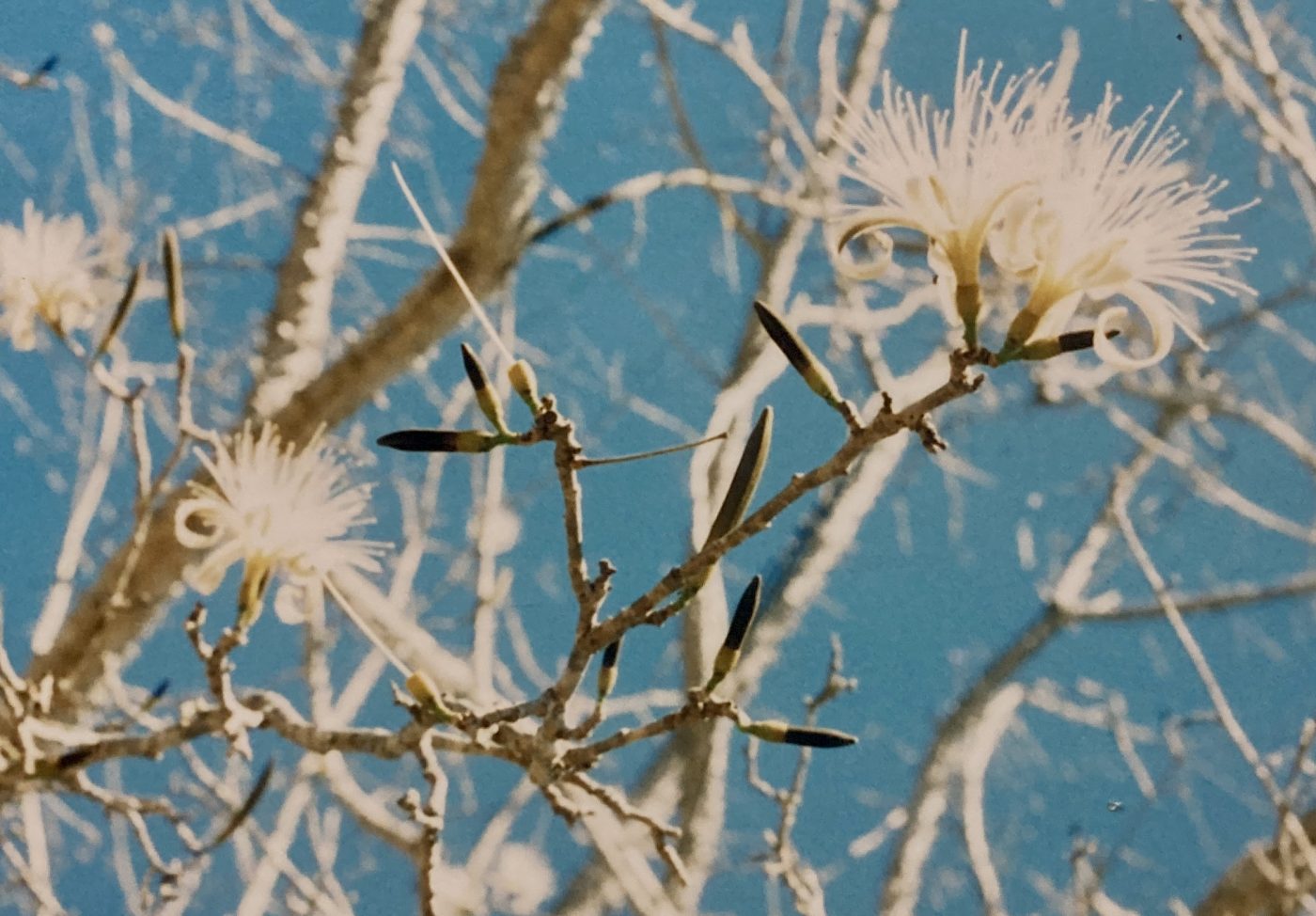
Ones the leaves are gone, torpedo-shaped flower buds begin to grow from leaf axils in small groups along the twigs. Each develops into a large blossom (10cm long by 12cm wide) with five, long, narrow petals emerging from a cup-shaped calyx. Though mostly white on their inner surfaces, the petals are finely speckled with reddish and brown outside. But the flower’s most eye-catching and notable feature are the abundant (upwards of 100), long stamens that populate the corolla along with the somewhat longer cental pistil. Flowers open at dusk and the corollas and stamens are shed during the course of the next morning. Spent and fallen blossoms dry out and then take on a deep red-orange color, adorning the ground as they accumulate under these trees. Flowering extends from January to early March.
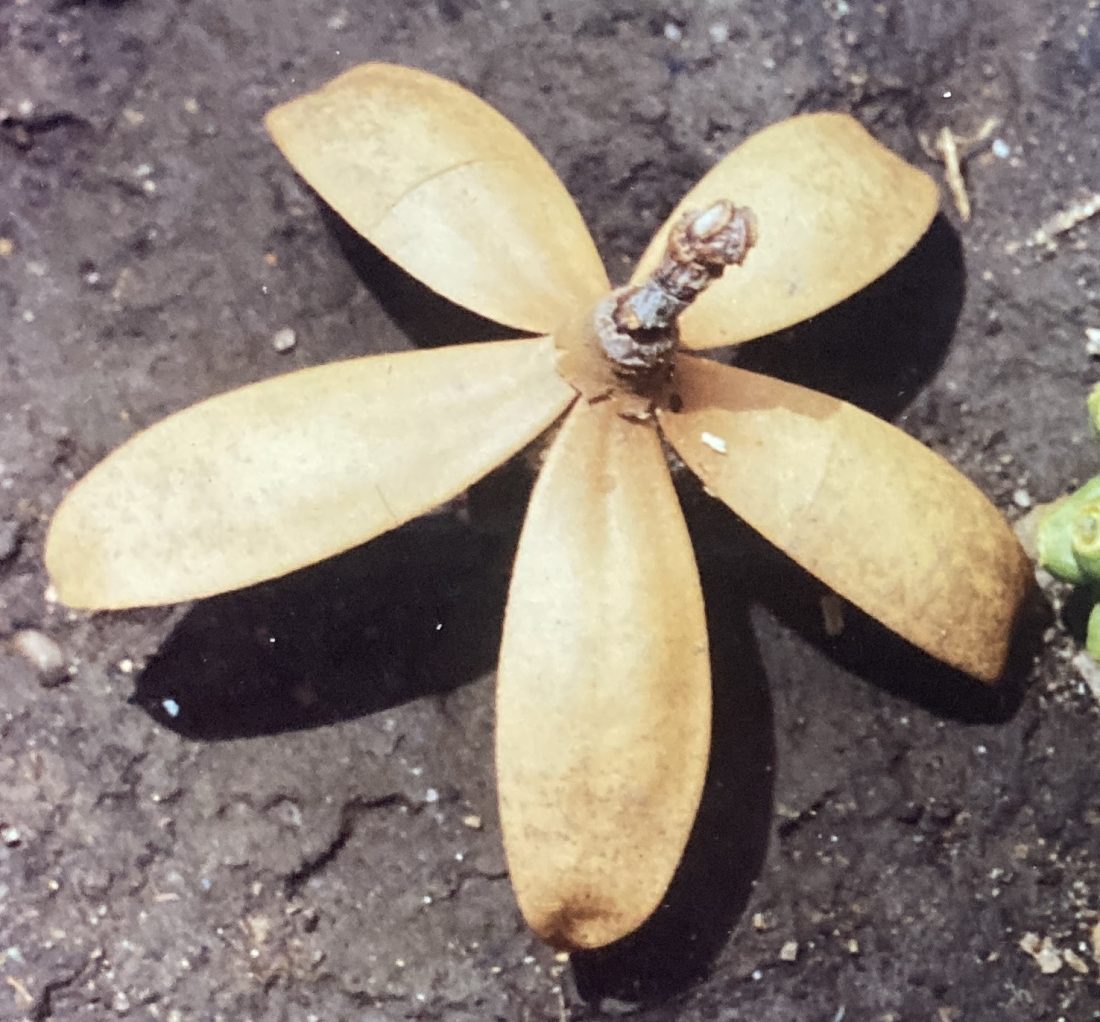
Pochote fruits mature as smooth, tan-colored, woody capsules (5cm). As they gradually dessicate in the hot, dry-season sun, they open – producing a structure that resembles a five-petalled, woody “flower”. Inside, many small, round seeds (4mm) are enveloped in a tan-colored cotton that is then carried by the strong trade winds, also characteristic of the dry season. Such dispersed seeds germinate readily with the increased humidity and first consistent rains of the wet season. Trees release seeds from March through April.
Similar Species: There are other species of the Bombacaceae family present along the Pacific slope that possess similar, palmately compound leaves to those of Pochote. However, none of these share the extensively thorned trunk possessed by mature Pochote trees.
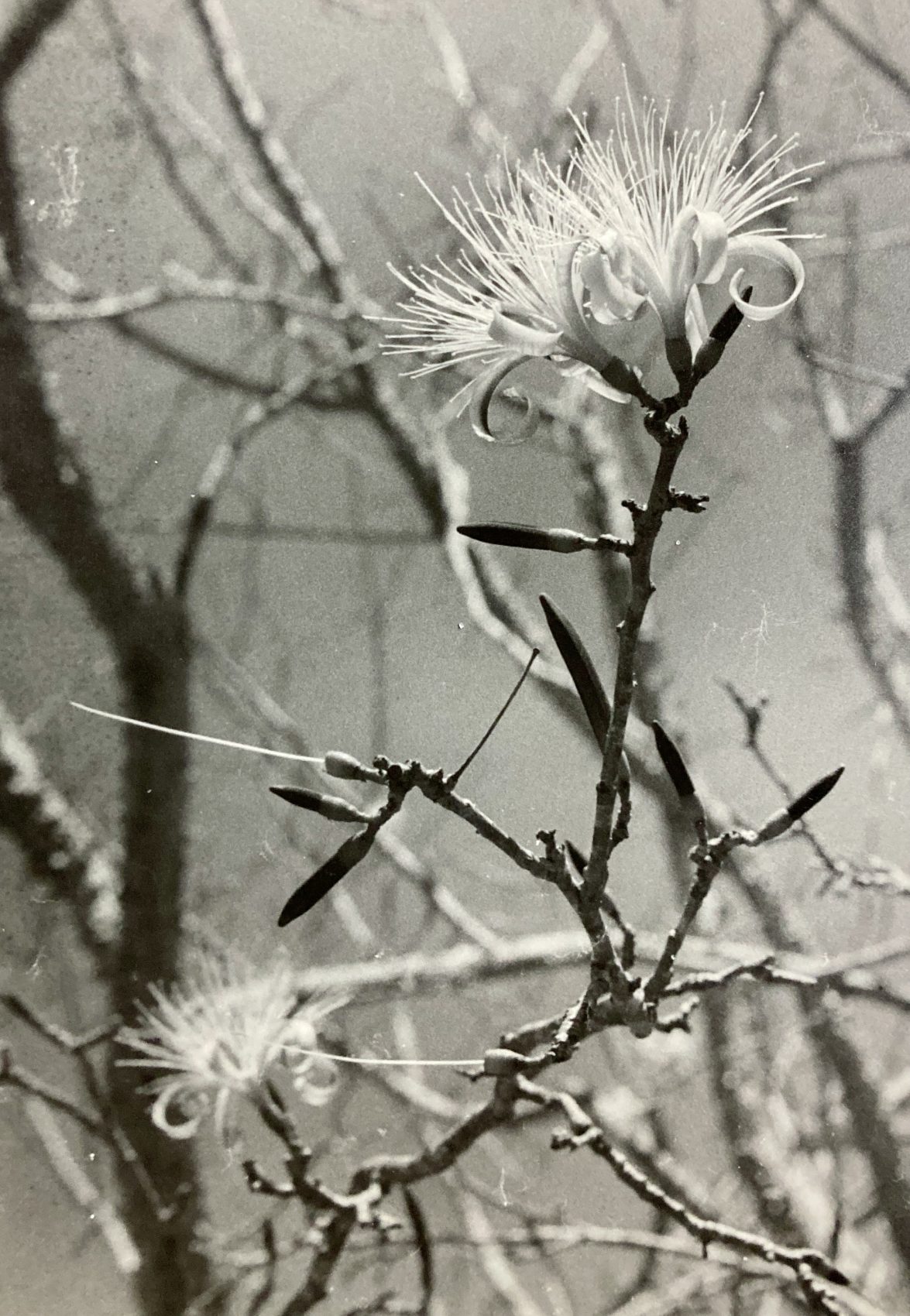
Natural History: A dry-adapted species, Pochote’s fertility cycle follows the same pattern as that of many arboreal species that have evolved to survive in an environment with an annual, pronounced dry season. Leaves are shed soon after rains diminish, to help the trees conserve water. In the case of Pochote, this occurs even earlier than for other tree species, due to the thin, papery nature of its foliage – lacking any waxy cuticle or covering to help the leaves retain moisture. The leaves rapidly yellow, dry out, and fall, forming a crinkled layer of biomass under the trees at this time. Flowers then appear along the bare branches where they are more exposed and accessible to the nocturnal pollinators (bats, moths) that frequent them. Finally, the fruits mature and desiccate in the late-dry season sun, releasing wind-dispersed seeds to be carried by the strong trade winds. Seeds are then in place to germinate at the start of the wet season, maximizing their time to get established and grow deep roots before the onset of he next dry season, when the majority of them will perish.
The purpose of the abundant thorns covering the tree’s trunk and branches is not clear. There does not appear to be any extant herbivore that might be deterred from consuming Pachote foliage by these sharp barbs, since no large herbivores climb trees and the smaller ones often live in the crowns themselves (i.e Howler Monkeys). It has been suggested that some component of the native American megafauna (that largely went extinct some 10,000 years ago) may have been the target of such a defense (e.g. Giant Ground Sloths).
Uses: Pochote wood is soft, easy to work, and rot resistant. According to Poveda (1975), the lumber contains a resin that attracts water and eventually causes nails to rust. Stakes made from Pochote branches root readily when placed in the soil, leading to the extensive use of this tree as a “living fencepost” for barbed wire fencing.
Range: In Costa Rica, Pochote is found in the dryer regions of the Pacific slope, but especially in Guanacaste Province in the north-west. Though it grows best where soils are humid and deep, the species competes well on rocky, south-facing hillsides where conditions can be far more extreme. It ranges from Nicaragua to Columbia and Venezuela.
Photos: Trunk Leaf Leaf2 Flower Flower2 Flower3 Flower4 Fruit
 Trees of Costa Rica's Pacific Slope