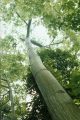
Caesalpinia eriostachys Benth.
Saíno
Caesalpiniaceae
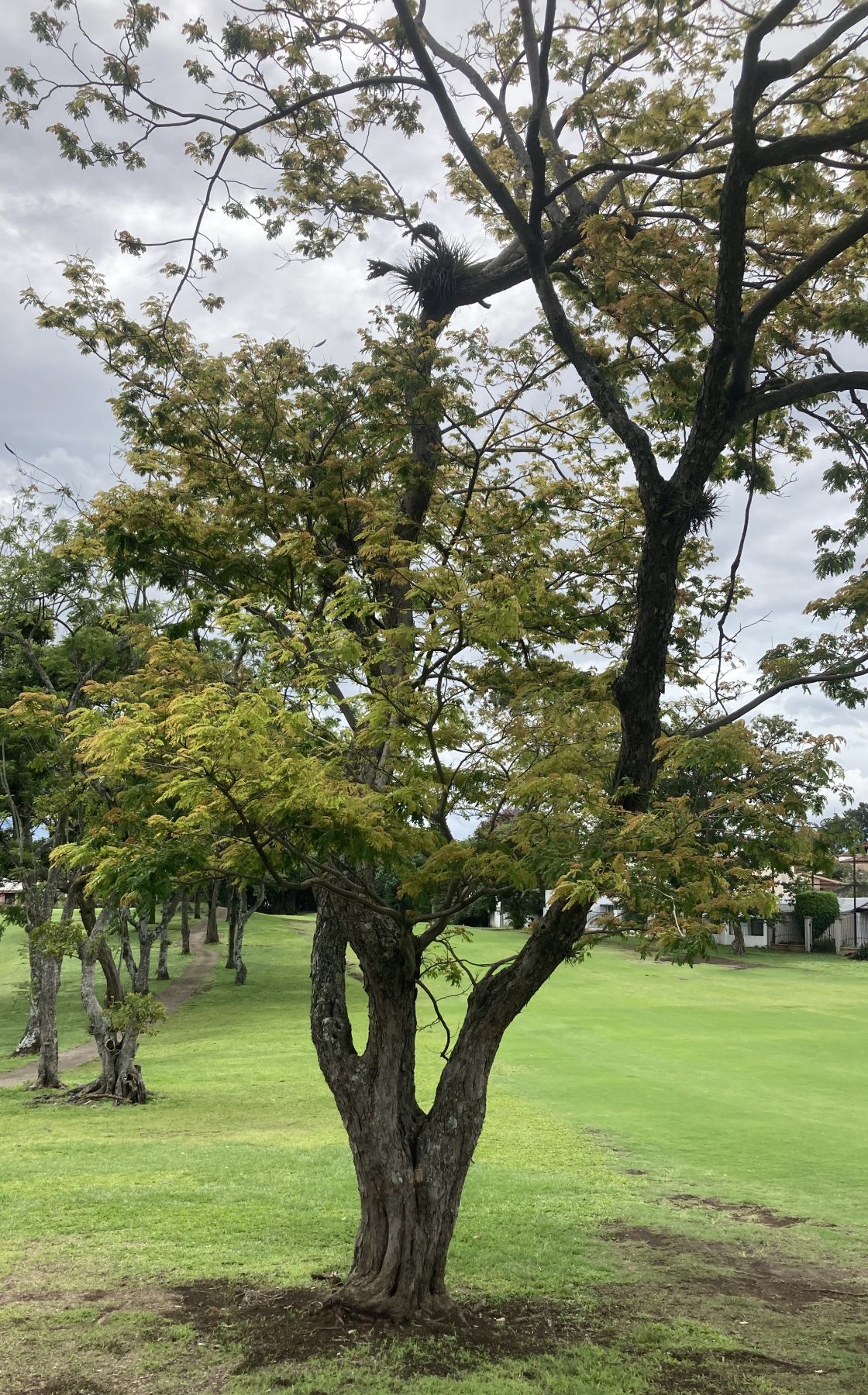
Occasional, subcanopy tree associated wit the dry tropical forest of Costa Rica’s northern Pacific coast. The colorful common name for this species derives from the pungent odor that is given off when its leaves are crushed – a smell very similar to than associated with a band of Collared Peccaries (Saínos) when encountered in the forest.
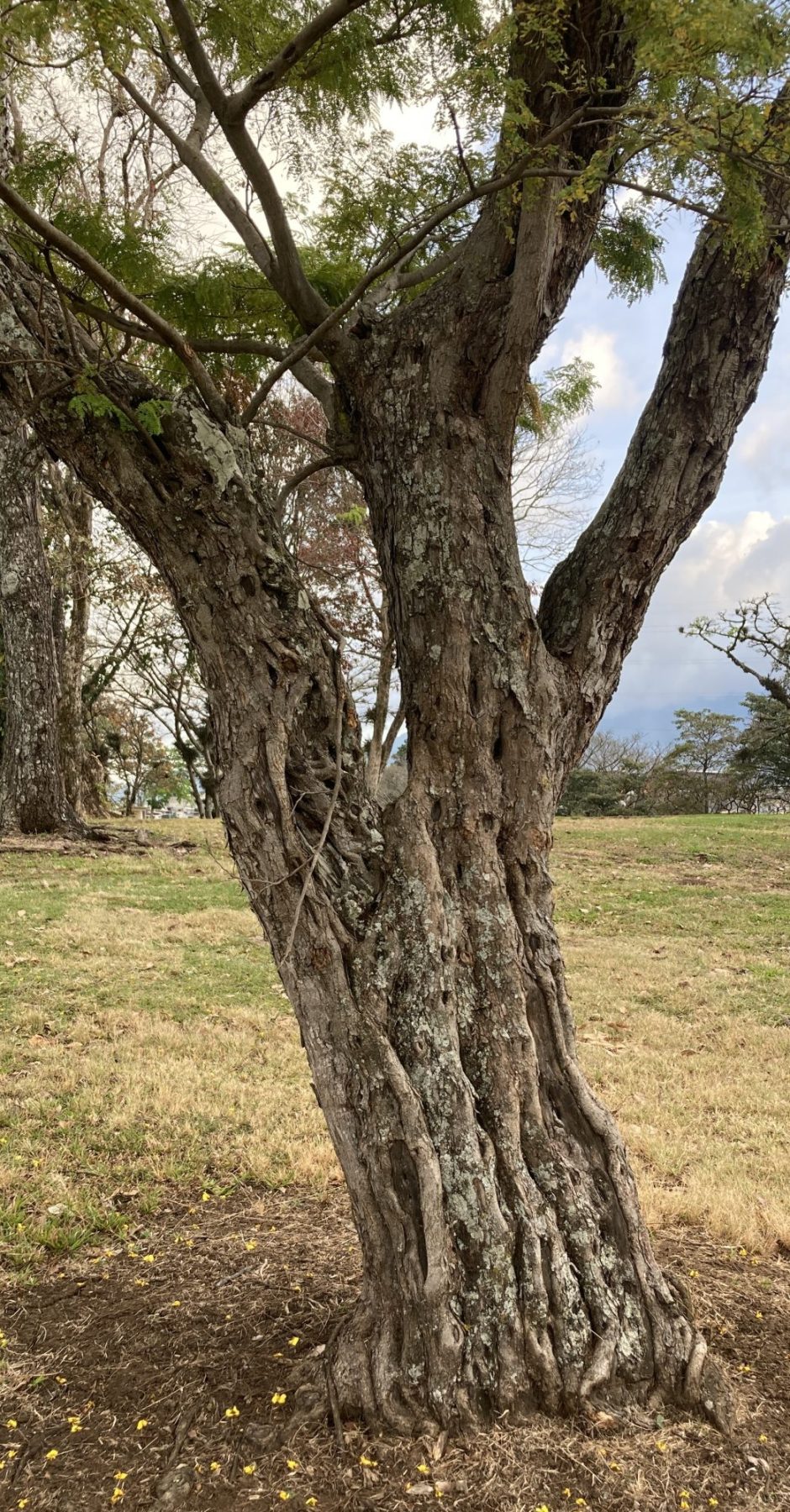
Description: Saíno has an angular, bending trunk (35-40cm) with a very irregular cross-section. Far from cylindrical, the bole is contoured by abundant, curtain-like vertical folds covered with thin, somewhat flakey, light-tan bark. Branches are stout and stiff, giving rise to an equally irregular, open crown.
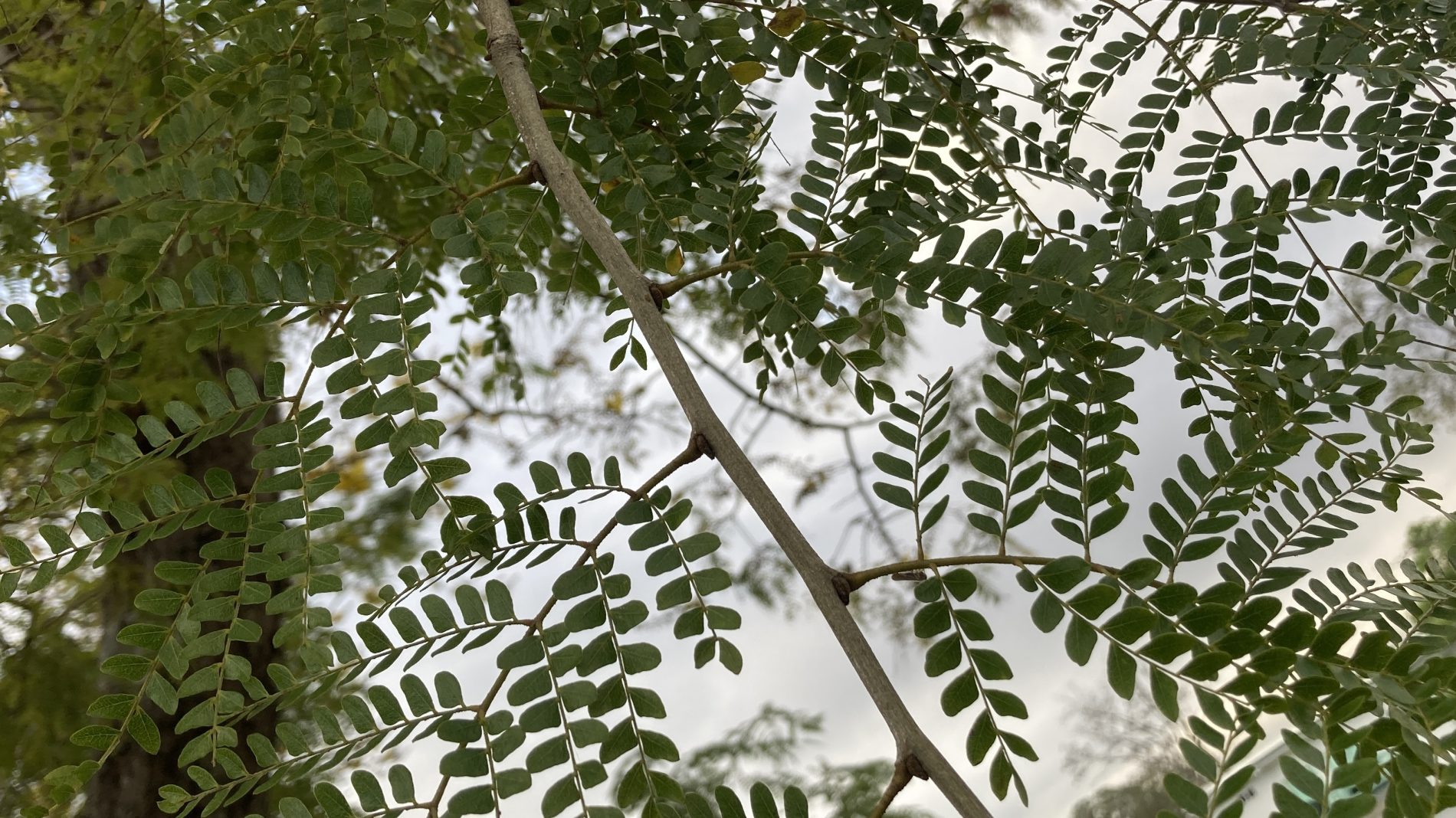
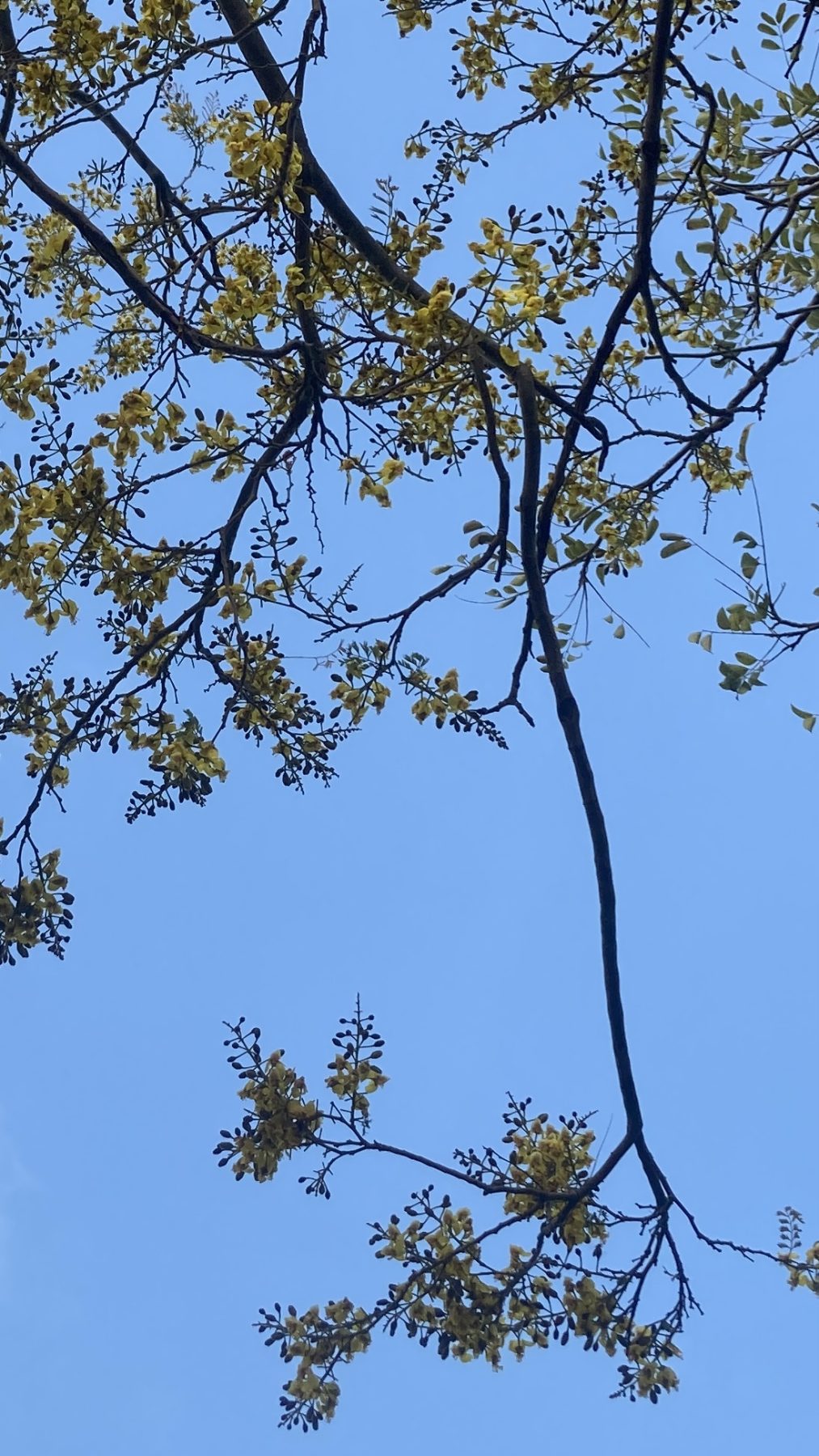
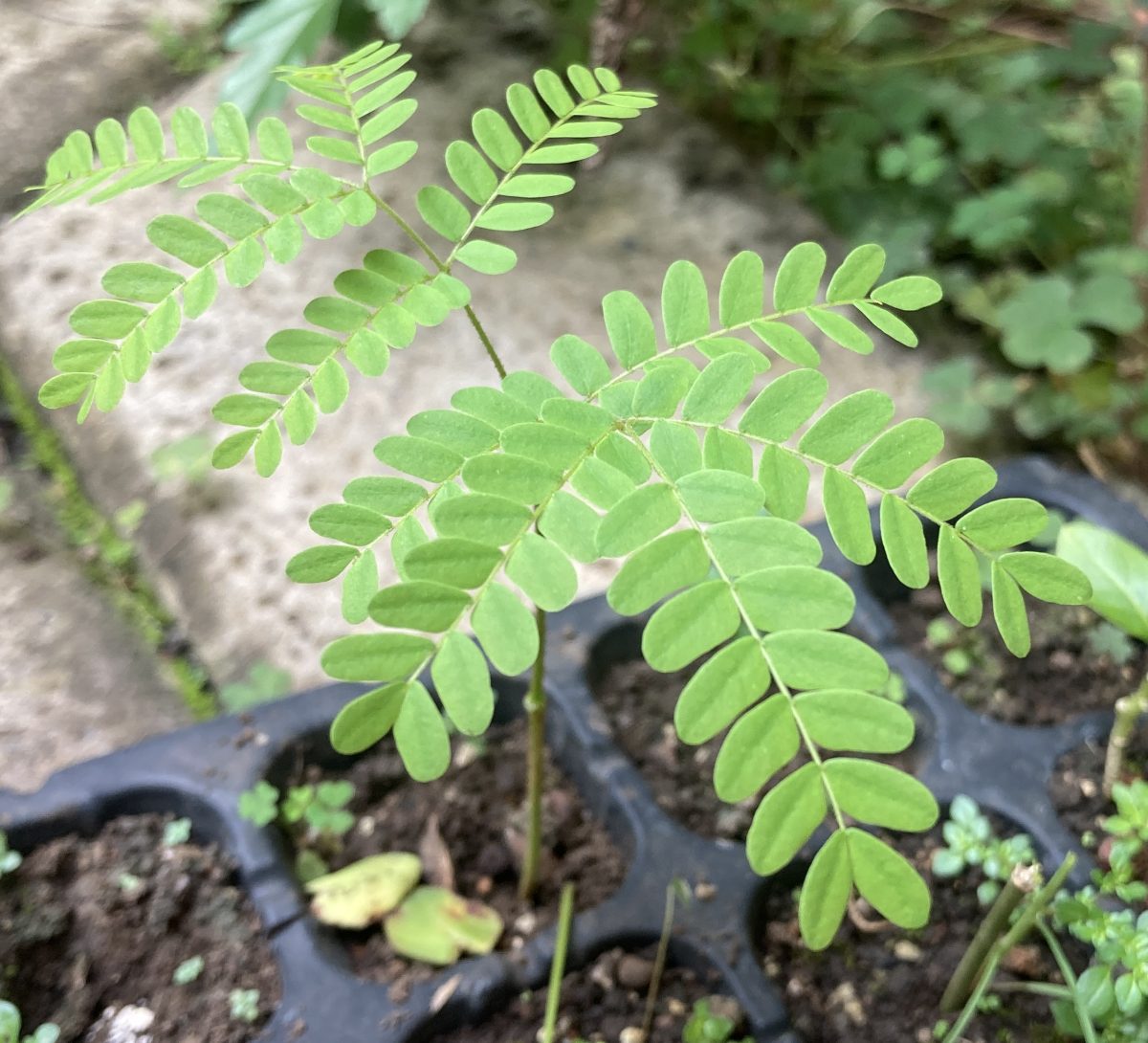
Leaves (20 x 12cm) are bipinnate and alternate, each composed of about nine pairs of pinnae plus one more located at the end of the petiole. The leaflets themselves are broad, have an unusual, roughly rectangular shape, and – being supported from one side – bear some resemblance to miniature “flags”. New foliage is generated from February to April, soon after flowering has begun. At this time, the young, flaccid leaves are eye-catching, due to their pastel shades of green and orange and their translucence.
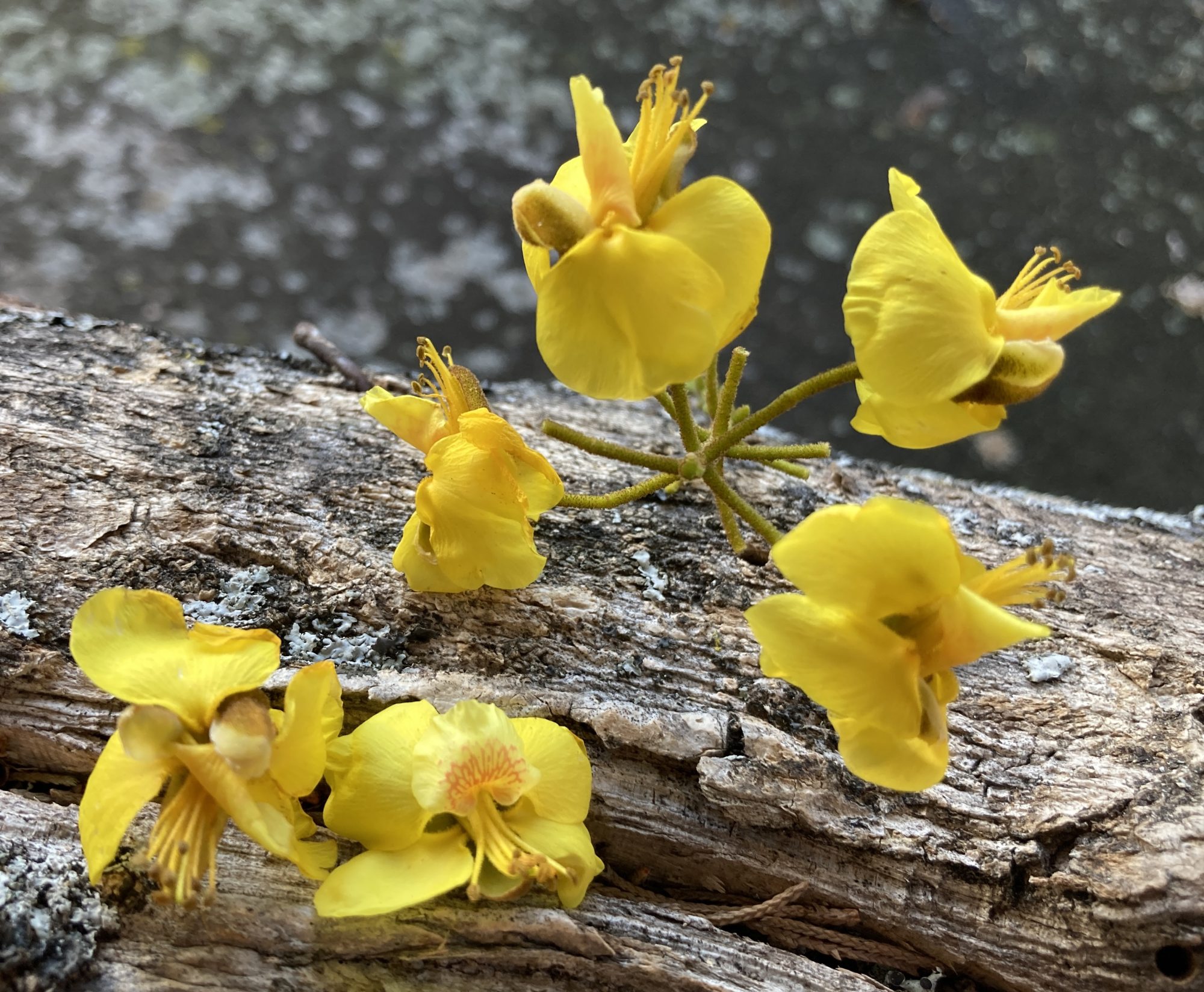
Flower racemes emerge from leaf axils, each bearing some 25 olive green buds covered with a fine, rust-colored pubescence. The buds open into showy yellow flowers (2cm) with five unequal petals, 10 brown-anthered yellow stamens, and a central, green-tipped pistil.
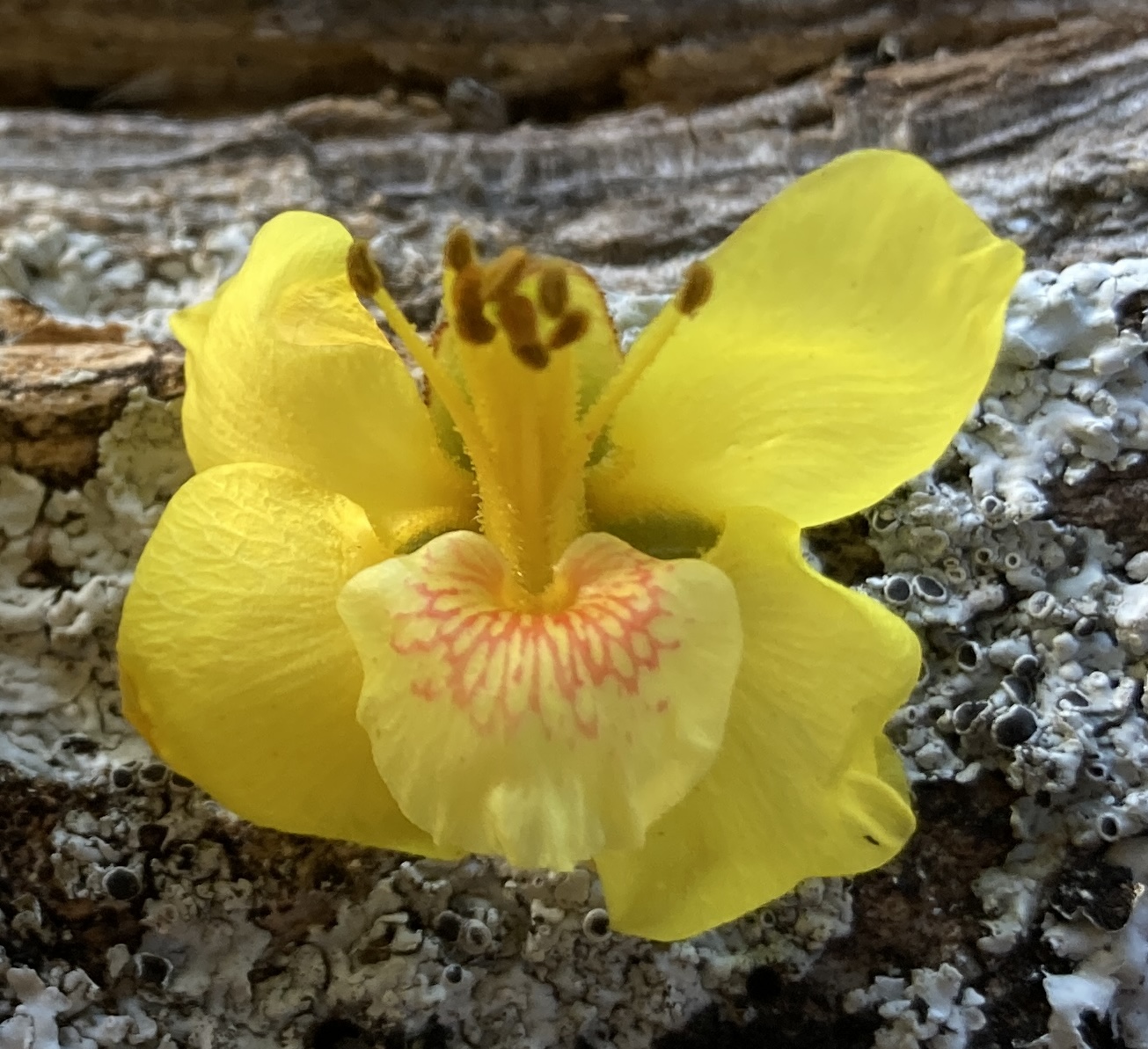
The central petal includes an ornate design resembling a fine, pink, web. Trees are fertile from February through March.
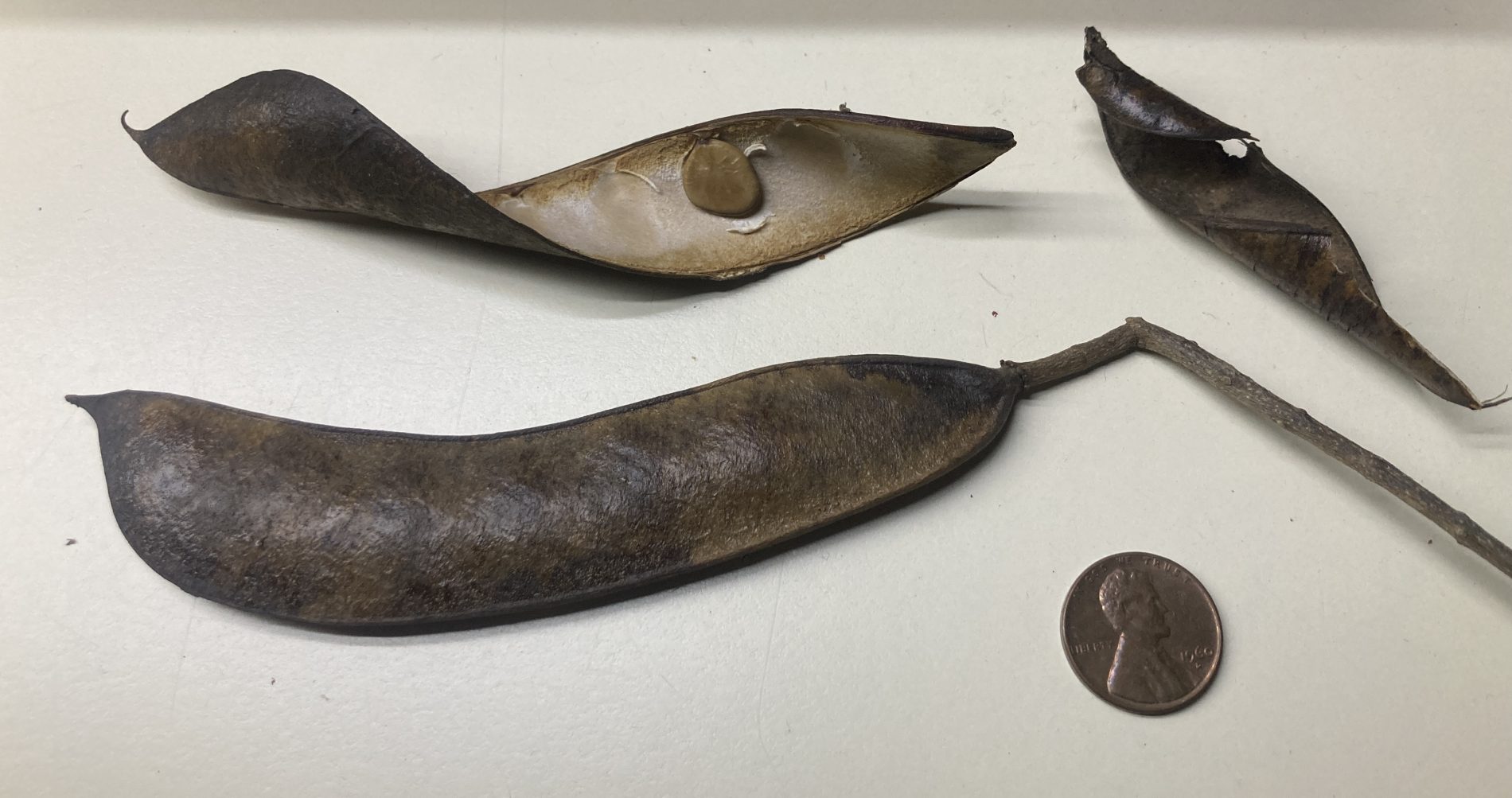
Fruits (12cmx2cm) expand rapidly into thin, flat, stiff, dark-brown and somewhat glossy pods. Becoming slightly wider distally, they resemble small machetes. Inside, they house 5 or so, disk-shaped, tan seeds. When ripe, the pods desiccates in the late dry season sun, split longitudinally, and release the seeds. Each half curls and tightly spirals into a tight, cylindrical tube. Fruiting lasts from May till June or July.
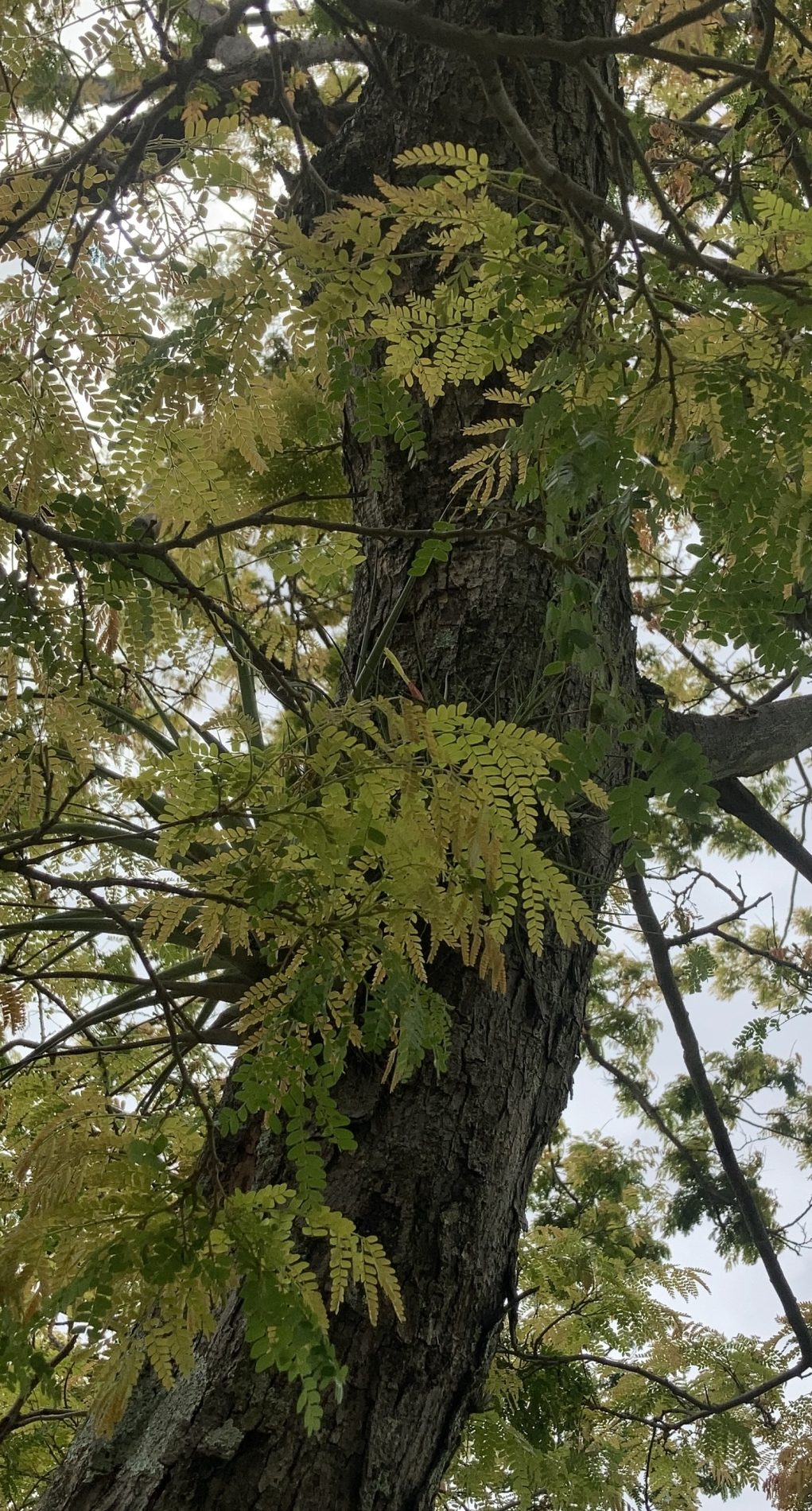
Similar Species: The unique shape of the leaflets possessed by Saíno’s bipinnate leaves is an identifying feature that no other tree growing in this region shares. In addition, the distinctive odor given off by the crushed foliage is not seen in other types of plants.
Natural History: Saíno flowers are visited and pollinated by bees and other insects. The seeds are probably most effectively dispersed by seed pods that open, curl, and then are blown from the tree by the strong winds typical of the dry season. It is even possible that the seed pods roll along the ground for some distance, given the cylindrical shape they take on after opening.
Uses: According to Mundo Forestal, Saíno is a drought-resistant, secondary forest species suitable for reclaiming degraded soils. Its branches can also be used as living fenceposts.
Range: In Costa Rica, Saíno is restricted naturally to the dry northwest, although it has been planted as an ornamental in other regions. The tree ranges from Mexico to Panama.
 Trees of Costa Rica's Pacific Slope