Croton schiedeanus Schlecht
COLPECHI, COPALCHI
Euphorbiaceae
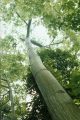
Occasional understory evergreen tree (10-15 m) found primarily along roadsides and stream banks where insolation is abundant and secondary growth thrives. This is a widespread and common tree in Costa Rica and it is perhaps most notable for its extensive use in traditional medicine.
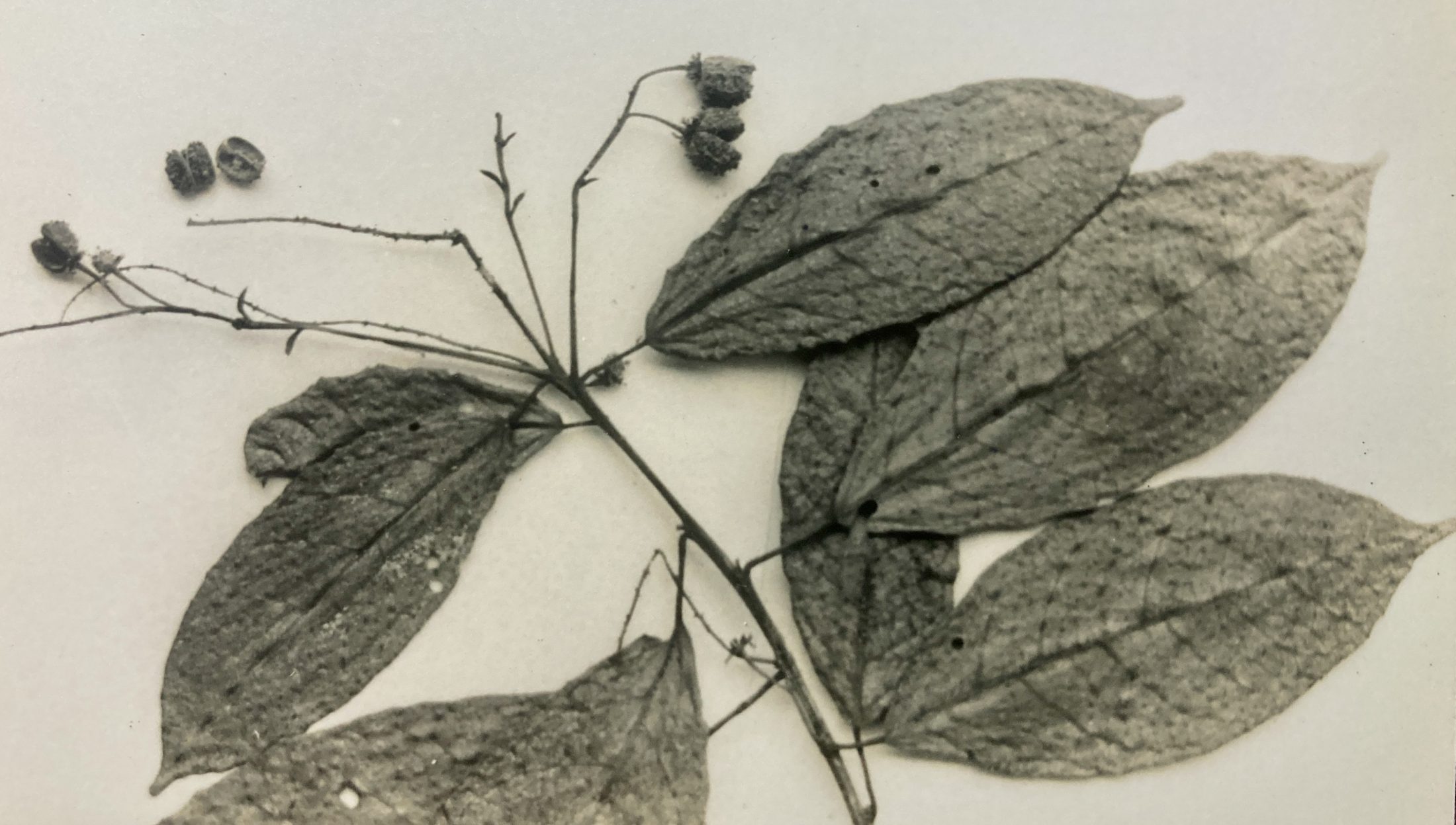
Description: Colpechi has a small (15-20 cm), cylindrical and regular trunk that is covered with smooth, dark brown bark. Branches occur thickly along the bole and they create a dense though narrow, dark green crown. Twigs, petioles and leaf mid-ribs are brown and minutely pubescent. The freshly pealed bark exudes a strong, penetrating, medicine-like odor of menthol or pine. Leaves are simple and alternate, having a dark-green color and a thin, flexible texture. The blades themselves are smooth and elliptical in shape, with stubby drip tips and very long, flat-topped petioles (3 cm). Variable in size, leaf dimensions range from 10-21 cm in length and from 4-8 cm in width.
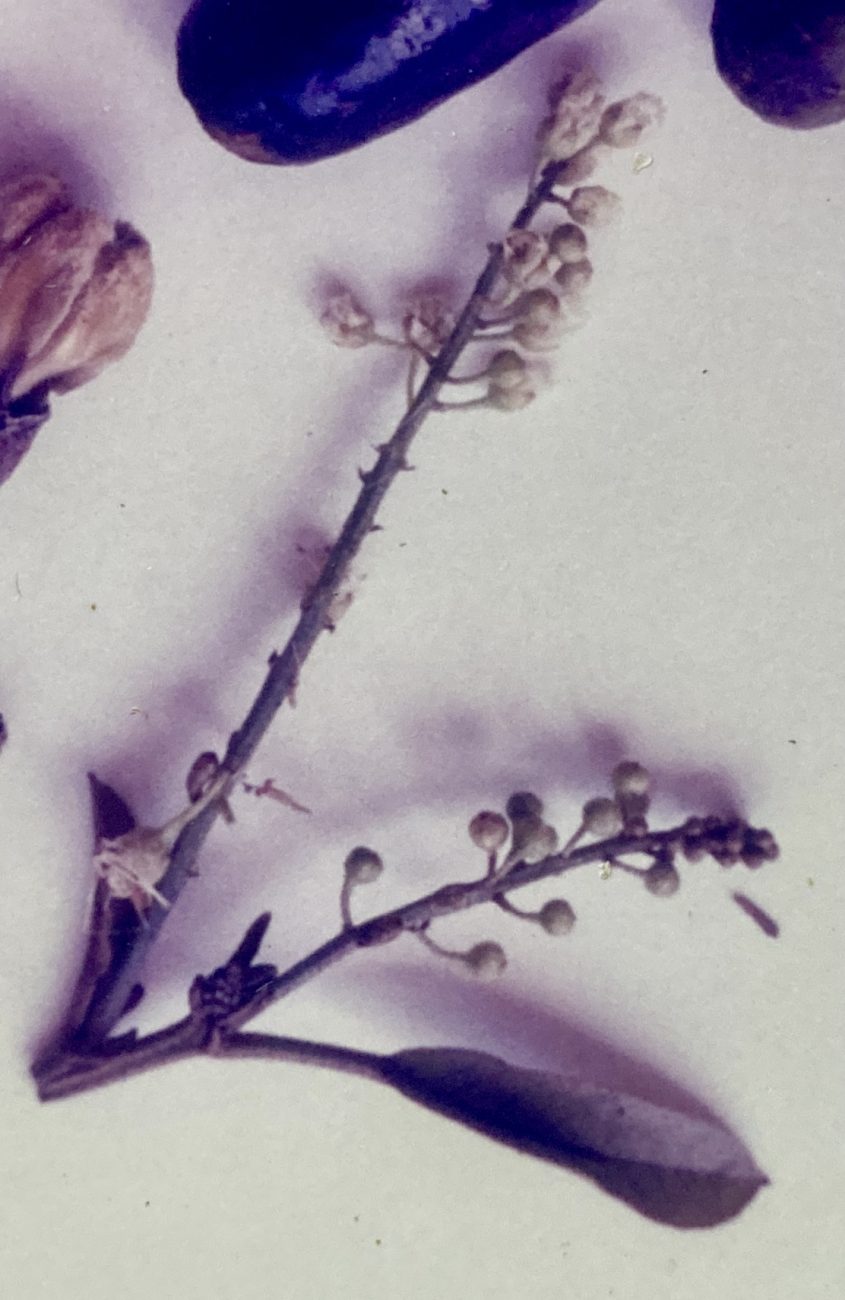
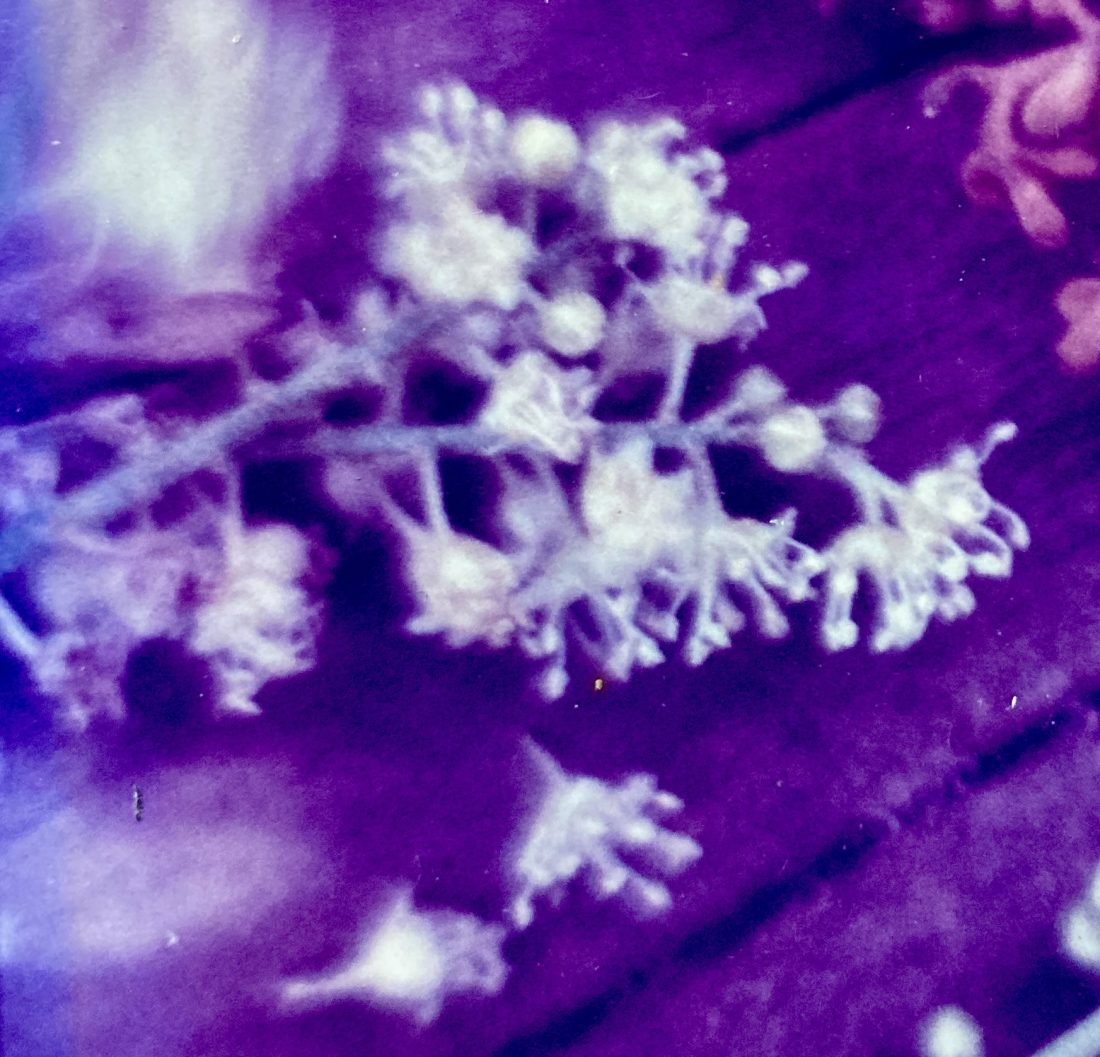
Flowers appear in stringy, axillary racemes (10 cm). Male and female floral structures are borne by different blossoms, and the two flower sexes are found spatially segregated on the same raceme – a characteristic that is not uncommon among members of the Euphorbiaceae family. The more abundant male flowers (about 20) cover the distal end of the fuzzy-looking spike while female flowers (about five) are clustered near its mid-section. The male flowers (5 mm in diameter) contain five small pale sepals; five tiny, white translucent petals; and ten short stamens with disproportionately large anthers. Colpechi flowering periods are irregular and blossoms may appear on individual trees at almost any time of the year – with the exception of the early wet-season months of May, June, and July. However, definite flowering peaks – recognizable for their universally prolific nature and high degree of synchronization – occur several times during the summer months of December through April. These peaks are brief and randomly timed.
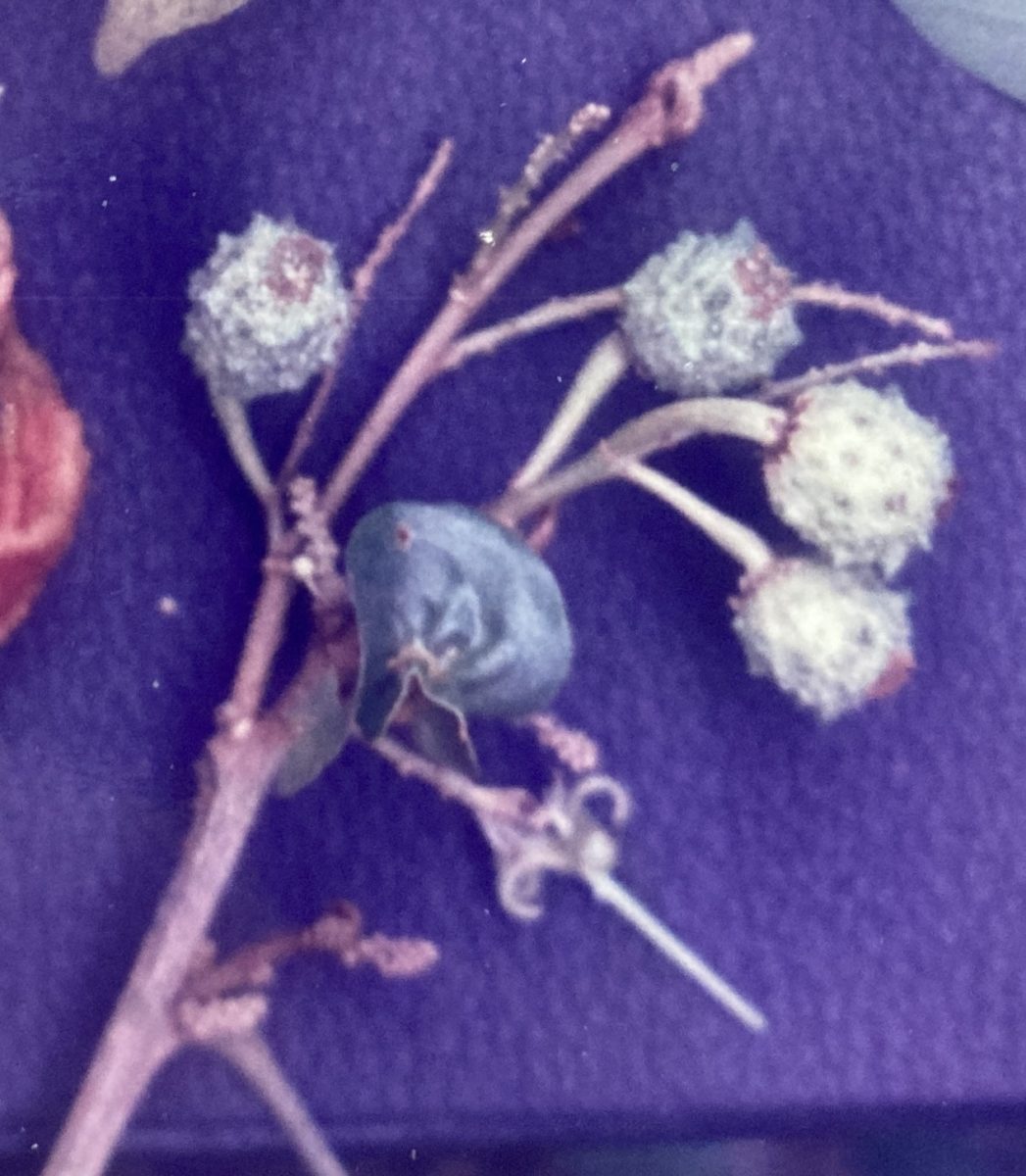
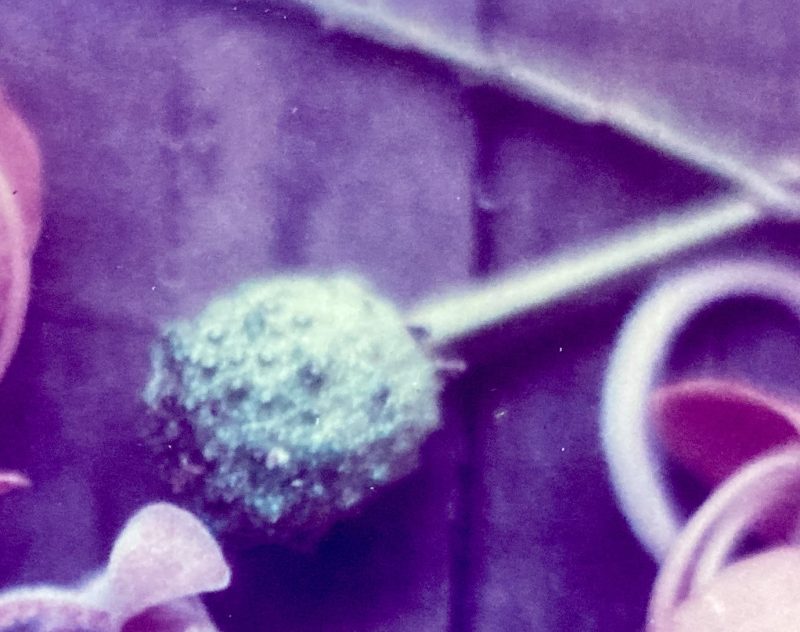
Fruits are dry, woody capsules (1 cm) that grow from the ovaries of the female flowers on the old racemes. Green and spherical when mature, each capsule is textured by small protuberances that cover its outer surface. Drying on the tree, the capsule has a thin outer skin that splits into six sections, opening from the bottom up – umbrella fashion. The capsule’s three inner compartments then separate and open, allowing three brown seeds to fall to the soil. Harvests continue – at low levels – all year round.
Similar Species: Colpechi leaves, possessing characteristics that are shared by most rain forest trees (simple alternate arrangement, elliptical shape) are not very useful for identification purposes. Fortunately, this tree is almost always fertile, with either fruits or flowers visible amid the foliage and near branch tips. These structures are distinctive and should facilitate the recognition of this species in the field.
Natural History: Flowers are pollinated by a variety of insects, especially bees and wasps. During periods of profuse flowering, the hum of insect activity around the blossoms is clearly audible from a distance of several meters. Fruits are not well dispersed – apparently falling directly to the forest floor once released from the capsules. Colpechi is a light-loving, secondary forest species that is found most abundantly in light gaps produced by natural tree-falls, on stream banks, and alongside roads and trails.
Euphorbs, as a general family trait, maintain flowers whose sexes are separate (bisexual blossoms are much more common). Often, the distinct flower sexes are restricted to different trees (such a species is said to be dioecious). Pilon (Hyeronima oblonga) is an example of such a Euphorb. In Colpechi, the two types of flowers appear on the same tree but on different portions of the raceme – a trait shared by the members of the Croton, Sapium, and Mabea genera. In each of these cases, the female flowers – and later the fruits – are borne on the basal portion of the inflorescence. In Croton, the male flowers also mature earlier than the female flowers, creating a temporal barrier between the two types of blossoms and diminishing the chances of that self-pollination will occur.
Uses: Leaves of Colpechi have been placed on wounds to help reduce inflammation and swelling (Q. Jimenez, personal communication, September 1990).
Distribution: In MANP, Colpechi is found along road, trail, and streamsides, particularly along the Perezoso trail. It ranges from Mexico through South America.
 Trees of Costa Rica's Pacific Slope