Guettarda sanblasensis Dwyer
Rubiaceae
Occasional, briefly deciduous, understory tree (10-15 m) frequenting the lower strata of better-lit primary forests and light gaps. Guettarda is an unremarkable species whose most notable features include light-green, distinctly veined foliage and velvety, purple fruits.
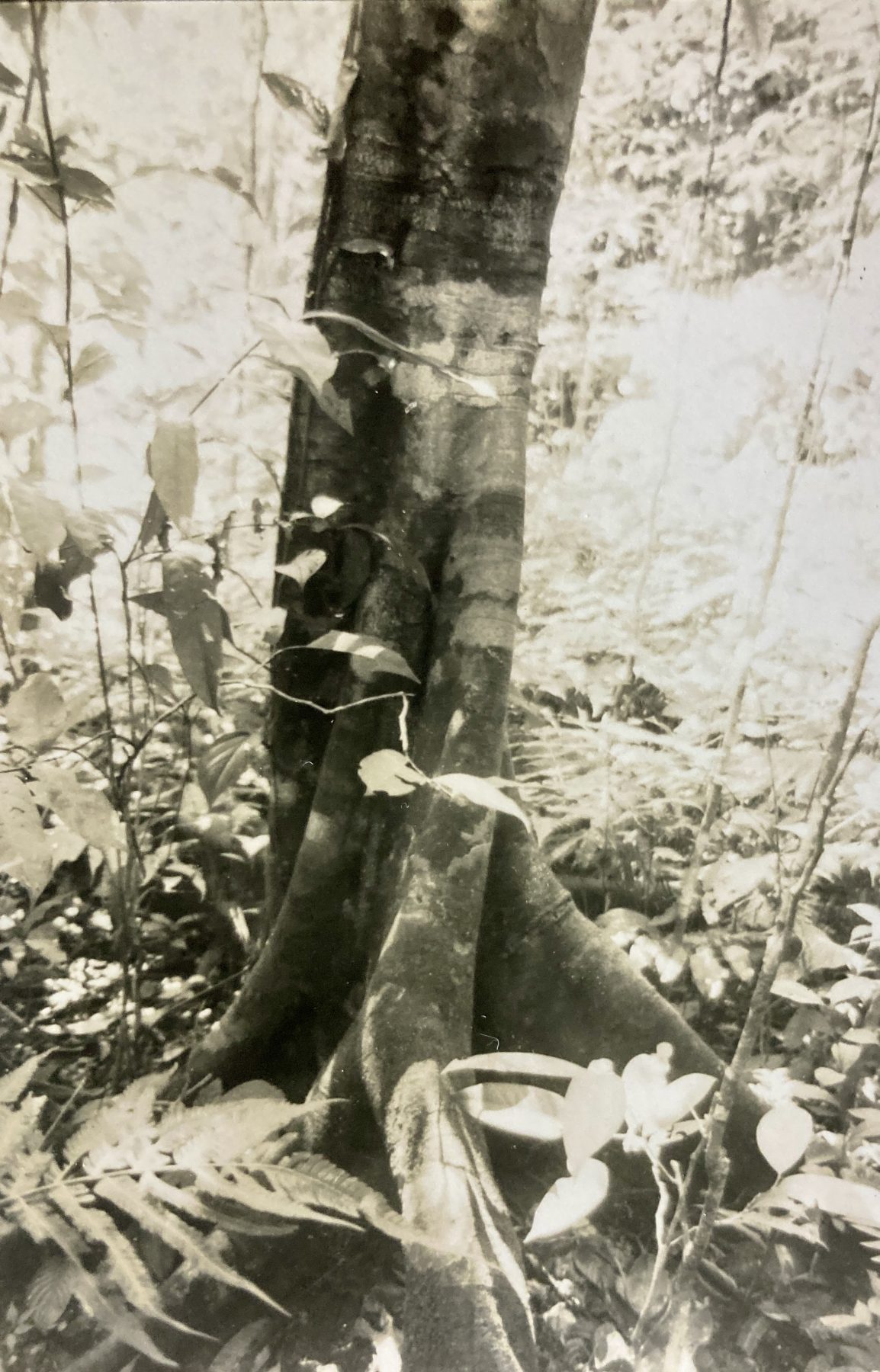
Description: Guettarda trees are generally small, with trunks that rarely exceed 25 cm in diameter (one individual, found growing near Punta Serrucho, measured 30 cm in diameter and was 20m high). The buttressless bole is cylindrical, (or sometimes slightly folded) and straight, with smooth, gray-green bark that is periodically punctuated – especially on younger trees – by sharp thorns (1-2 cm). Branches occur along the upper third of the trunk and they form a rounded, dense crown of a single-layer. Leaves, found more or less clustered around branch tips, are large (17-22 cm by 5-8 cm), simple, and oppositely arranged. The wide, elliptical, smooth blades are supported by very long (2-3 cm) petioles. Drip-tips are small or lacking entirely. A strongly impressed and easily recognizable pattern of leaf veins is present on Guettarda foliage and this characteristic proves very useful in the field identification of this species. When viewed from underneath, these bundles of vascular tissue create an opaque, silvery-white, fishbone (pinnate) pattern framed against the translucent green of the surrounding leaf mesophyll tissue. A deciduous tree, Guettarda leaves yellow and are rapidly shed in March. Trees remain leafless until early May.
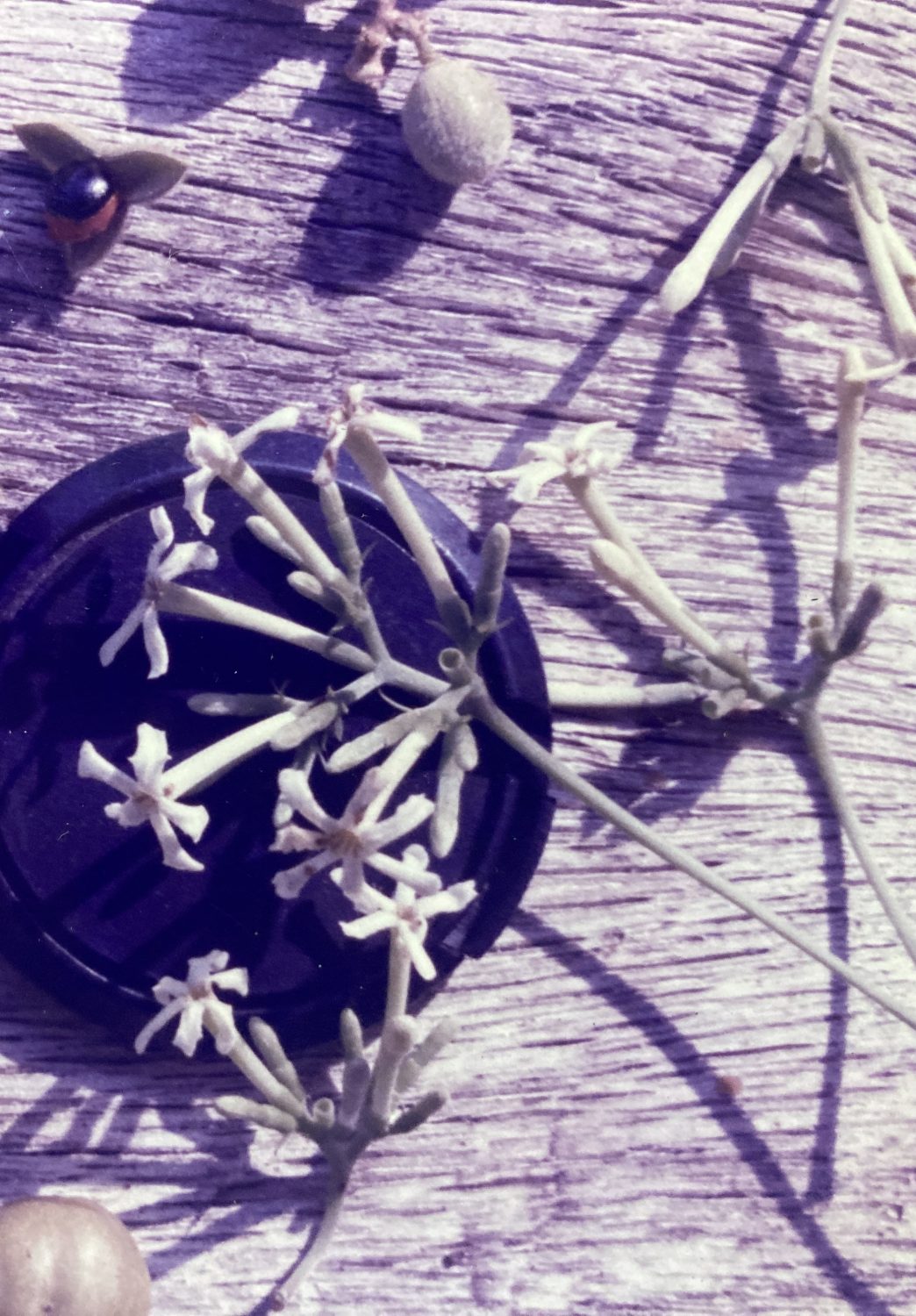
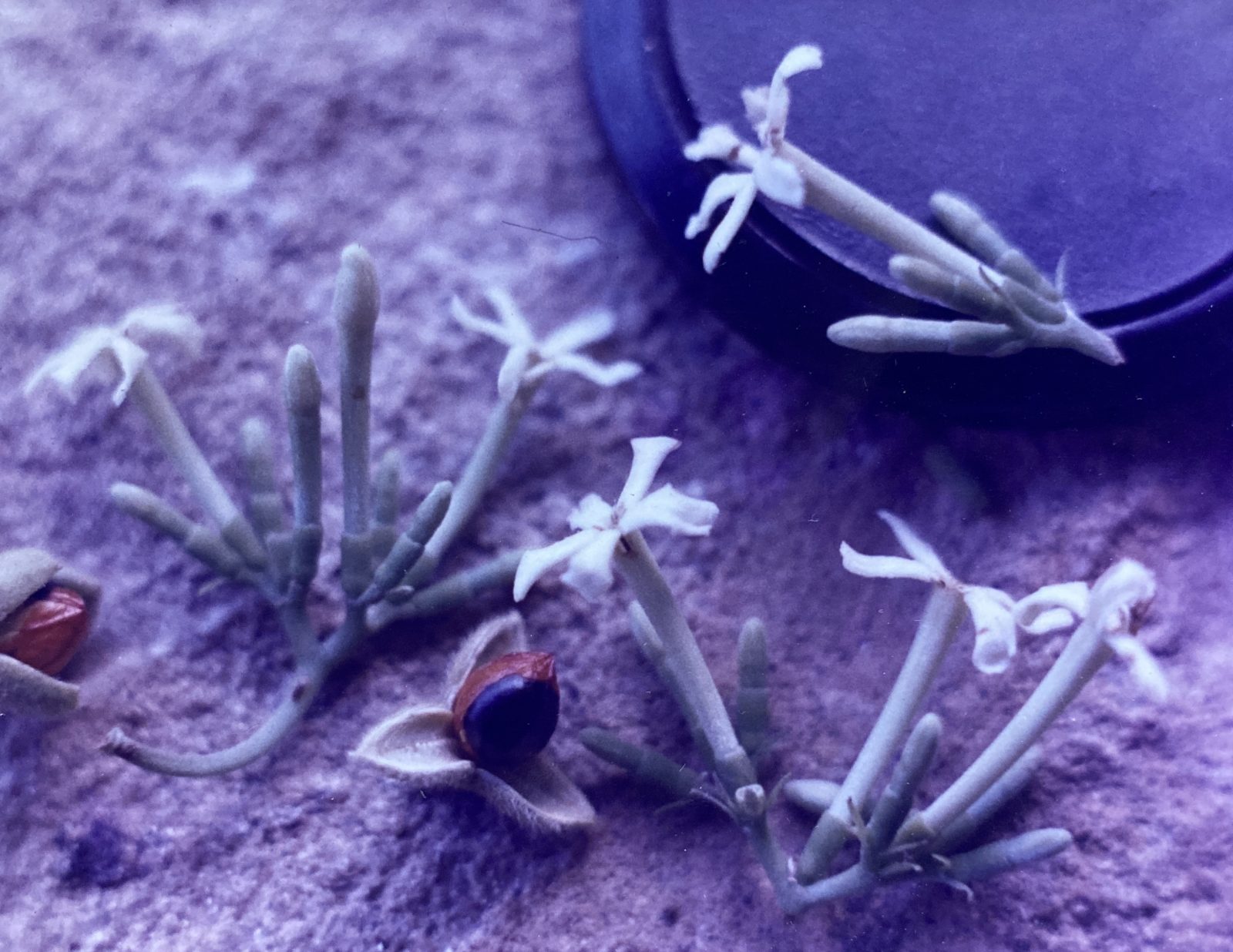
Flowers appear shortly after re-foliation, growing slowly from spindly panicles (8 cm long or more) joined to leaf axils. Each inflorescence generates about ten off-white or pale green blossoms (2 cm long by 1 cm in diameter). Dominated by a narrow, silky-textured corolla tube that flares into in six (sometimes five) rectangular petals, the flower also contains six (sometimes five) tiny stamens attached to the upper neck of the tube and a small stigma located just below the stamens. At its base, the corolla is mounted on a green, cup-like calyx. Thanks to the length of the long panicle stalks, the flowers are positioned just below the fresh foliage on the branches. Quite inconspicuous nevertheless, their aromatic and sweet odor serves to attract insect pollinators. Flowering periods are precisely timed, annual events, though they are only moderately well synchronized between individuals. Blossoming begins in late June and lasts through early August.
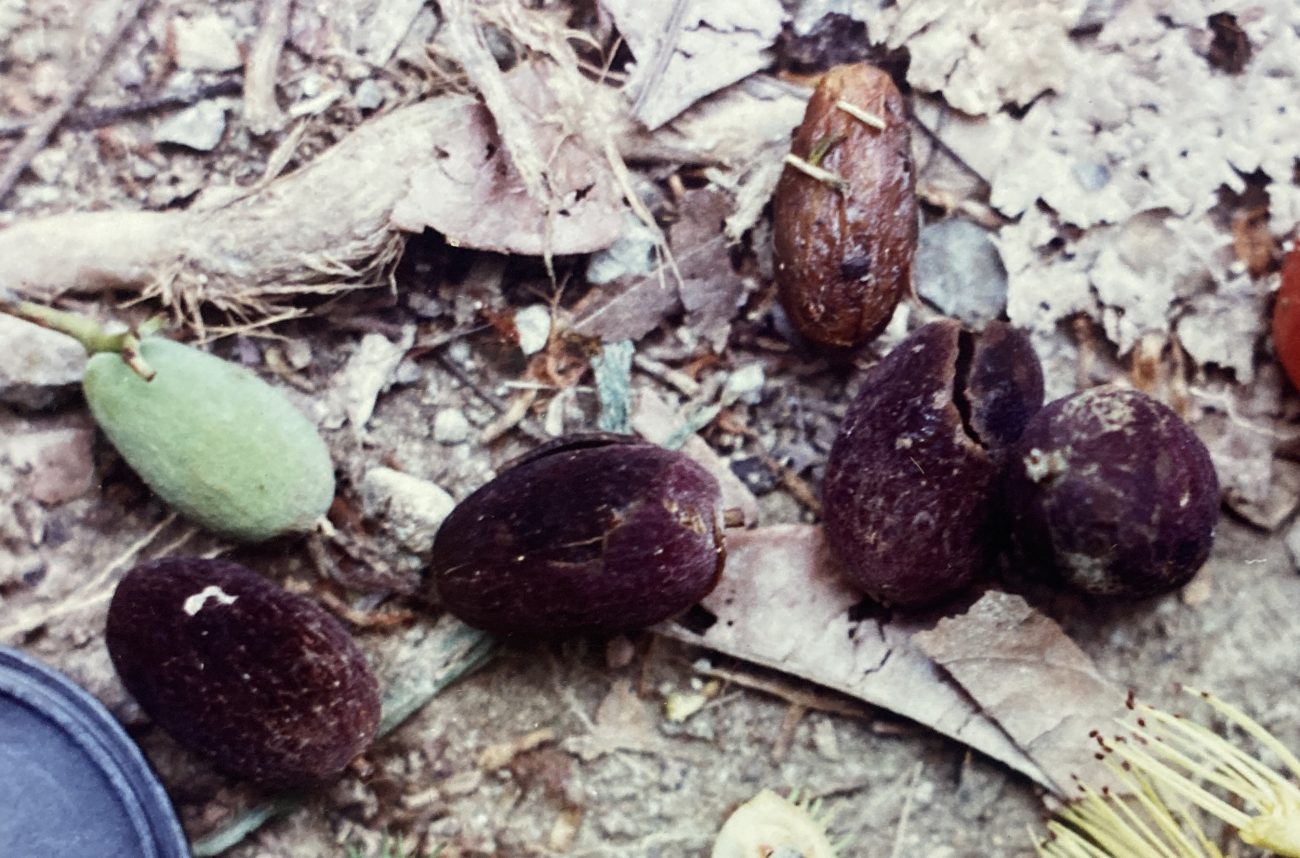
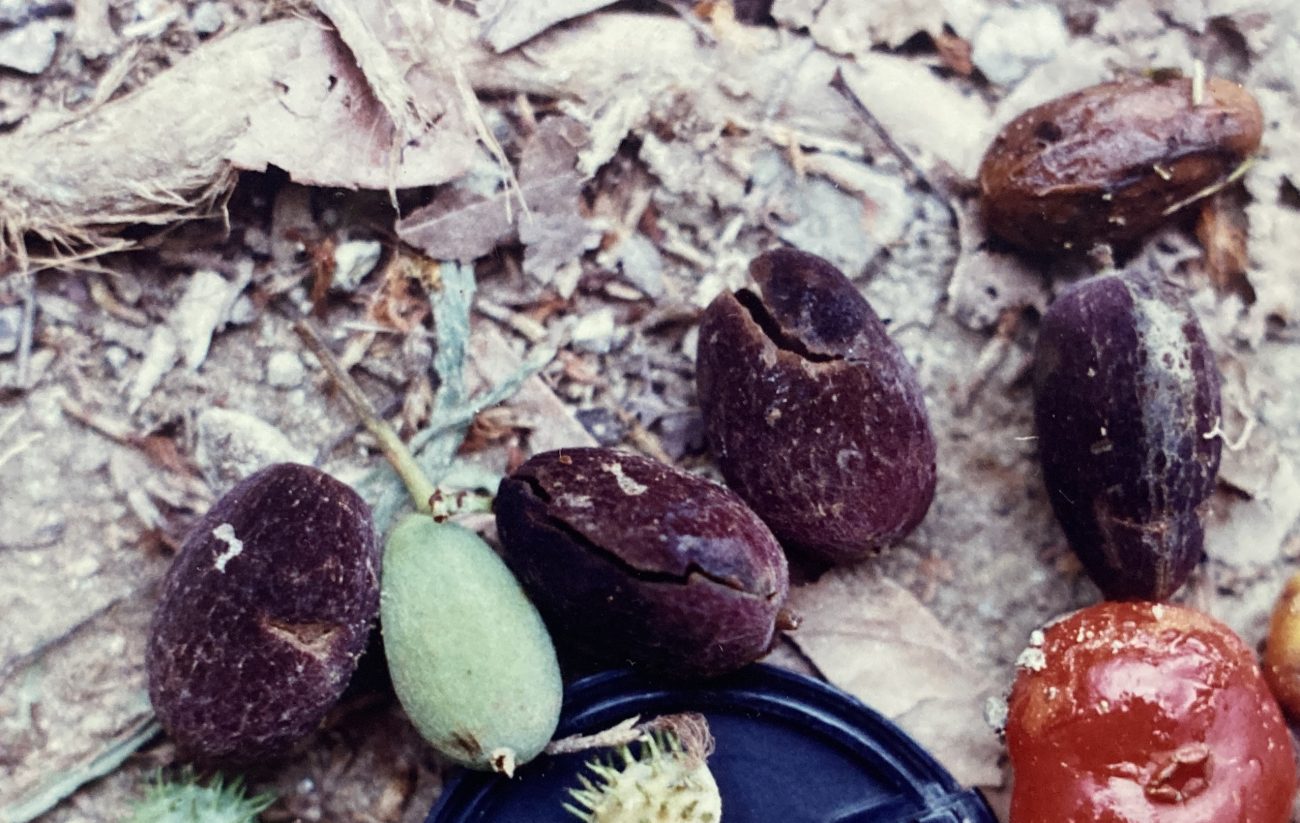
Fruits are cylindrical drupes (2.5 cm by 1.5 cm) that bear distinctive, terminal points or snouts. Initially covered by green, silky and leathery skin, they persist in the canopy for four months during development. Finally ripening, the drupes change color to deep purple. Each consists of a thin layer of moist, whitish pulp and a single, fibrous, cylindrical pit (2 cm). The annual harvests are consistently prolific in nature, and they last from late November through early January. Presumably, Guettarda seeds germinate with the first rains of the wet season – sprouting seeds (and seedlings) are rarely seen and their viability appears to be low.
Similar Species: Prominent, silver veins and long petioles serve to distinguish Guettarda foliage from that of other Rubiaceaes and Myrtaceaes – leaves that are also rounded and oppositely arranged. Furthermore, no other tree from either of these two families possesses Guettarda‘s (admittedly few) trunk thorns.
Natural History: Guettarda flowers are pollinated by long-mouthed insects. Arboreal mammals (squirrels, monkeys) eat and disperse its purple drupes. Since the fruits tend to accumulate underneath parent trees during harvest, ground dwelling mammals may play a dispersing role as well.
Distribution: In MANP, Guettarda is found in well-lit and well-drained patches of primary forest in Punta Catedral and Puerto Escondido. In Costa Rica, this species is also known from the Osa Peninsula and the Cordillera de Guanacaste.
 Trees of Costa Rica's Pacific Slope