Lindackeria laurina C. Presl
CARBONERO
Flacourtiaceae
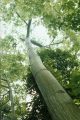
Rare understory evergreen tree (4-8 m) preferring the higher insolation levels of thinner primary forests, trailsides or streams. This species is notable for its snow-white flowers and three-part fruit capsules with unusual, pastel-colored seed arils.
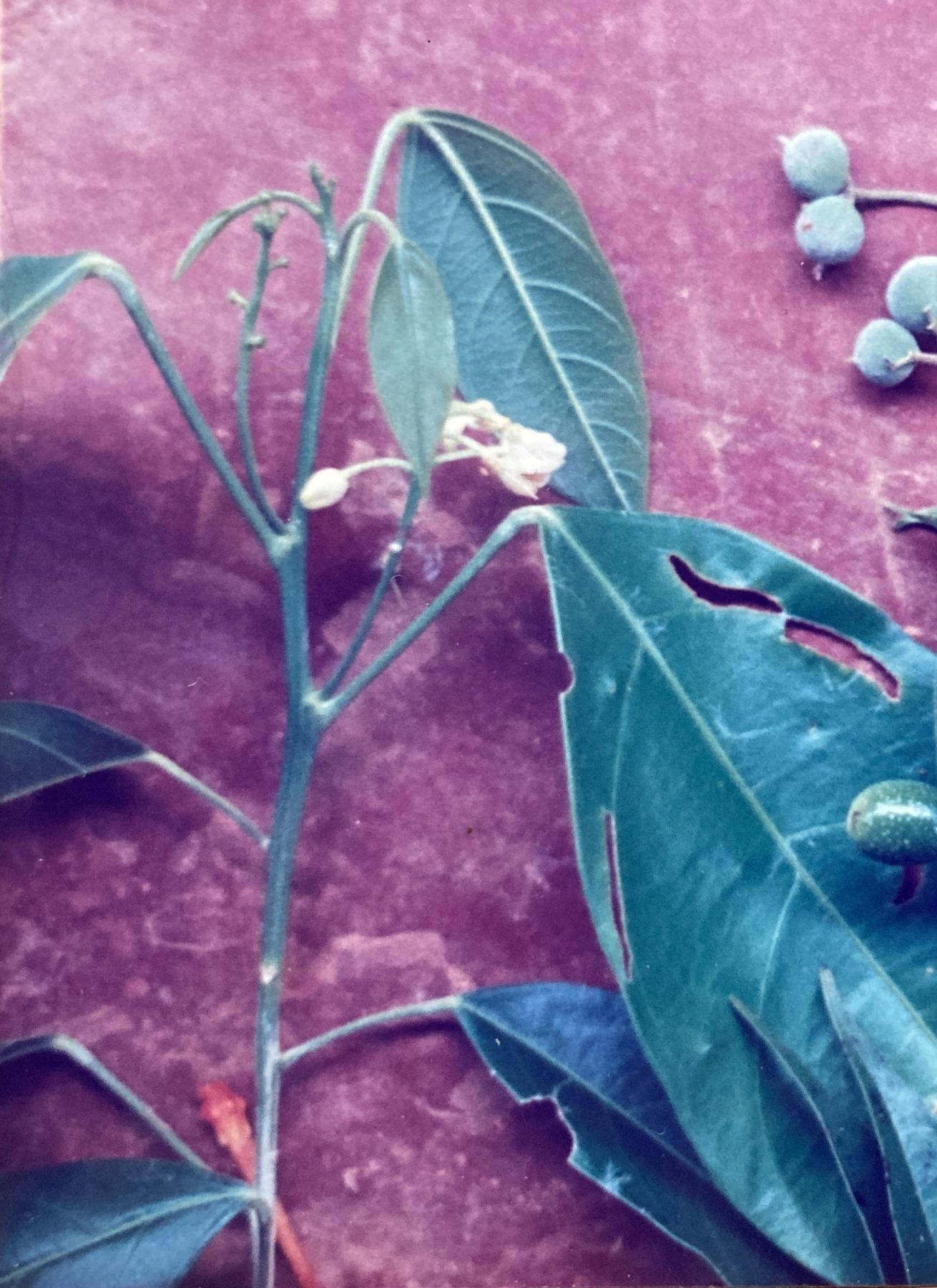
Description: This small tree has a trunk whose diameter rarely exceeds 20 cm and that usually measures only half this size. The creme-barked, cylindrical bole gives rise to upwardly arching, flexible branches that bend and droop under their own weight. Lindackeria’s crown, composed of relatively few of these limbs, is narrow, thin, and airy. Ridged and porous twigs give rise to simple, alternate leaves of variable size (15-15 cm in length by 4-9 cm in width). Sporting very long (3-5 cm) petioles that present marked, elbow-like bends just before the blades, Lindackeria foliage has an unusual and characteristically angled appearance. The blades themselves are papery in texture, lanceolate in form, and patterned by sets of forward-arcing secondary veins that etch out U-shaped designs.
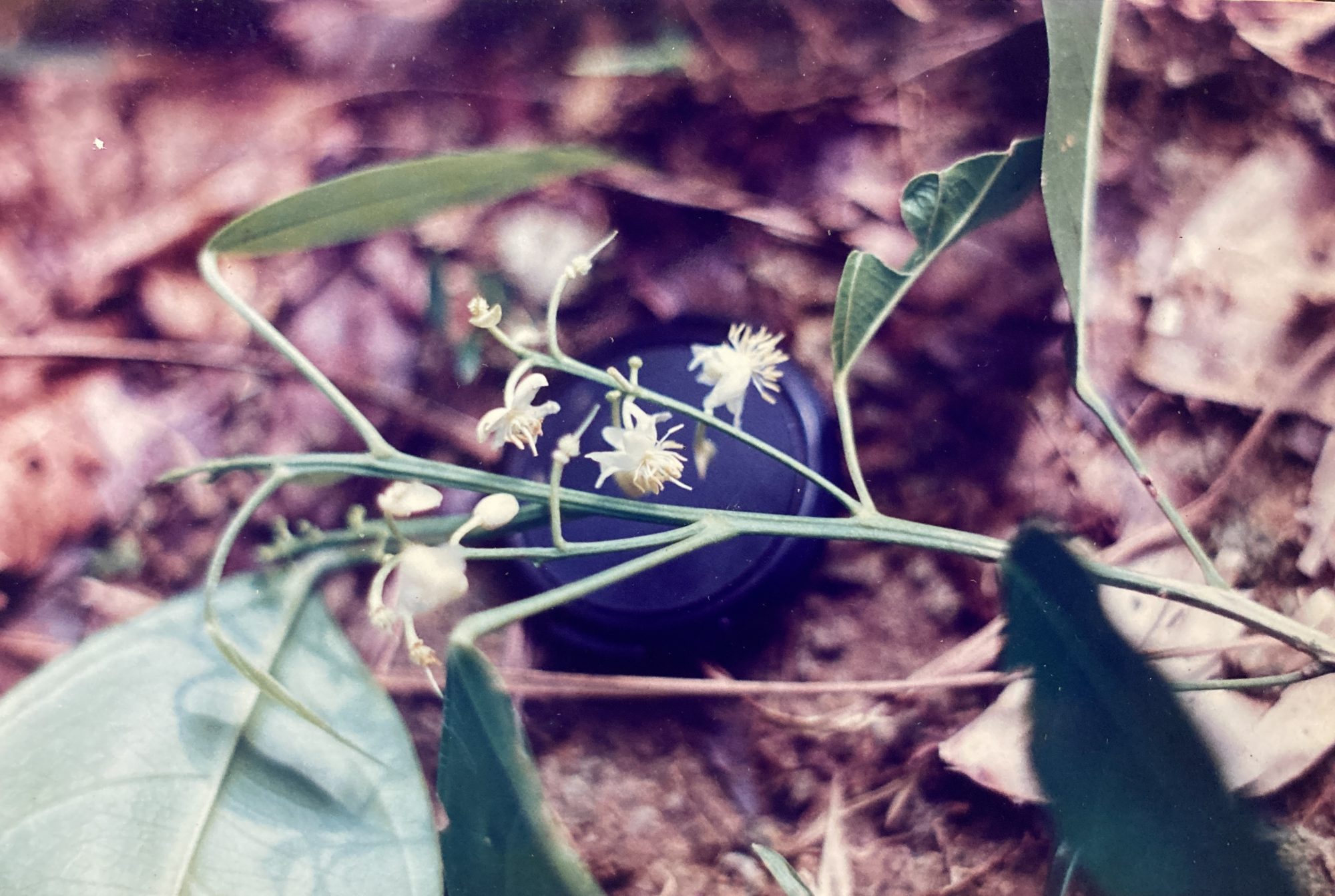
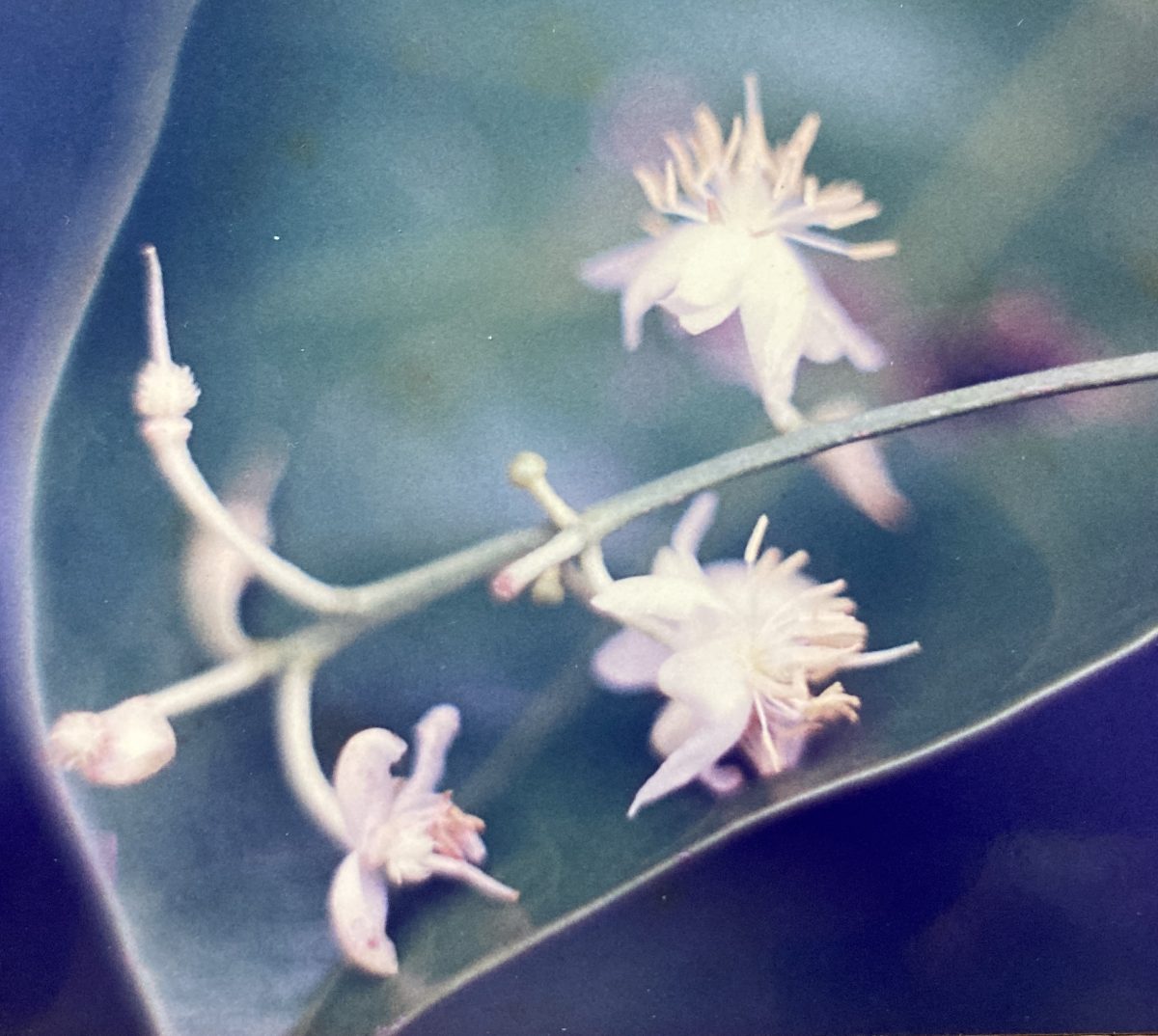
Snow white flowers (1 cm) grow from small, axillar panicles. Each is composed of eight narrow petals that are bent backwards, exposing a central cluster of 16 yellow-anthered stamens and a slightly longer white pistil. Three, cupped and scale-like sepals compose the calyx. Flowering behavior in this species is erratic, occurring in several bursts of activity between early August and early October.
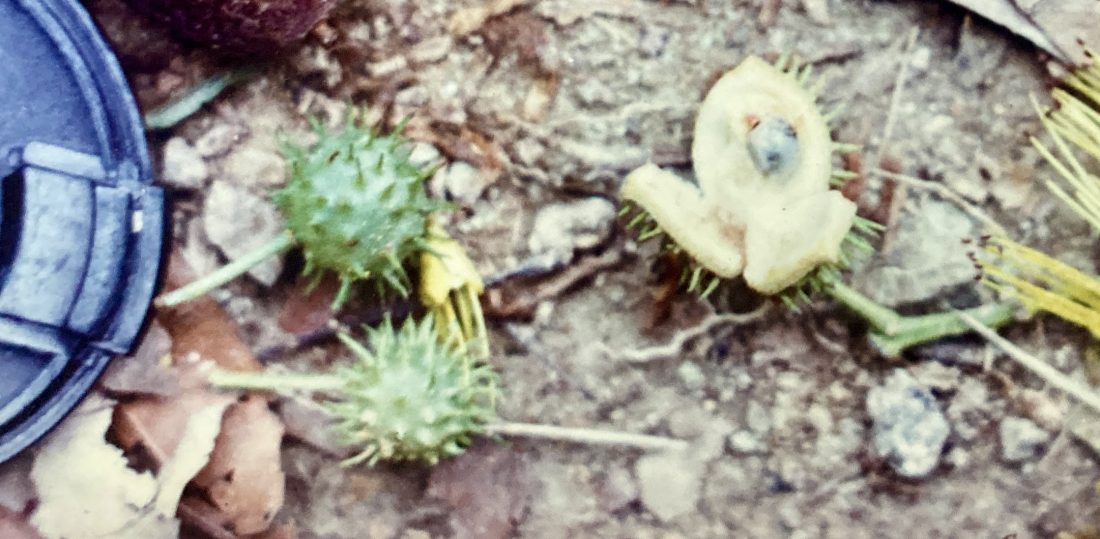
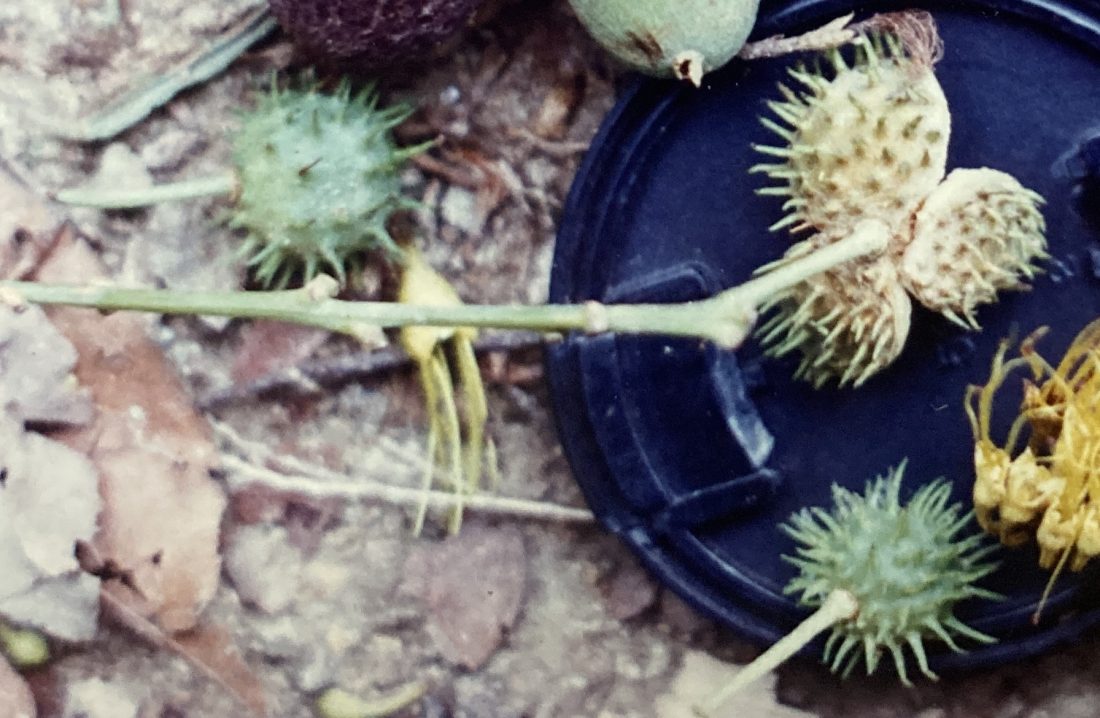
Fruits (2 cm) develop as green, globular capsules covered with stubby, rubbery spines. Upon ripening, each divides into three fleshy sections, revealing as many small, orange-ariled, black seeds (5 mm) inside. Harvests last from December through February.
Similar Species: The long petioles of Lindackeria leaves coupled with the crooked, wrist-like bend that they exhibit near their point of attachment to the blade, are hallmark characteristics which serve to distinguish this species from others of its small stature.
Natural History: Lindackeria flowers are pollinated by insects and its seeds are dispersed by frugivorous birds. Lindackeria seems to do best in older secondary or altered primary forests where insolation levels are moderate.
Uses: Lindackeria leaves have been used to cure snakebites in Panama (Flora Neotropica). The heavy, hard, yellow wood is not often used.
Distribution: In Manuel Antonio, this species has been observed along the Lutz road, along the Quebrada Trucha, and amid the better illuminated parts of the primary forest. It ranges from southwestern Mexico to Colombia and Venezuela.
 Trees of Costa Rica's Pacific Slope