Lonchocarpus pentaphyllus (Poir.) DC.
Fabaceae
CHAPERNO, AMARILLON
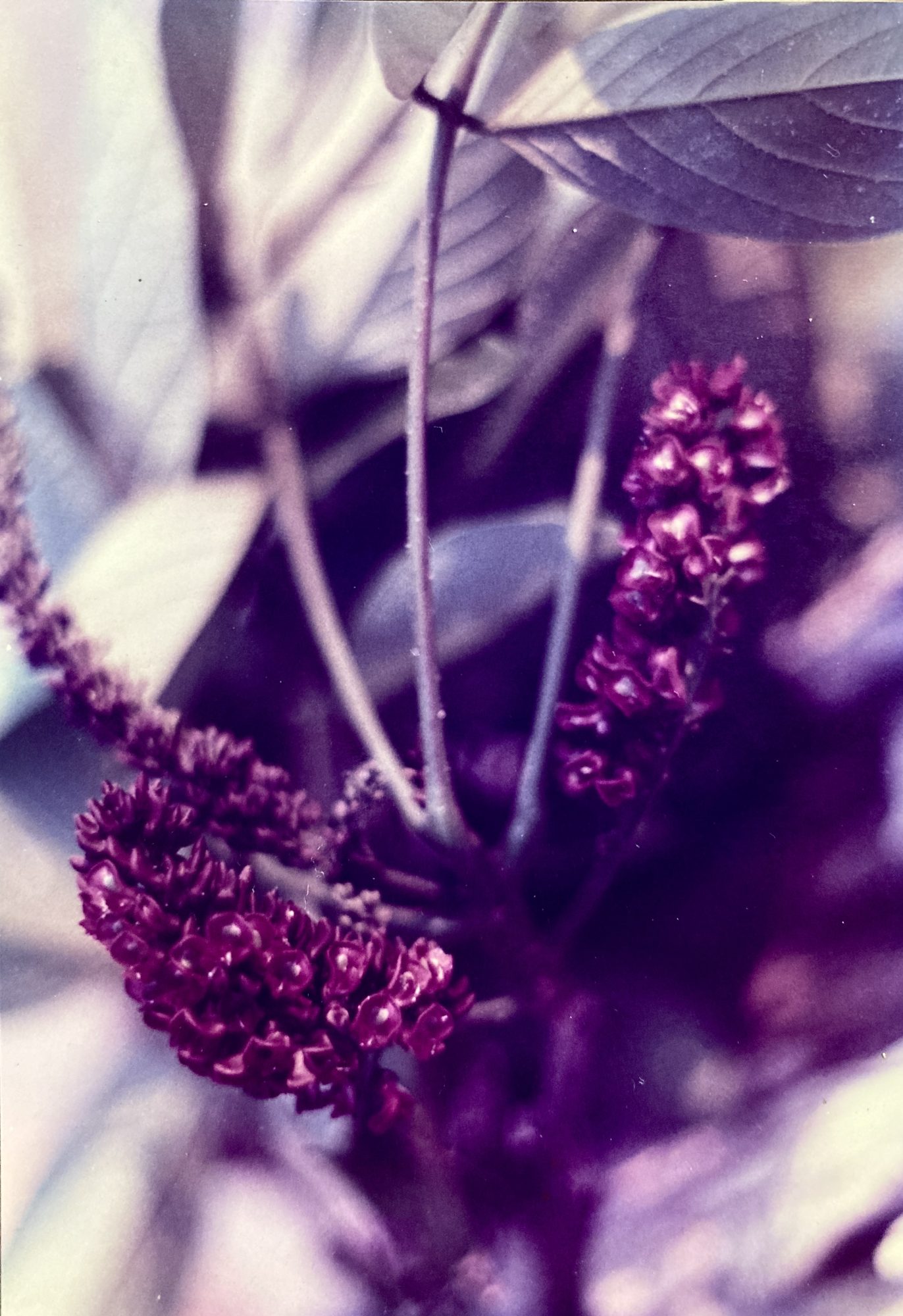
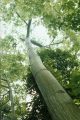
Common or occasional, briefly deciduous, subcanopy or understory tree (15-20 m) found in greatest abundance amid the strip of coastal vegetation lining the Espadilla Sur beach but also scattered thinly inside the deeper forest. Chaperno tends to be a stunted, bent, and twisted tree when growing along the coast but woodland trees are straight and much taller. Flat, papery pods – frequently seen spread over the sand of the upper beach – and tight clumps of purple flowers are hallmarks of the species.
Description: The trunks (60 cm) of forest trees are mostly cylindrical and straight. Lacking buttresses, they are clad in smoothish, gray bark. Branching occurs along the upper half of the bole and the crown they produce is thin, narrow, and very open. In contrast, beachside trees are deformed, low and twisted – at best appearing to be distant relatives of their forest counterparts. Perhaps due to the harsher conditions found along the immediate coast (like driving wind, salt spray, baking sun, and sandy soil), the trees found here remain small, bent and often broken.
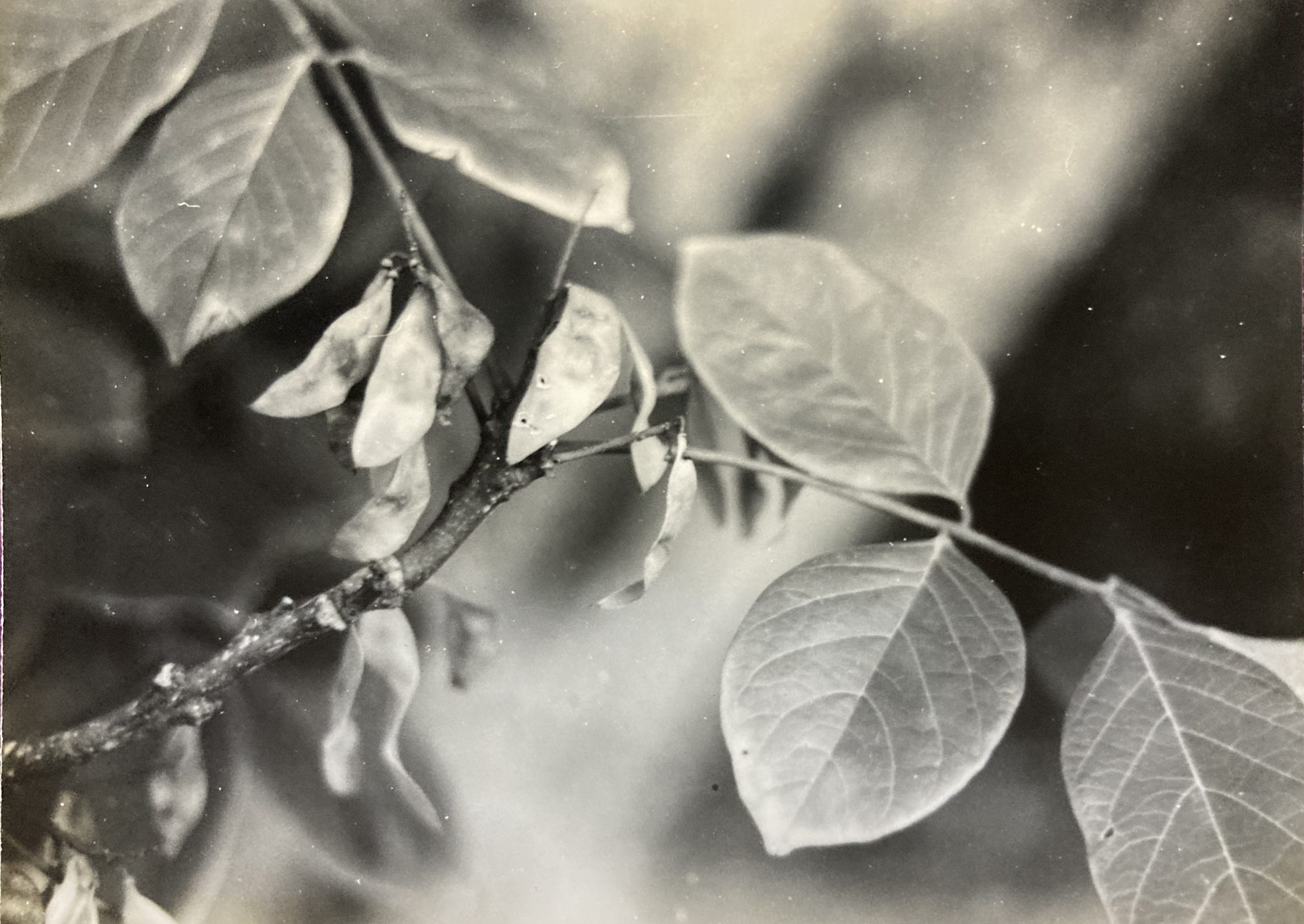
Leaves (40 by 28 cm) are compound, imparipinnate, and alternately arranged. Each possesses 7-9 smooth leaflets of variable size and shape. Increasing in size with distance along the petiole, leaflets reach a maximum length and width of 16 by 6 cm. Their form is elliptical or more often oblanceolate, with stubby drip tips in evidence. All foliage is shed in February or March and new leaves begin to grow almost immediately thereafter.
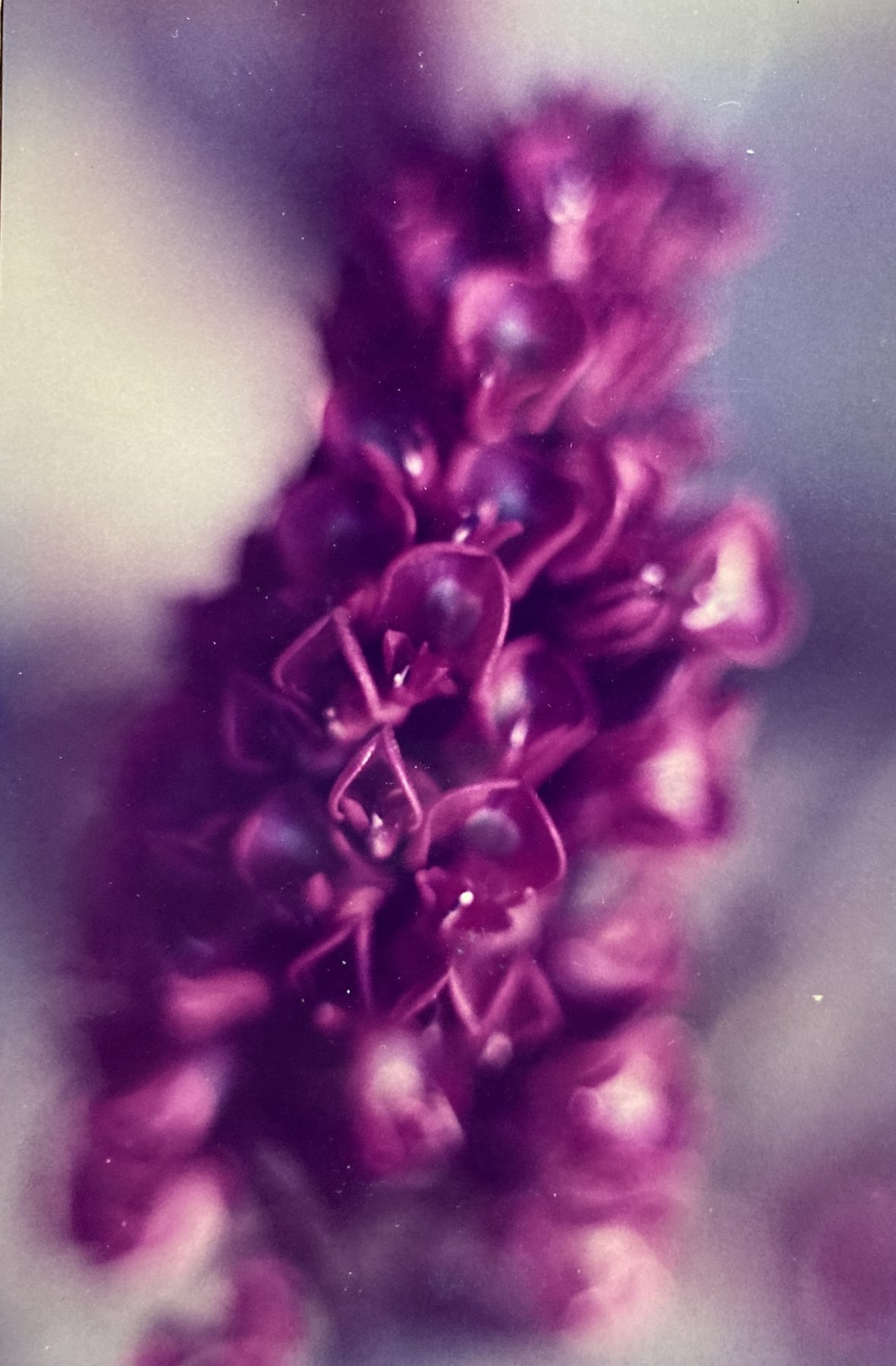
Flowers (1 cm) are produced in large axillary panicles (about 10 cm long) holding a hundred or so of the irregular, burgundy blossoms. Resembling pea flowers, each has five unequal petals; a cup-shaped, fused calyx; ten stamens; and a central pistil. A large, superior petal, sporting a pale green spot at its center, forms a wide hood over the remaining, narrow, inferior petals. Flowering occurs from March through early May along the beach, with deep forest trees showing fertility as early as February. Fruits grow and reach full size (about 10 by 3 cm) quickly. Initially green, they are thin, flat, papery pods containing 1 to 3 planar seeds. When they dry and ripen, they fade from green to tan brown but remain strongly fixed to the trees until dislodged by a strong wind. Pods thus persist on the branches for many months after maturation. Fruits ripen from May until the end of August, though they may remain on the trees until November.
Similar Species: In Manuel Antonio National Park, only Ormosia velutina has compound leaves of similar size and shape. It even has virtually identical, maroon-colored flowers. However, this tree is much larger (reaching canopy proportions) and rarer, and its leaves possess a covering of fine hairs that are absent in L. pentaphyllus. Spondias mombin, also bearing imparipinnately compound leaves (although quite dissimilar in form), has more abundant and much smaller leaflets per leaf than does Lonchocarpus.
Natural History: Lonchocarpus flowers are pollinated by insects and its fruits are dispersed by the winds. This tree’s preponderance along the Espadilla Sur beach can probably be partly explained by this mode of seed-dispersal. The flat, smooth, windy beach is a perfect site for the long distance transport of the papery Lonchocarpus pods. They may roll and tumble significant distances until finally getting trapped by the vegetation along the beach’s edge.
Lonchocarpus is another of Manuel Antonio’s salt and drought resistant trees, surviving as close to the sea as any other species except Hippomane mancinella. Here, large quantities of salt pervade the air (in sea spray), the soil and even the ground water. The coarse-grained, sandy soil lacks the surface area necessary to retain fresh rainwater through adhesion – as fine grained silts and clays can – and thus is extremely droughty. Lonchocarpus must be extraordinarily hardy and specialized in order to survive in such a demanding habitat. The pea-shaped flowers of this species are typical of all plants in the Papilionaceae family. Along with the Caesalpiniaceae and the Mimosaceae, this family is leguminous and capable of trapping atmospheric nitrogen for use as a nutrient. The Lonchocarpus genus is a large one, with dozens of species possessing similar compound leaves and dry, papery pods.
Uses: Lonchocarpus wood has a strong, yellow hue that is the source of the common name “Amarillon”.
Distribution: In MANP, Lonchocarpus is found in the primary forest and particularly along the sandy coastline.
 Trees of Costa Rica's Pacific Slope