Lophanthera hammelii W. R. Anderson
Malpighiaceae
Occasional or rare evergreen understory treelet (5-8 m) preferring stream banks or otherwise very moist soils. Lophanthera has a low, spreading crown and is a typical representative of the Malpighiaceae family, having flowers with widely spaced petals and forward-thrusted stamens.
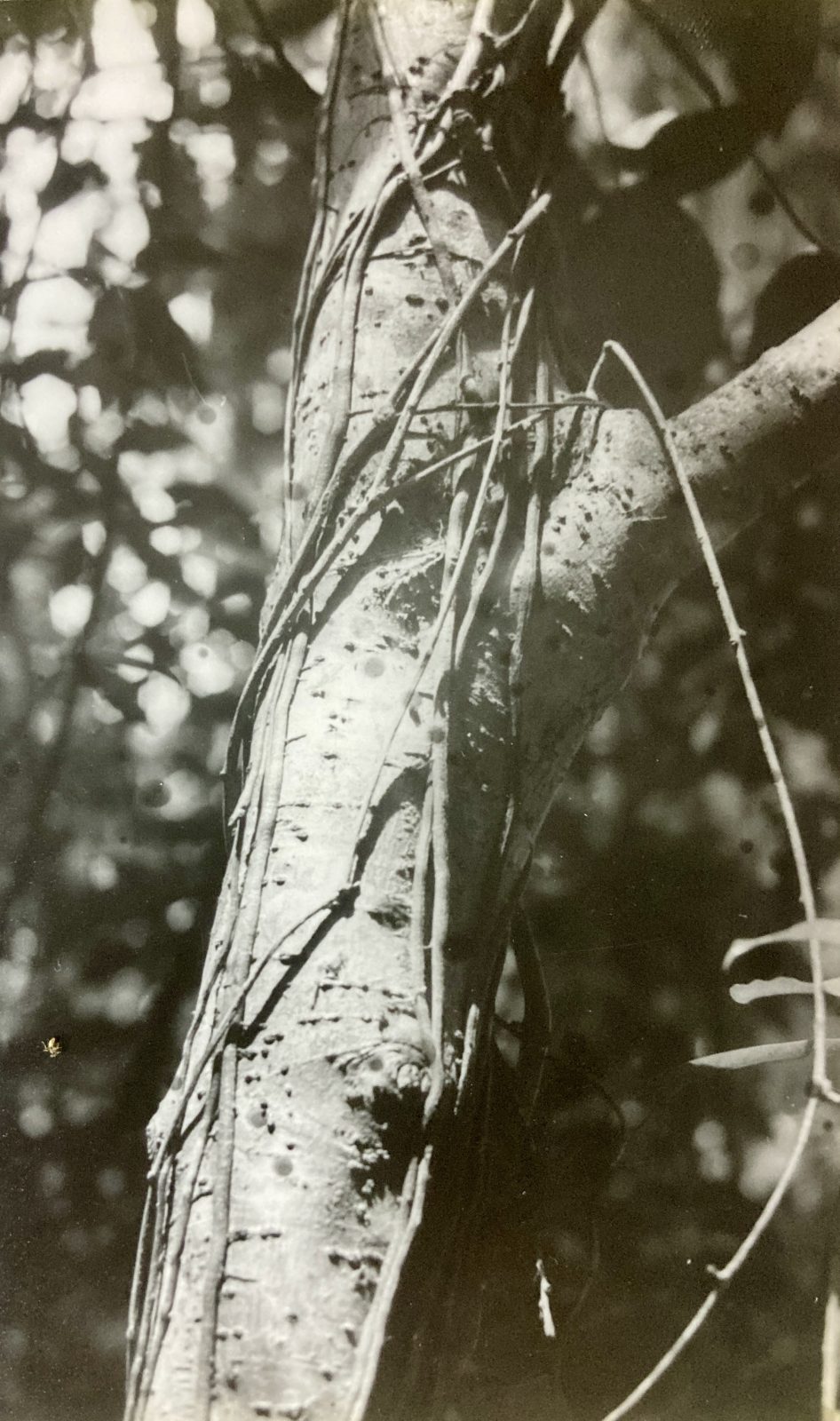
Description: The Lophanthera trunk is small (15 cm), straight, and cylindrical. Covered with tan-brown bark, it is further textured by large, elevated point lenticels. The long, thin, whip-like branches emerge along the upper half of the bole and extend away from it nearly horizontally, gradually arcing and bending downward at their extremes. These limbs subdivide minimally, ending in flexible, pubescent twigs, and the crown that they create is thin, though wide and umbrella-shaped. Leaves are simple and opposite with thin, papery, and smooth blades. Of variable size, they range from 12-16 cm in length and from 4.5-6.5 cm in width. Their shape is elliptical or oblanceolate (with their widest point skewed somewhat distally from center). Well developed drip-tips are present. Petioles (1 cm), twigs, stipules and veins are covered by fine, tan hairs. New twig and leaf growth occurs in June, marking the beginning of this tree’s extended fertility cycle.
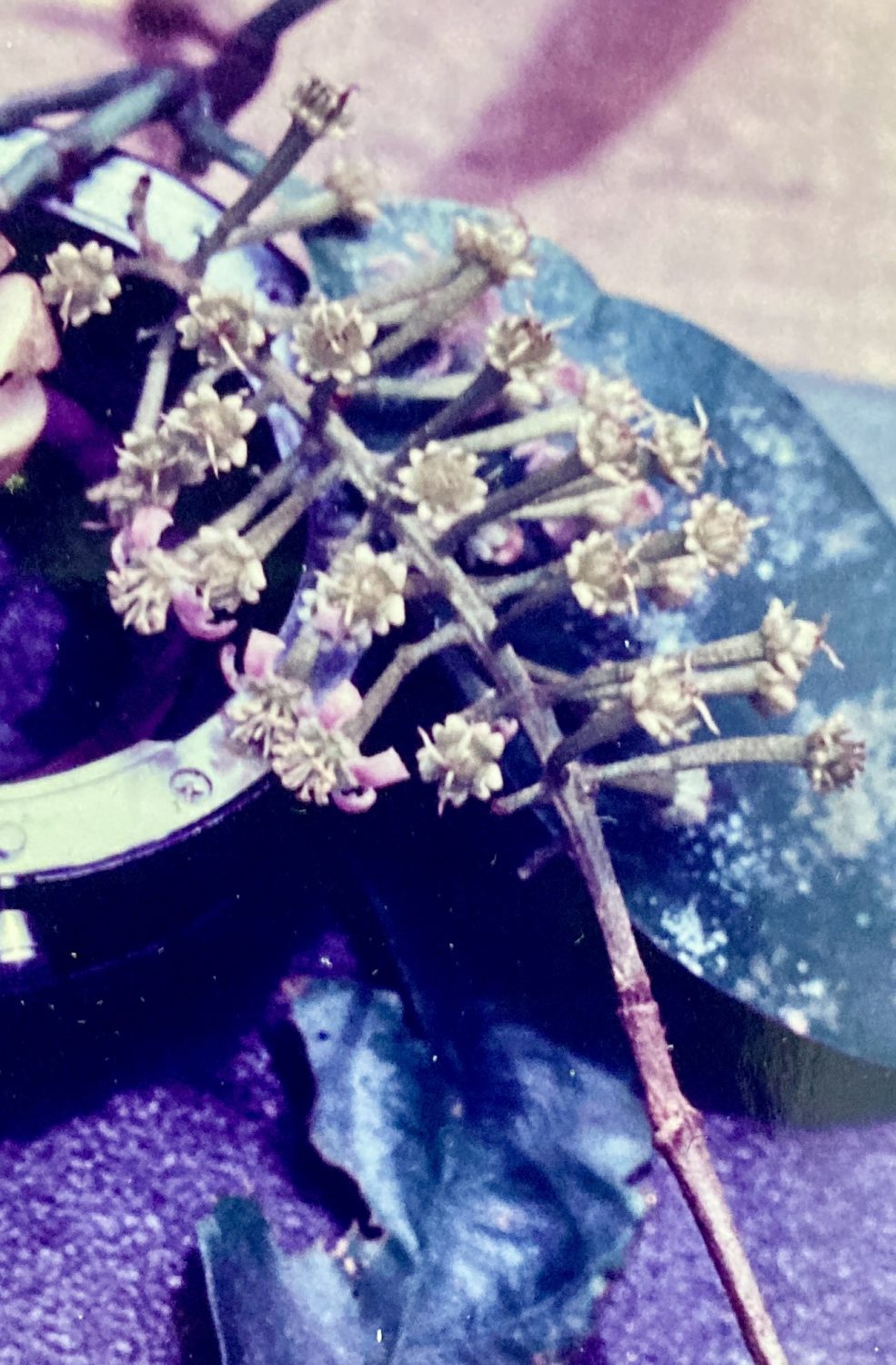
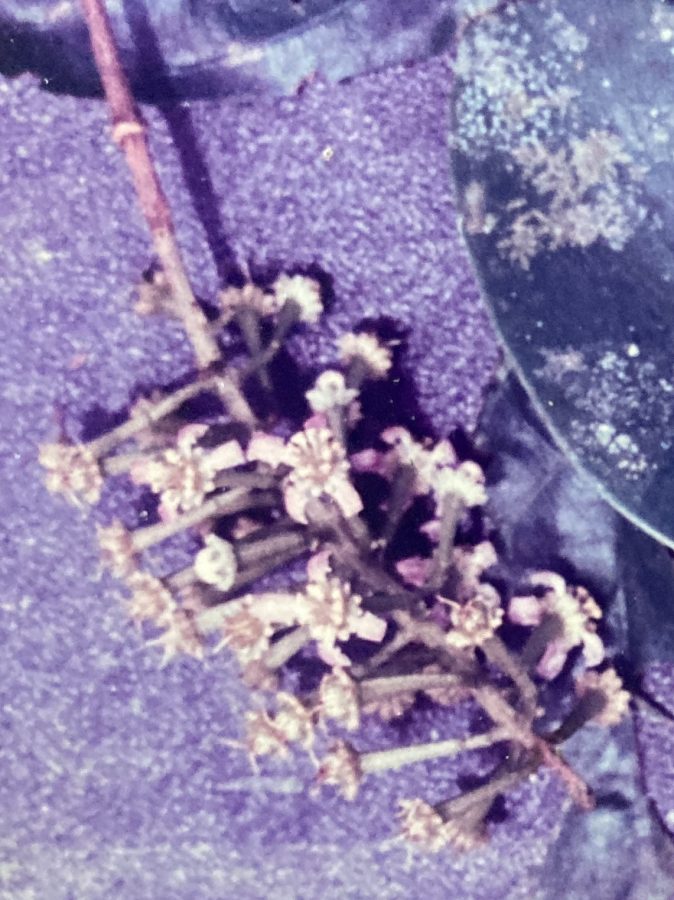
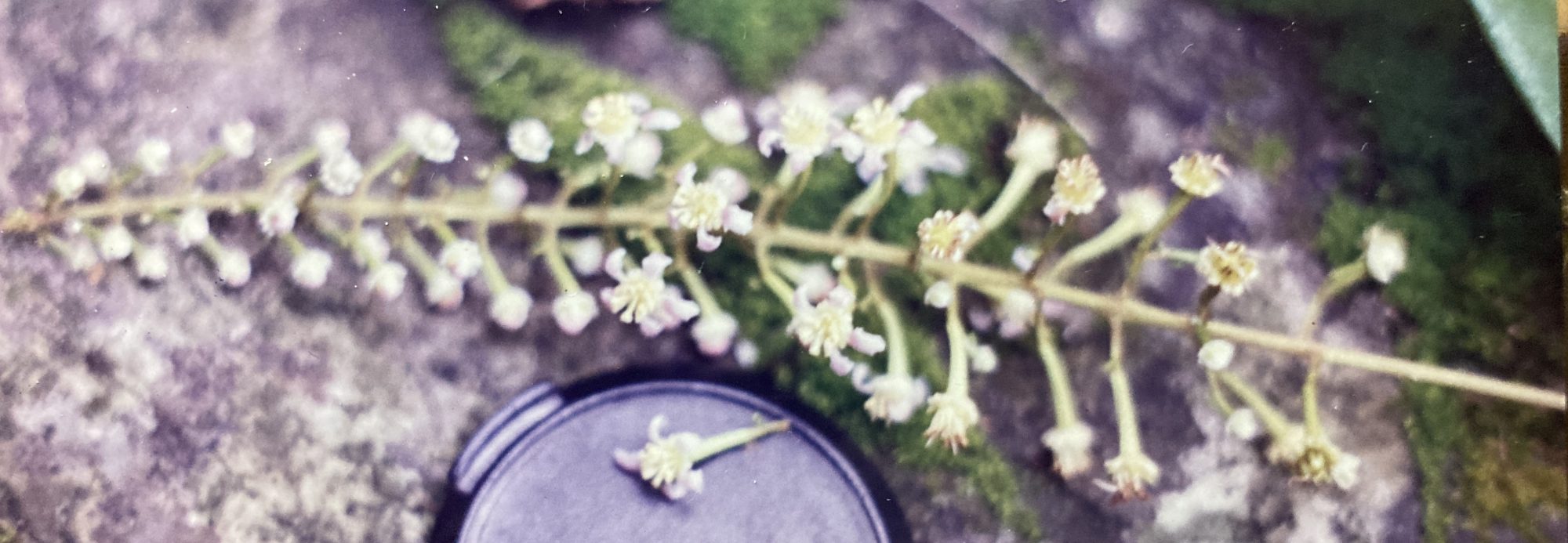
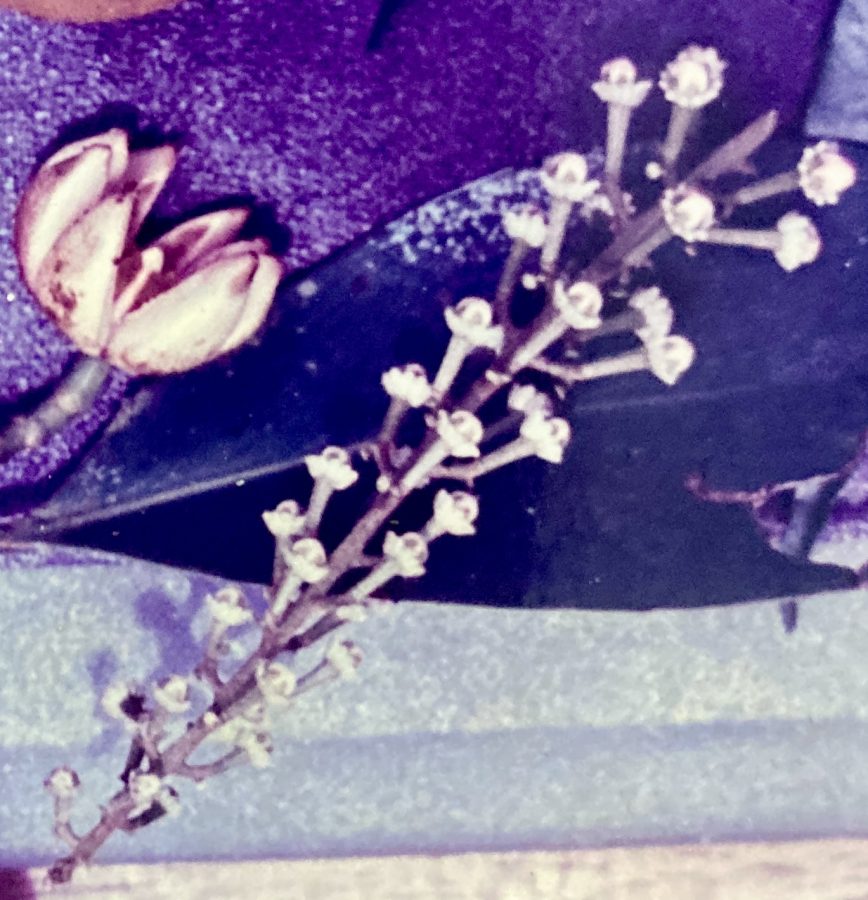
Flowers (1 cm) appear in large, pendulous, terminal racemes (20 cm long) that grow from the tips of the long branches after the production of new foliage is complete. Each contains five small, green sepals; five delicate and narrow pink petals separated by wide, intervening gaps; ten prominent, striated, brown and yellow stamens; three fused stigmas; and a long (2 cm) pedestal with a gland at its base. Blossoming begins in mid-July and continues strongly through October, with a few racemes lingering into December.
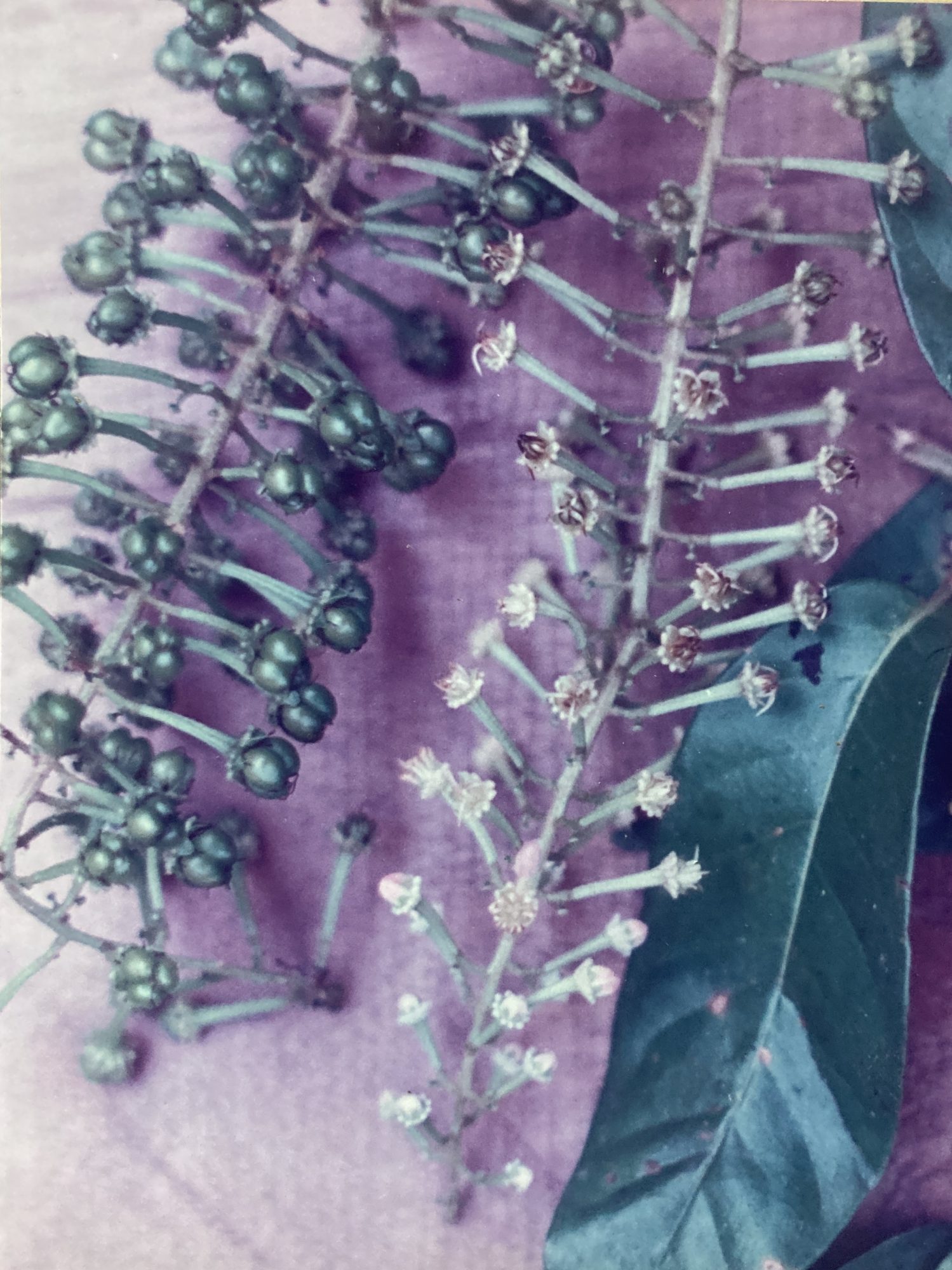
Fruits are simple, green capsules that develop from the same racemes soon after the flowers have died. Each consists of a cluster of three, thinly skinned seeds (4 mm) that are held in place by the old floral calyx. Eventually, they blacken, dry and fall from the tree. Harvest begins in mid-September and lasts through January.
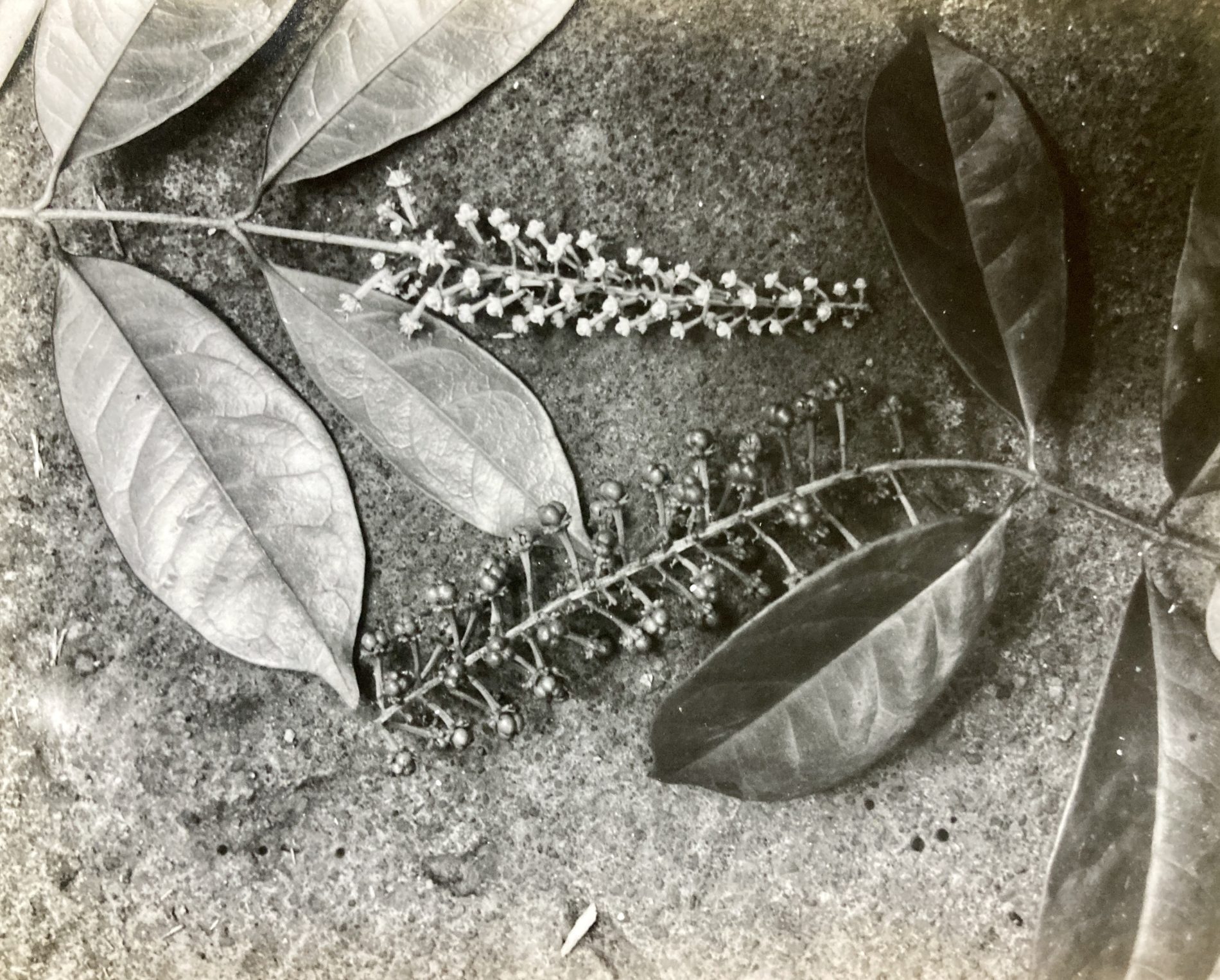
Similar Species: If L. hammelii is fertile (as it is for nine months of the year) its hanging, cone-shaped racemes should make it easy to identify. Sterile individuals may bear a superficial resemblance to Faramea occidentalis – a tree of similar stature and foliage characteristics. In general, however, Faramea is shorter and its crown is much more compact – lacking the widely spreading branches of Lophanthera. In addition, Faramea‘s foliage is longer and narrower than that of Lophanthera. Finally, the two are not usually present together in the same habitat: Faramea prefers somewhat better drained sites than the streamsides and bottomlands typical of Lophanthera.
Natural History: Lophanthera flowers are pollinated by bees and other insects. Lacking arils or other edible components, its dry fruits do not seem to be actively dispersed by any animal. Possibly, water dispersal has a role to play, since the dry fruits frequently drop into creeks from Lophanthera‘s extended, overhanging branches. Though this does not explain how the species arrives upstream in the first place, it could account for its almost exclusively riparian distribution.
Distribution: In MANP, Lophanthera is common only along the banks of creeks and streams. Rarely, it may be encountered in the understory of the dark, lower, moister forests. The species is endemic to Costa Rica.
Photos: Trunk Leaf Flower Flower2 Flower3 Flower Bud Fruit Fruit2
 Trees of Costa Rica's Pacific Slope