Mabea montana Mull. Arg.
Euphorbiaceae
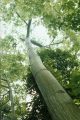
Uncommon evergreen understory tree (5-10 m) found in moist, primary forest habitats like streambanks and low bottomlands. Of special note are its long, pendulous panicles of flowers and fruit capsules.
Description: Mabea has a small, regular trunk (10 cm) with a cylindrical cross-section, and it is clad in smooth, dark brown bark. The tree’s branches are extended, thin, and drooping and they create an open and relatively wide crown in the darkness of the deep forest understory. Broken bark and twigs exude a thick, white latex sap.
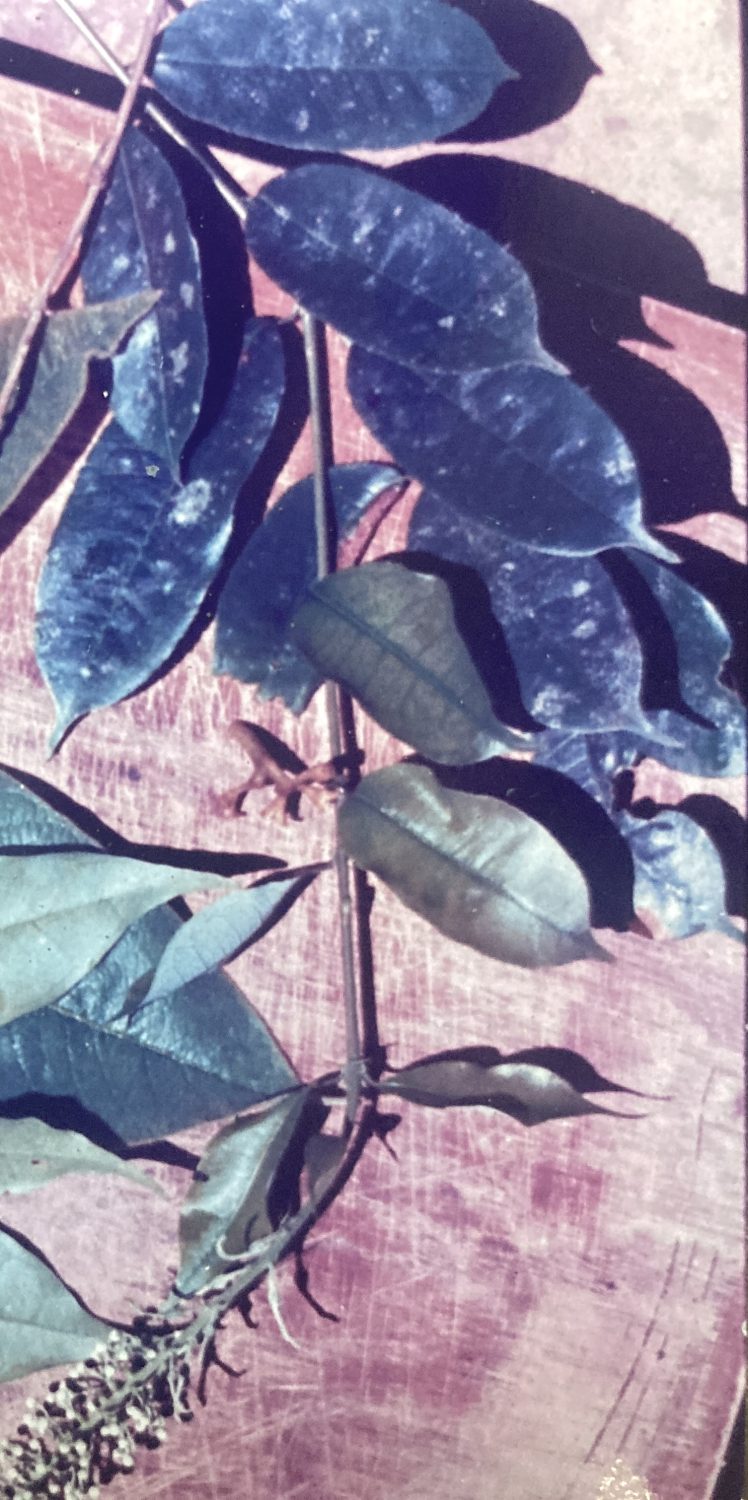
Leaves (9 by 3 cm) are simple and alternately arranged. Smooth and elliptical or oblong in shape, the flat blades are supported by short petioles (3 mm) and end in narrow, highly developed drip-tips (1.5 cm). Blade margins are serrulate (finely serrate) and often slightly undulate as well. A fine network of fibery, yellow veins pattern leaf undersurfaces. New foliage (about 10% of the total leaf cover) tends to be grown in May and again in September.
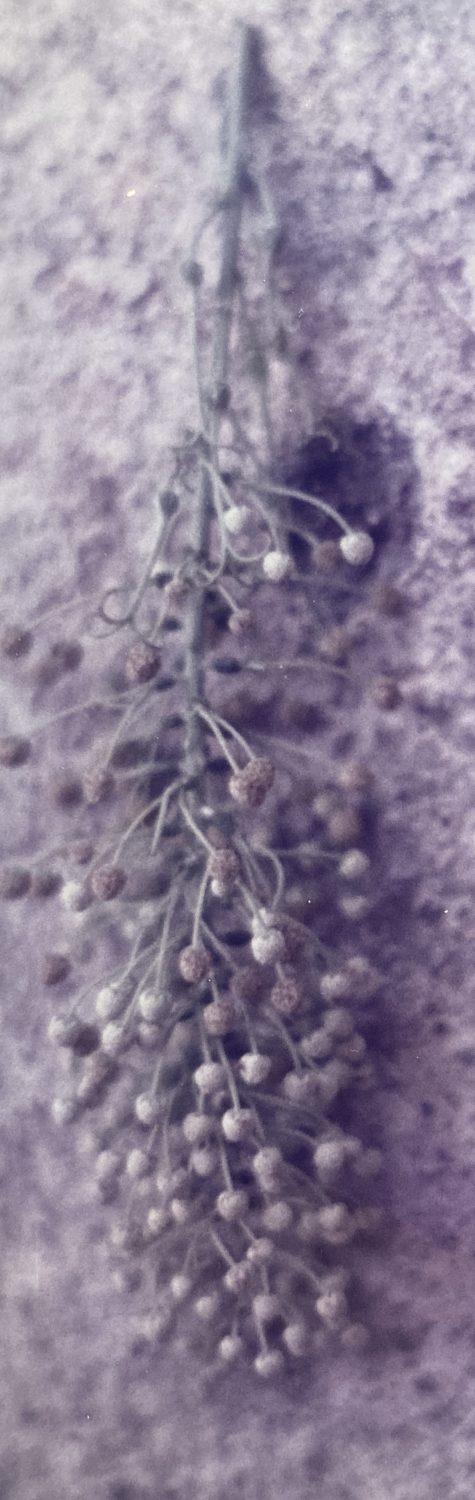
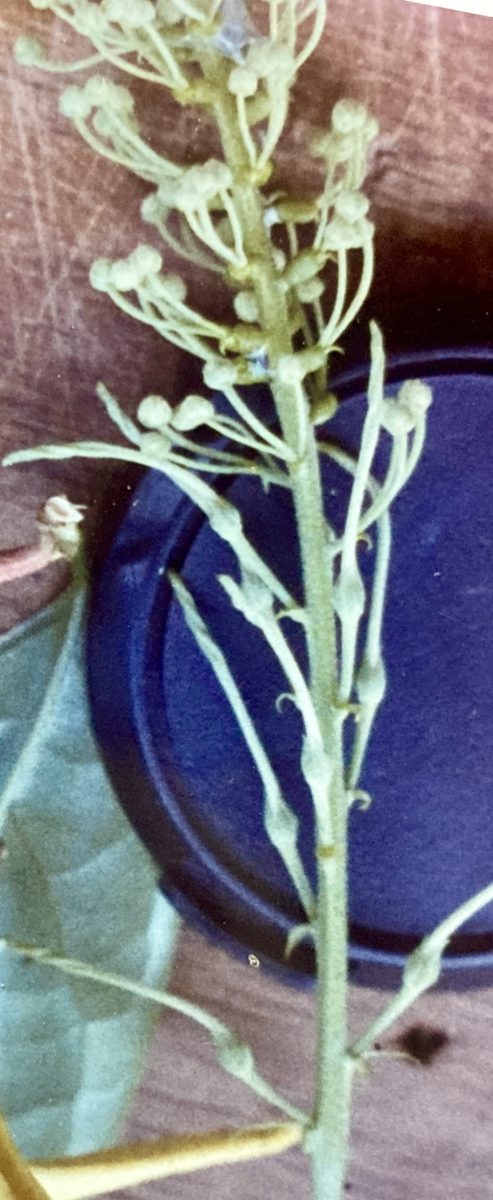
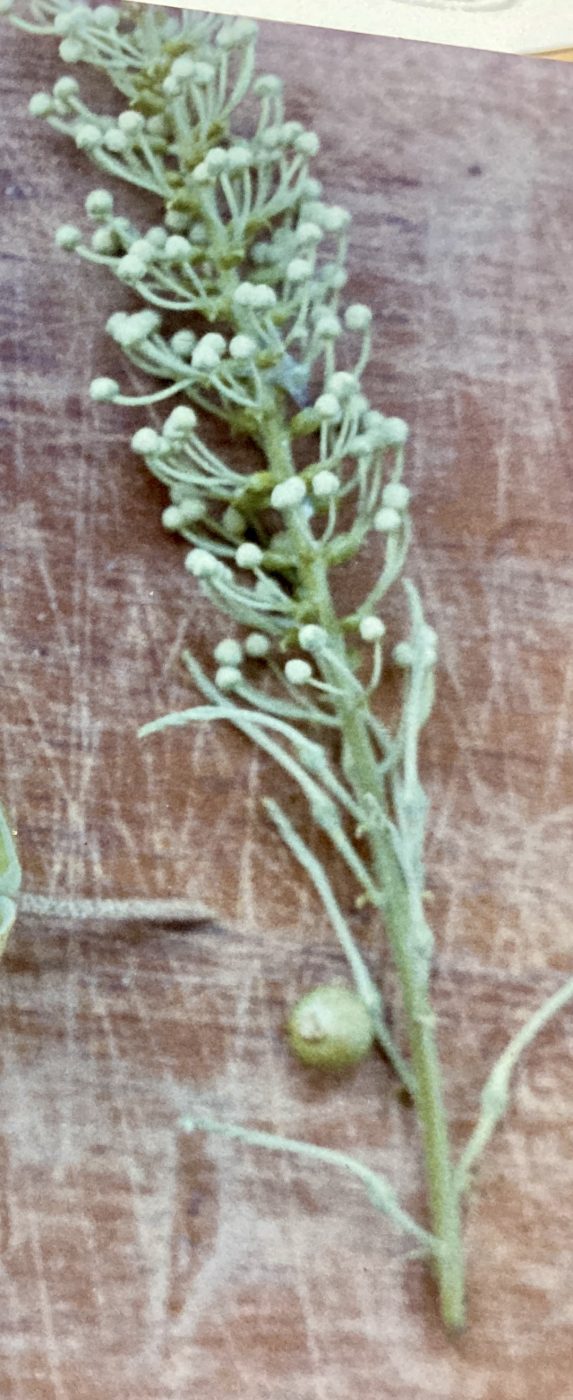
Flowers appear on long, pendulous, cone-shaped racemes (20 cm)that grow from the ends of the long branches (terminally). As do some other Euphorbs, they possess separate male and female flowers positioned along different sections of the same infloresence. Male flowers, more abundant and located distally, are comprised of three stamen balls (4 mm in diameter) attached to thin stalks that unite and then merge with the main raceme. The simpler female flowers, numbering about eight per raceme and located proximally, consist of a string-like pistil (3 cm) with a spiraled tip. The entire inflorescence is pale green in color. Flowering occurs from late November through January, with sporadic blossoms sometimes visible as early as September.

Fruits are deeply lobed green capsules (1.5 cm), each containing three, strong, woody compartments. Generally, they remain in the tree for several months before finally yellowing a bit, opening, and releasing three seeds. The annual harvests occur from late February through early April.
Similar Species: Sorocea cuffudontsi is a tree of similar size, habitat and leaf shape to M. montana. However, in Manuel Antonio, Sorocea is of slightly smaller stature and has much shorter branches and a narrower crown than the latter species. In addition, the Sorocea leaf is longer and strongly tapered toward its proximal end – oblanceolate in shape rather than elliptical (as in Mabea).
Natural History: Mabea flowers are pollinated by insects. Its fruits are possibly dispersed through the explosive opening of the seed pods – though this has not been directly observed. The sandbox tree (Hura crepitans), another Euphorb, has similar woody capsular fruits. These are known to burst explosively – and violently – when mature, making an audible shot-gun-like sound in the forest and sending Hura seeds flying for several meters in all directions.
Distribution: Mabea montana is found in the damp and dark tropical forest understory. It ranges from Costa Rica through South America.
 Trees of Costa Rica's Pacific Slope