Muntingia calabura L.
Capulín
Muntingiaceae
Common, secondary forest, evergreen tree (4m) of small stature whose renown stems from the good-tasting, red fruits it perpetually generates to the delight of avifauna and humans alike.
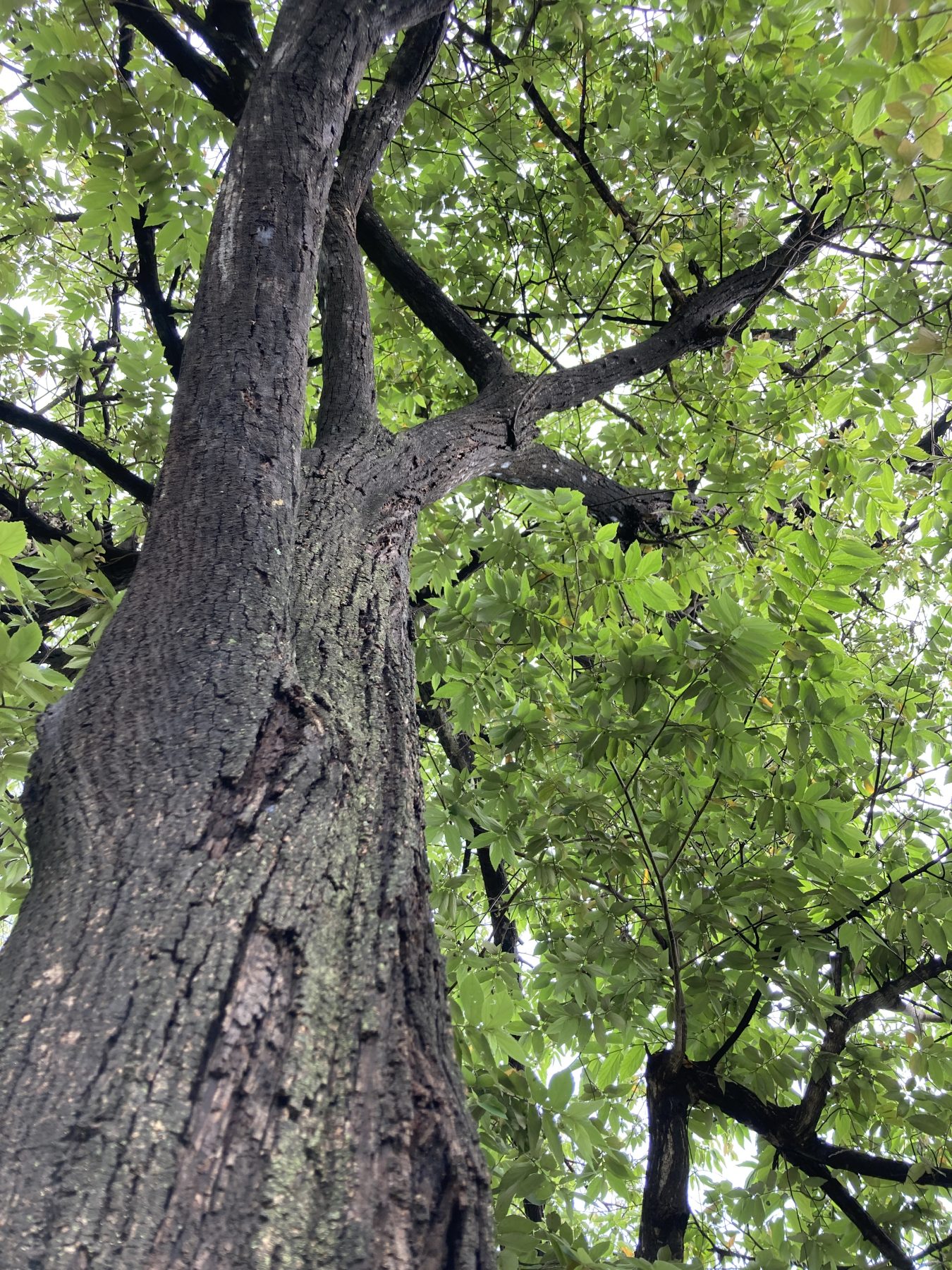
Description: Capulín is a small, understory tree whose irregular, bending trunk gives rise to long, thin, drooping branches that form an extended, umbrella-shaped crown. The bole and limbs are covered with vertically fissured, rough, dark brown bark.
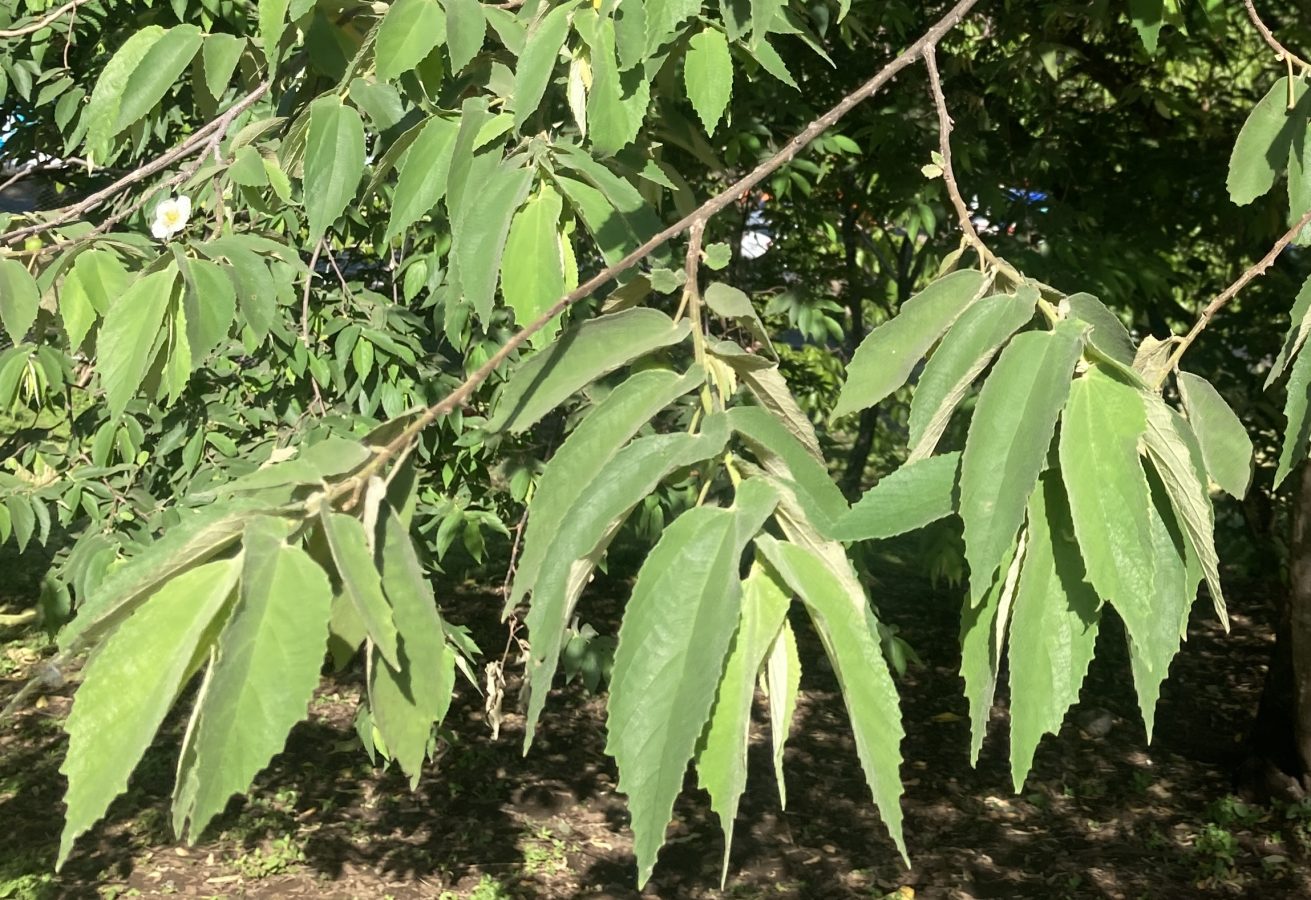
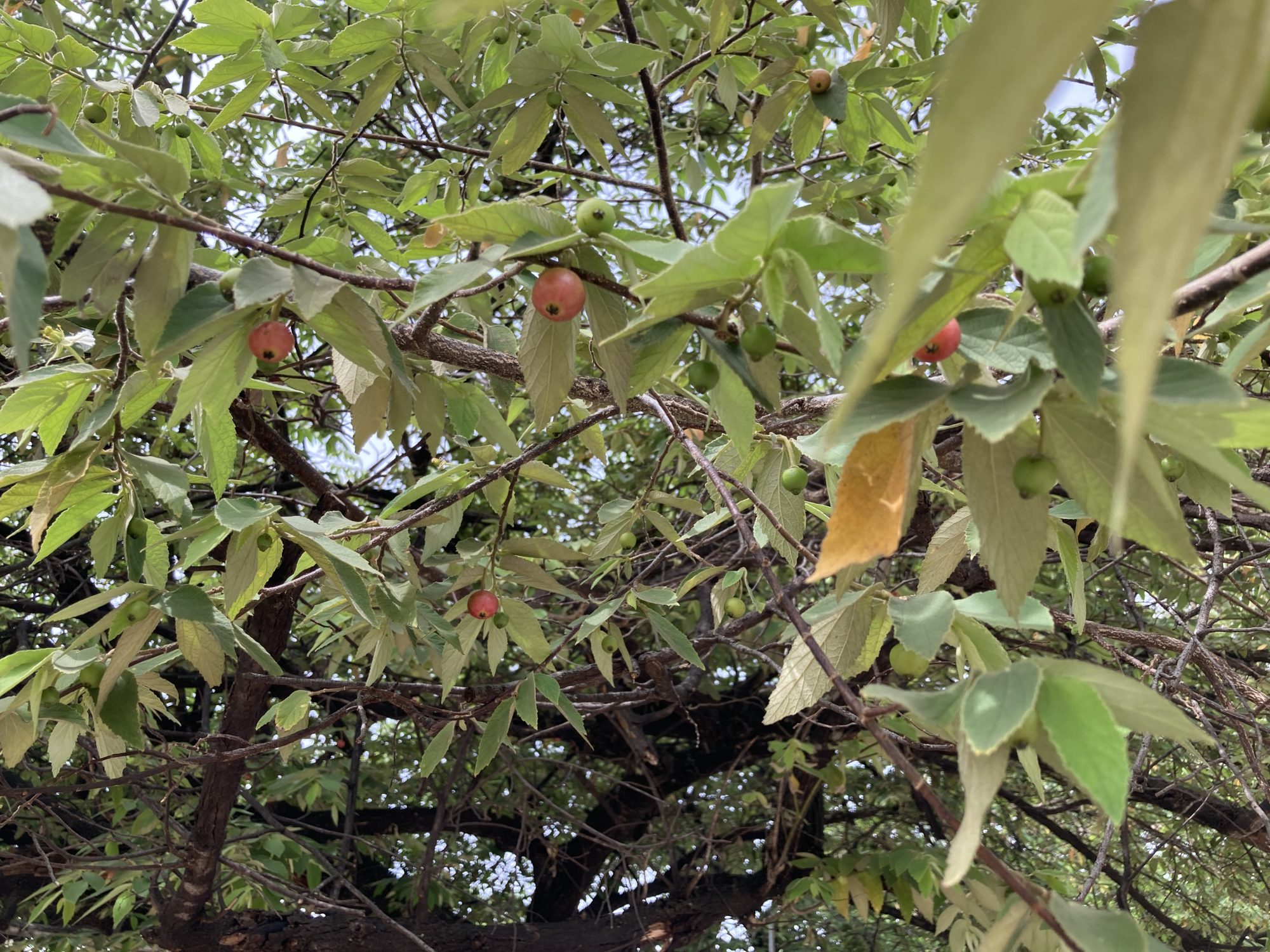
Leaves (9 x 3cm) are simple and alternately arranged. Each spear-shaped blade has serrate edges and an unequal base where it joins the short petiole. Leaves and petioles are covered by a fine pubescence.
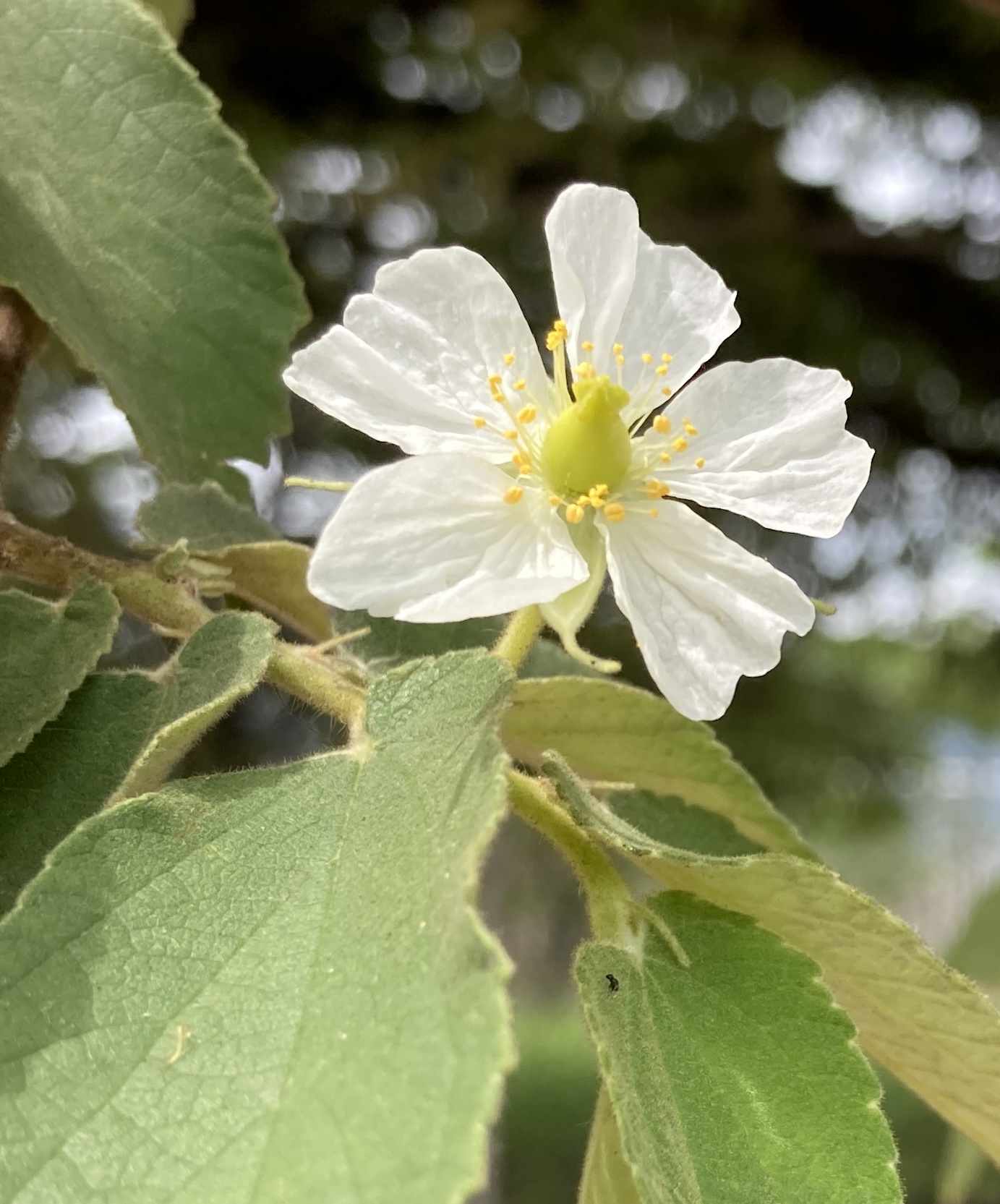
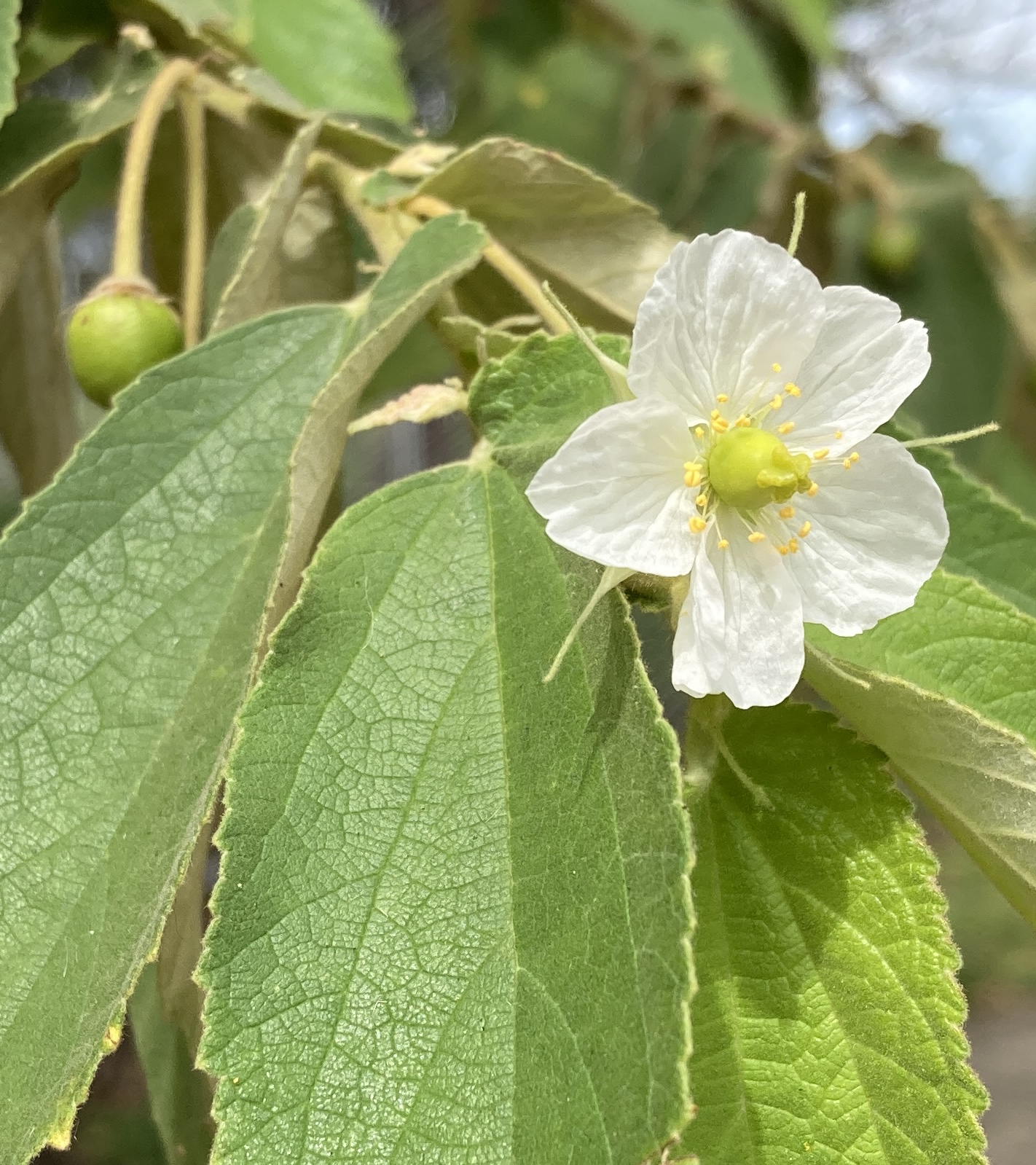
The omnipresent flowers (2.5cm) appear singly from leaf axils and consist of five green sepals, an equal number of crinkled, white petals, around 30 short yellow stamens, and a fat, bulbous, green pistil.
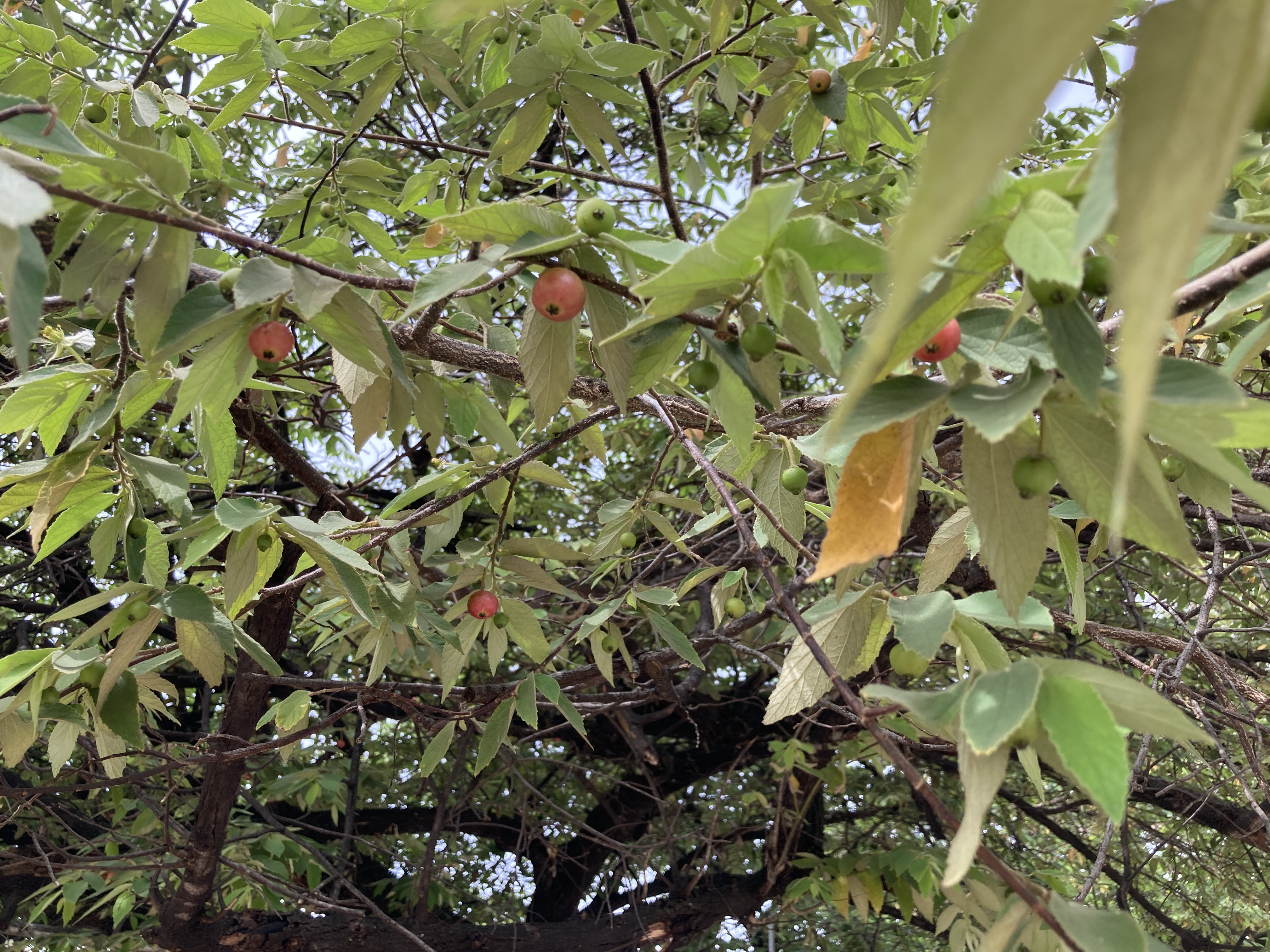
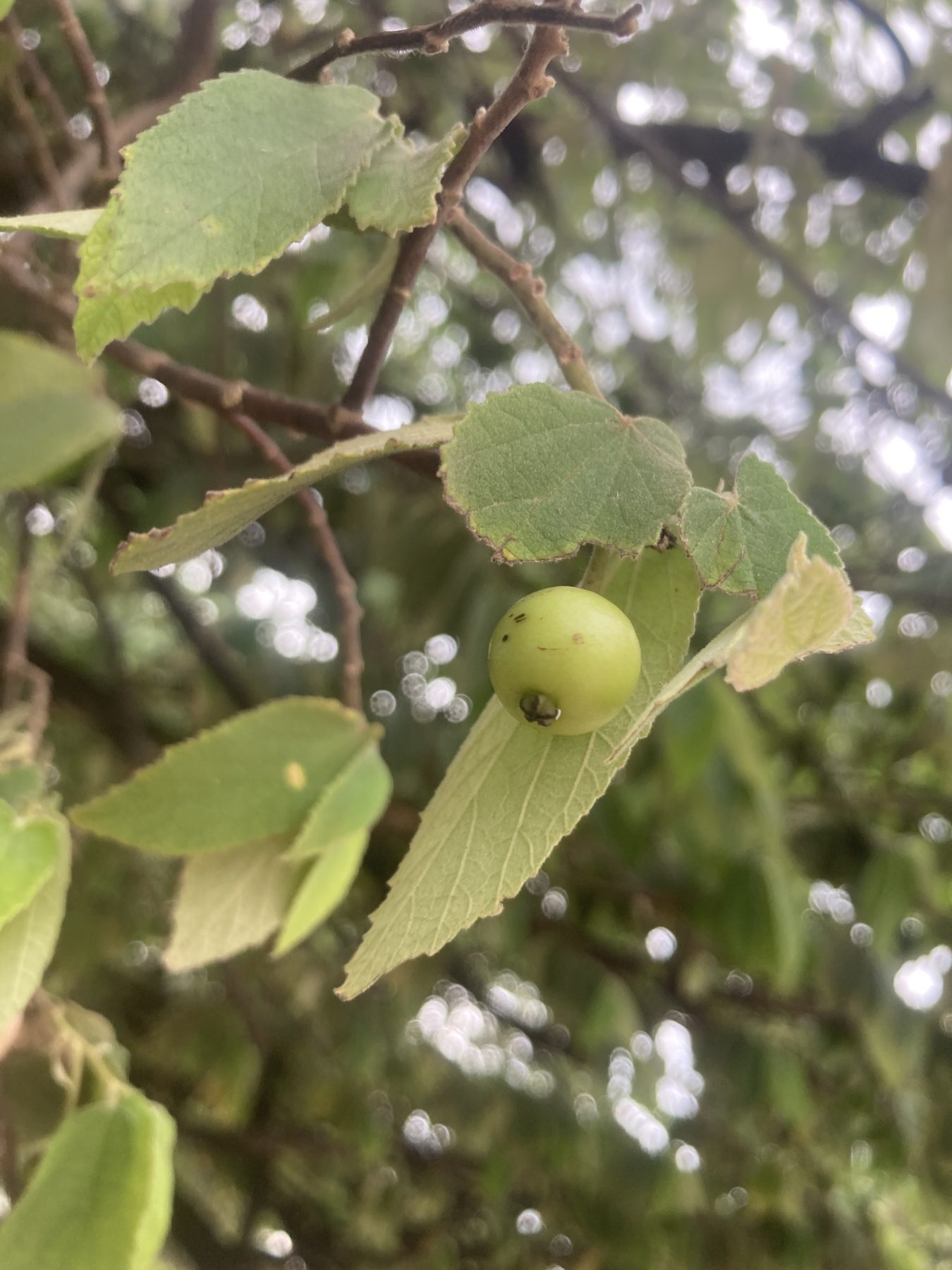
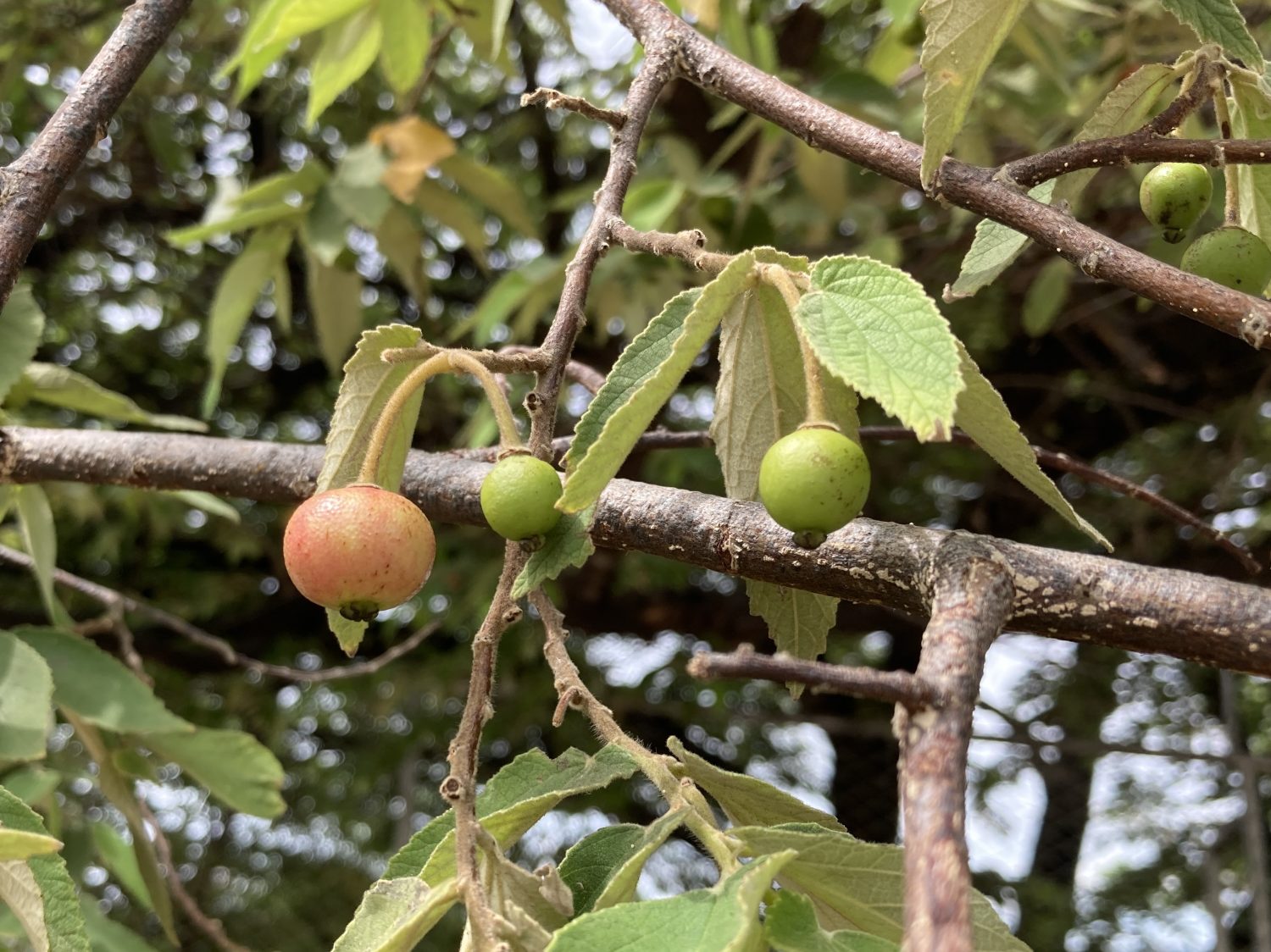
Capulín fruits (1.5cm) mature within a few weeks of flowering, turning from green to pink or red. Each is an edible, sweet, spherical berry whose flavor is unique, defying accurate description, but perhaps most similar to cinnamon. Though potentially present at all times during the year, they are perhaps most abundant during the early rainy season months of June and July. Fruits contain a myriad of minute (< 1mm), pale seeds.
Similar Species: Guacimo Blanco (Guazuma ulmifolia) is another secondary forest species with similar size, shape and leaf structure to that of Capulín. The two can be readily distinguished, however, by the latter’s smaller foliage and much larger and white (not yellow) flowers.
Natural History: Capulín is a secondary forest species that thrives only in full sunlight and is tolerant of disturbed, droughty, and infertile soils. Its flowers are visited and pollinated by insects while it fruits are eaten and seeds dispersed by a variety of avifauna (including long-tailed manakins and bananaquits). Formerly classified as a member of the Tiliaceae, Capulín and just two other species now comprise the small, new Muntingiaceae family of plants.
Uses: Considered a pioneer species, Capulin has potential use in the reclamation of baren, deforested and otherwise degraded land. By establishing stands of trees where most other species cannot thrive, plants like Capulin can be used to gradually restore organic matter, nutrients, and moisture to degraded soils, thus paving the way for future recolonization by a more diverse array of tropical forest species. The Capulin fruit is edible, sweet, and pleasant tasting.
Range: In Costa Rica, Capulin can be found all along the Pacific slope, including the Central Valley. It ranges from Mexico to Brazil, Bolivia, and Ecuador.
 Trees of Costa Rica's Pacific Slope