Guapira costaricana (Standl.) Woodson
Nyctaginaceae
Rare evergreen understory tree (10-15 m) that constitutes an inconspicuous component of the primary tropical forest. Lacking remarkable anatomical characteristics, Guapira‘s drab flowers and small fruits fail to offset its diminutive stature. The species seems to do best within the dark, humid, lower levels of the multi-stratal climax forest, but it occurs in sunnier zones near creek and trailsides as well.
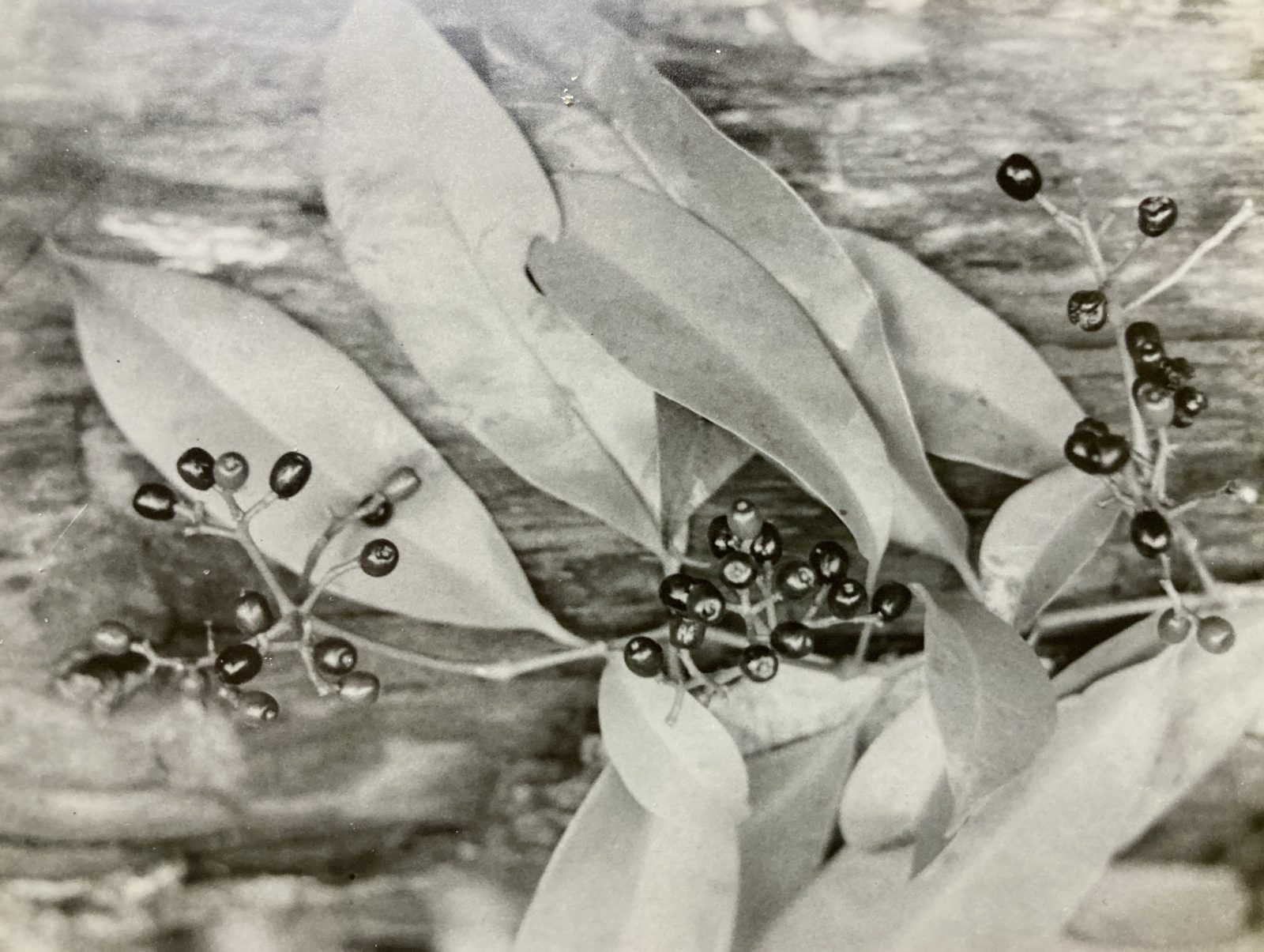
Description: Mature Guapira trees are small, with diameters rarely exceeding 30 cm. The irregular trunk, though usually circular in cross-section, is often bent – even arcing – in form. Occasionally, deep folds may be impressed into the bole, lending it a curtain-like quality. Guapira bark is mostly smooth and gray (or sometimes greenish) and it is textured with fine, vertical cracking. Branching occurs along the upper third of the bole and the Guapira crown is umbrella-like: composed of a single layer of leaves. Thin and narrow, the canopy is often precisely sculpted to fit the irregularly shaped light gaps of the primary forest understory. Leaves (14 by 3 cm) are simple, oppositely arranged and quite variable in size and shape. Generally elliptical and narrow, the blades taper to acute points at both ends where well-developed drip tips (1 cm) and long petioles mark the respective extremes. Opposing leaf pairs are often unequal in size, and this may create the (false) impression of an alternate arrangement. Blades are smooth and sometimes slightly curved (falcate) or curled. Secondary leaf veins are inconspicuous and the blade is strongly marked only by the sharply defined mid-rib. New foliage and tree growth occur from August through October, with up to 70% of the leaf canopy regenerated during these months. Fresh leaves are lighter in color and they contrast with the dark green of the persistent older foliage – a phenomenon that helps to distinguish this species during and after the period of active growth.
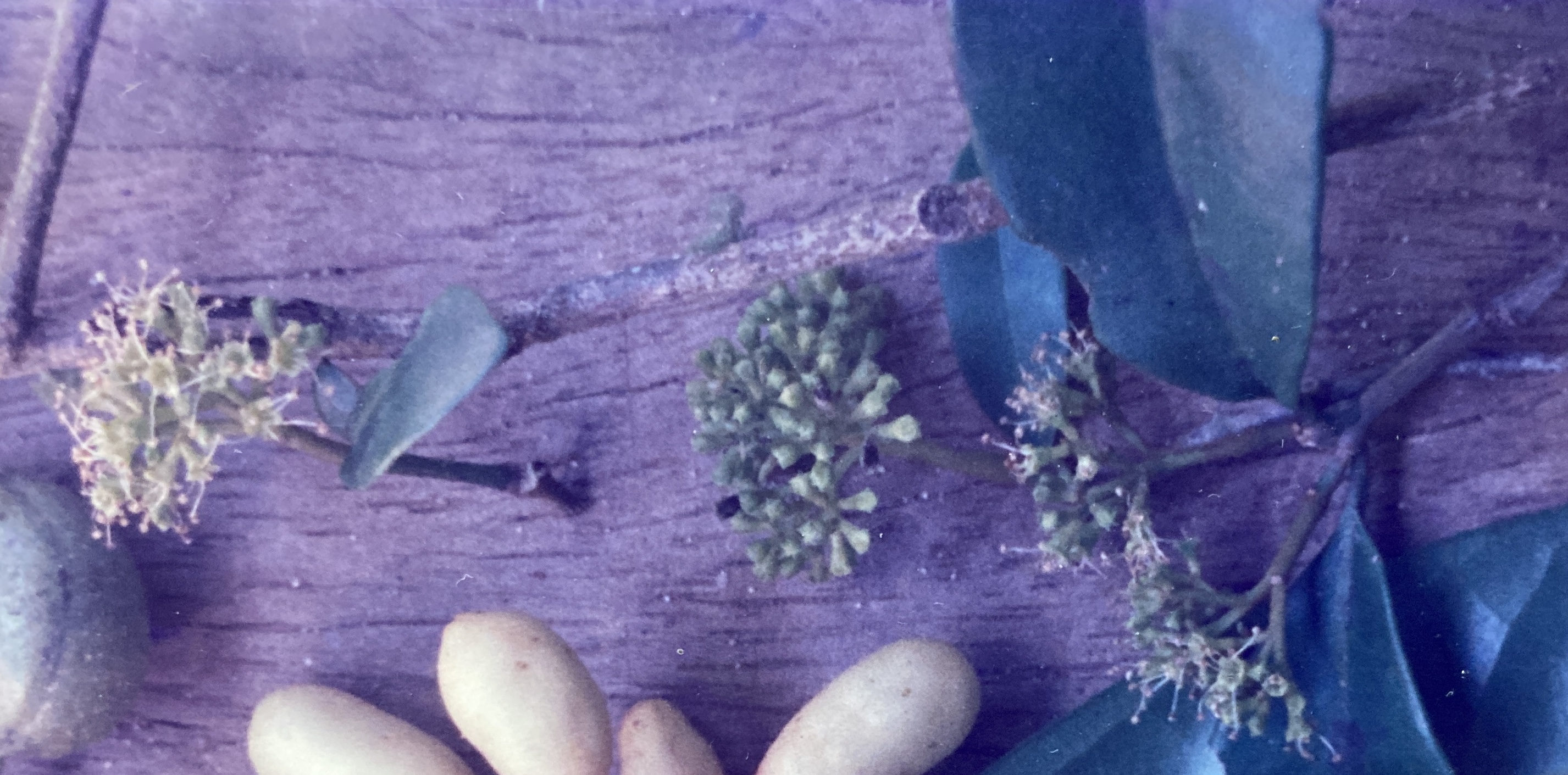
In January, small flower buds become visible in the terminal (sometimes axillary) leaf axils. These develop slowly into dense, compact panicles (each bearing about 70 buds) that finally bloom in late March or early April. As the short, two-three week flowering period commences, the heretofore green clusters fade and slightly yellow. Each of the flowers on male trees (the species is dioecious) consist of a minute, green, tube-shaped perianth that flares distally into 5 stubby sepals. From this petal-less cup project 5 long, yellow stamens. A pleasant, sweet, honeysuckle-like smell is emitted from the blossoms during the short but well synchronized flowering season. Male flowers measure 0.5 cm long by 0.3 cm wide; female flowers have not been seen.
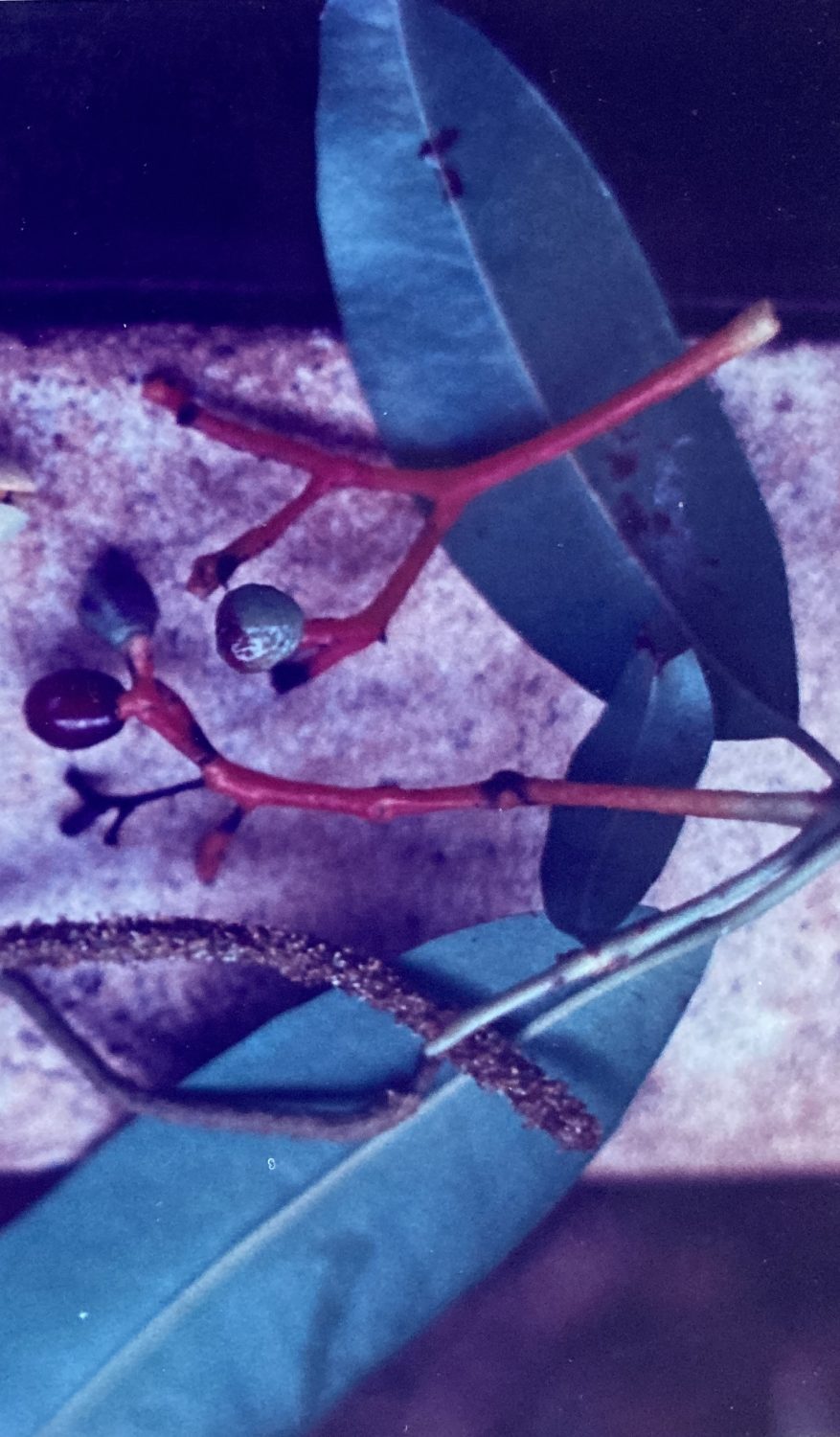
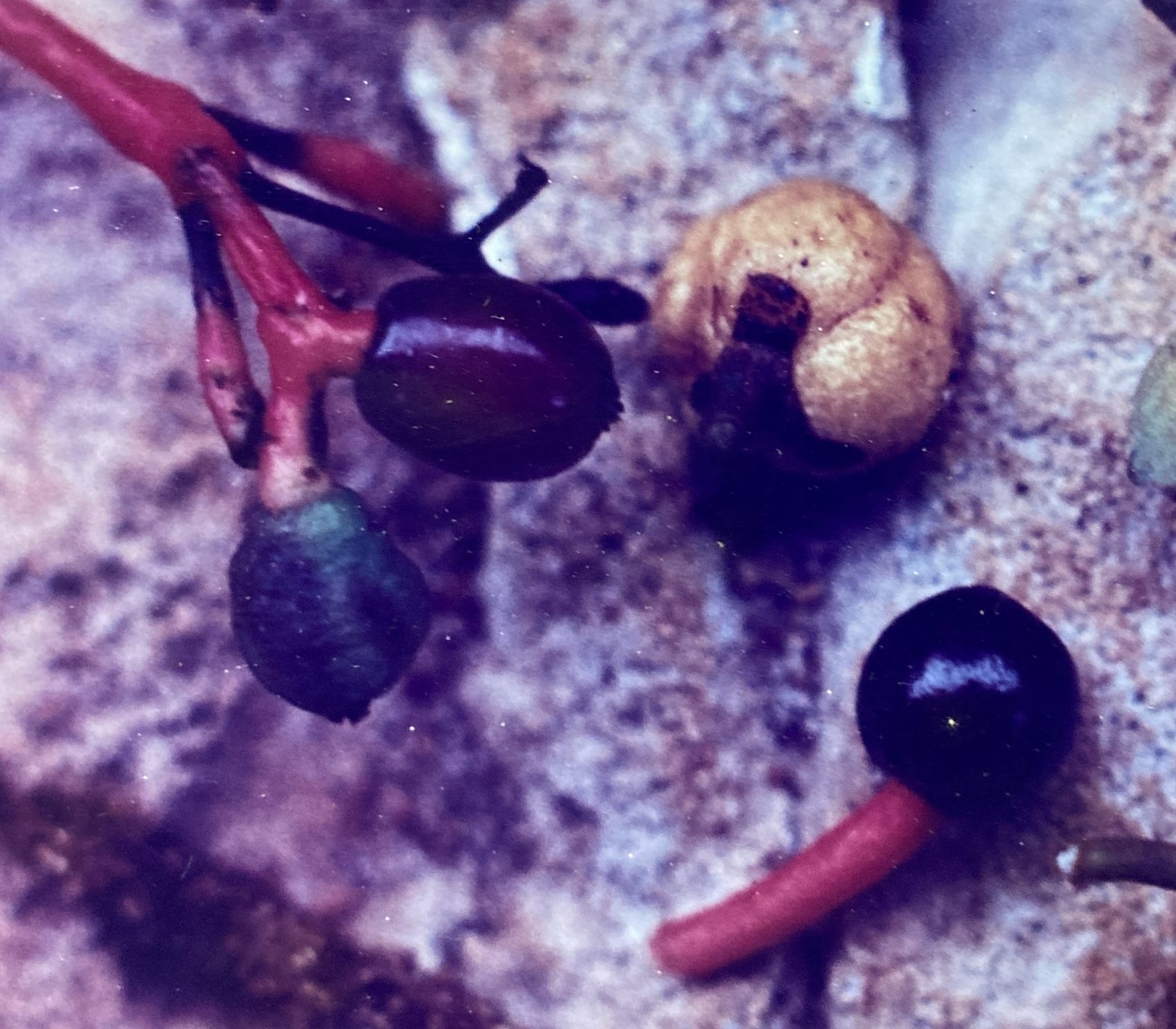
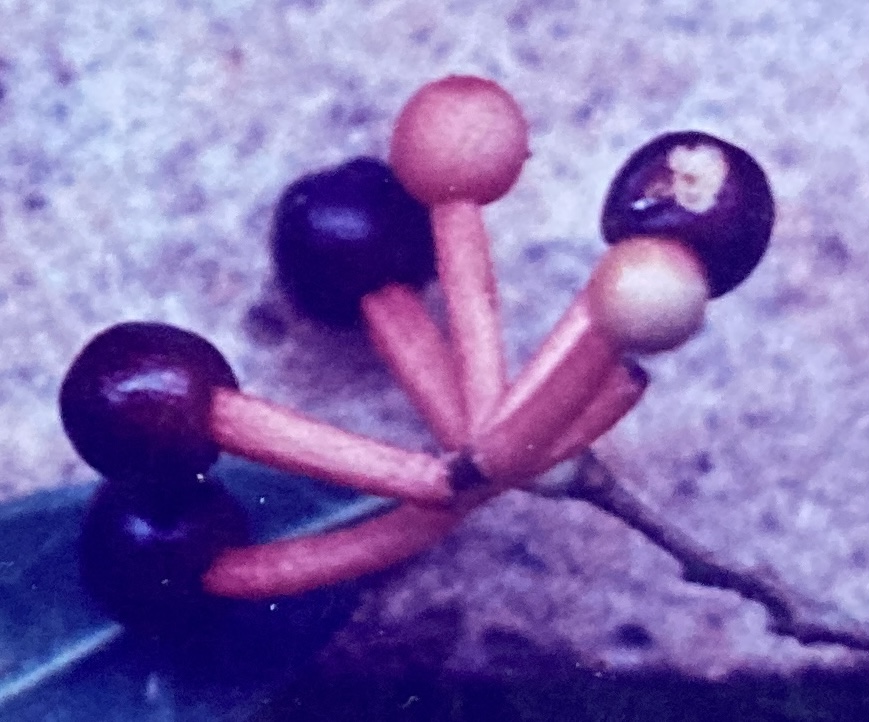
Fruits begin to develop rapidly after flowering ceases. The stalk supporting the old panicle begins two swell and then redden until its scarlet hue is vibrant enough to stand out amid the dull green foliage. Flattened, ovoid, and green when young, the shriveled fruits soon expand and ripen into plump, wine-colored berries (1 cm), each bearing a single, rounded seed. Harvests are annual, but generally lean and short-lived, with fruit fall occurring over a two-week period around the middle of May.
Similar Species: Camarón (Licania operculipetala) is an emergent tree with similarly shaped – thought alternately arranged – leaves. Krugiodendron acuminatumnus has opposite, elongate leaves like those of Guapira and it is a tree of comparable stature, but the blades of this species show marked secondary venation.
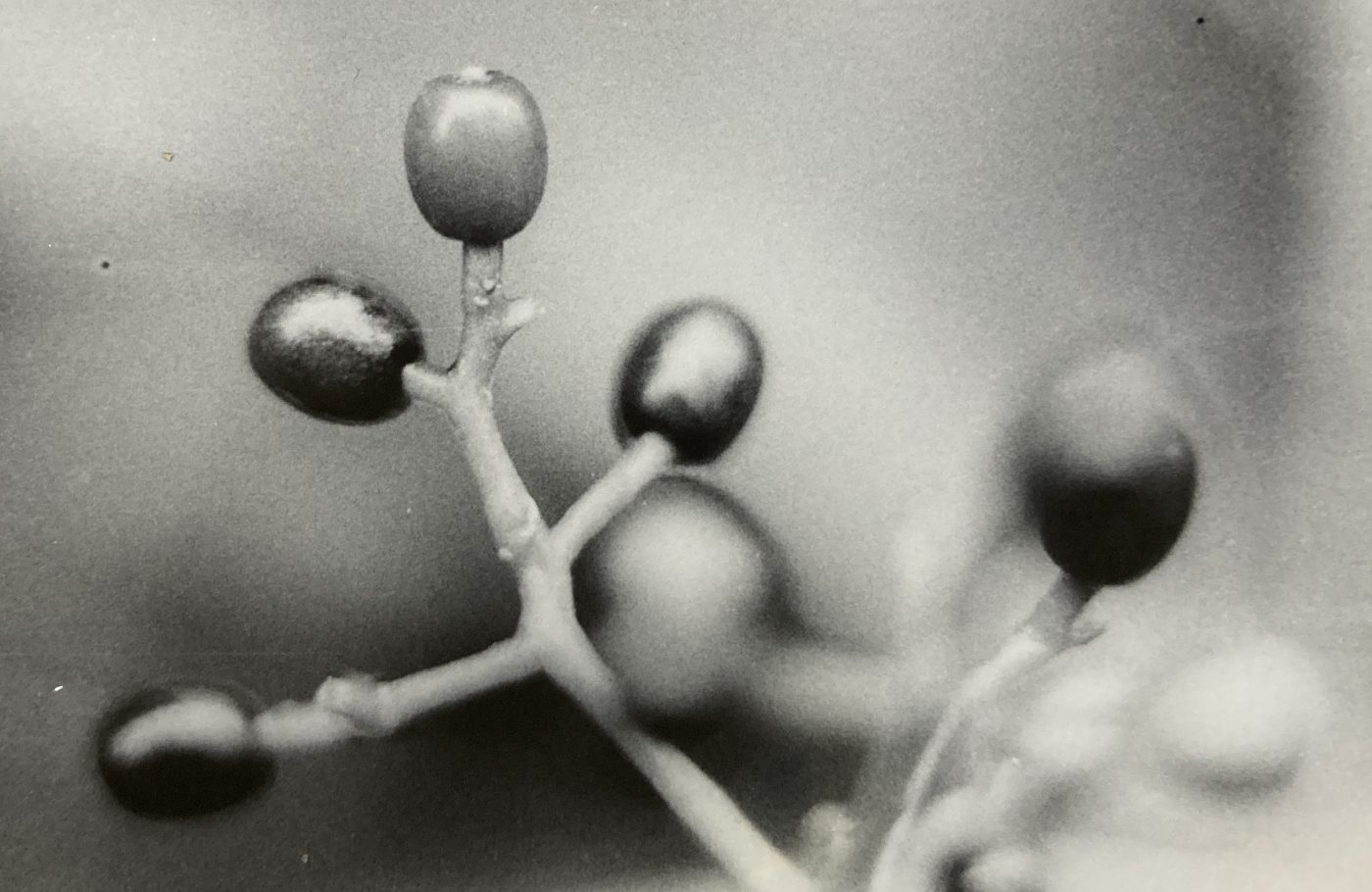
Natural History: Pollination of Guapira flowers is by insects, attracted to the sweet, honeysuckle-like odor emitted by these blossoms. More unusual is Guapira‘s method for luring potential seed-dispersers. Rather than using the fruit itself as a bight signal to color-sighted primates and avifauna, the swollen and red fruit stalk serves this purpose. In fact, it becomes the most obvious part of this tree’s anatomy during harvests, standing in marked contrast with the more somberly decorated components of the forest. Presumably, foragers attracted to the tree by these brightly colored appendages find and eat the fruits as well.
Distribution: Guapira is a primary forest species and in Manuel Antonio it is associated with the vegetation bordering the Perezoso Trail (old ANEP road). The species ranges from Mexico to Colombia.
 Trees of Costa Rica's Pacific Slope