Ocotea veraguensis (Meissn.) Mez.
Lauraceae
CANELO
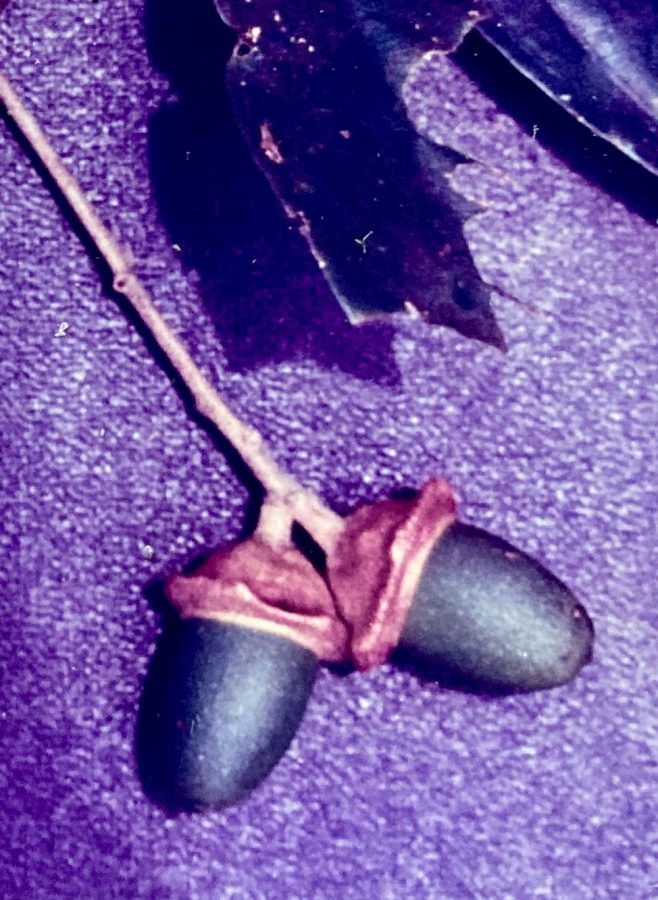
Occasional evergreen understory tree or treelet (5-10 m), this species is found thinly distributed throughout the humid forests of the Pacific slope. Ocotea supports a wide range of conditions, frequenting primary forest edges as well as their dark interiors. Canelo’s most noteworthy feature is its fruit – a green, olive-like drupe set in a pink, cup-shaped, flared calyx.
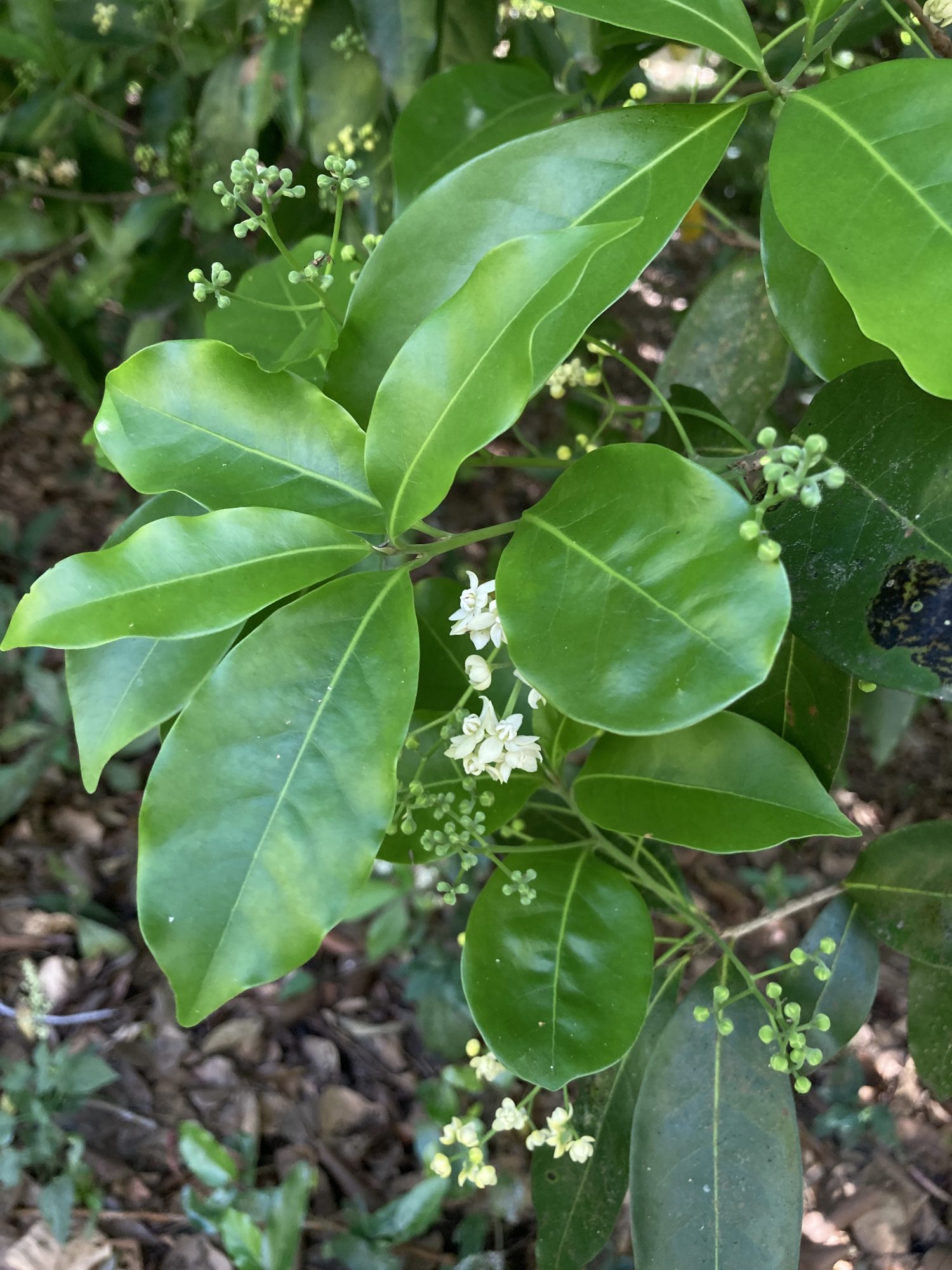
Description: Canelo has a slight, mostly cylindrical trunk (15 cm) that is usually straight but that may be found growing inclined at a significant angle from the vertical. The bark is smooth and gray. Branches occur at all levels of the small bole and they produce a narrow, elongate, and thin crown. Leaves are simple, alternate, thick and leathery. Their smooth, elliptical blades, with small drip tips (1 cm) and short petioles (0.5 cm), are variable in size, ranging from 10-17 cm in length by 4-6 cm in width. New foliage may be produced by individual plants sporadically during the year but most new growth occurs around January, just before blossoming.
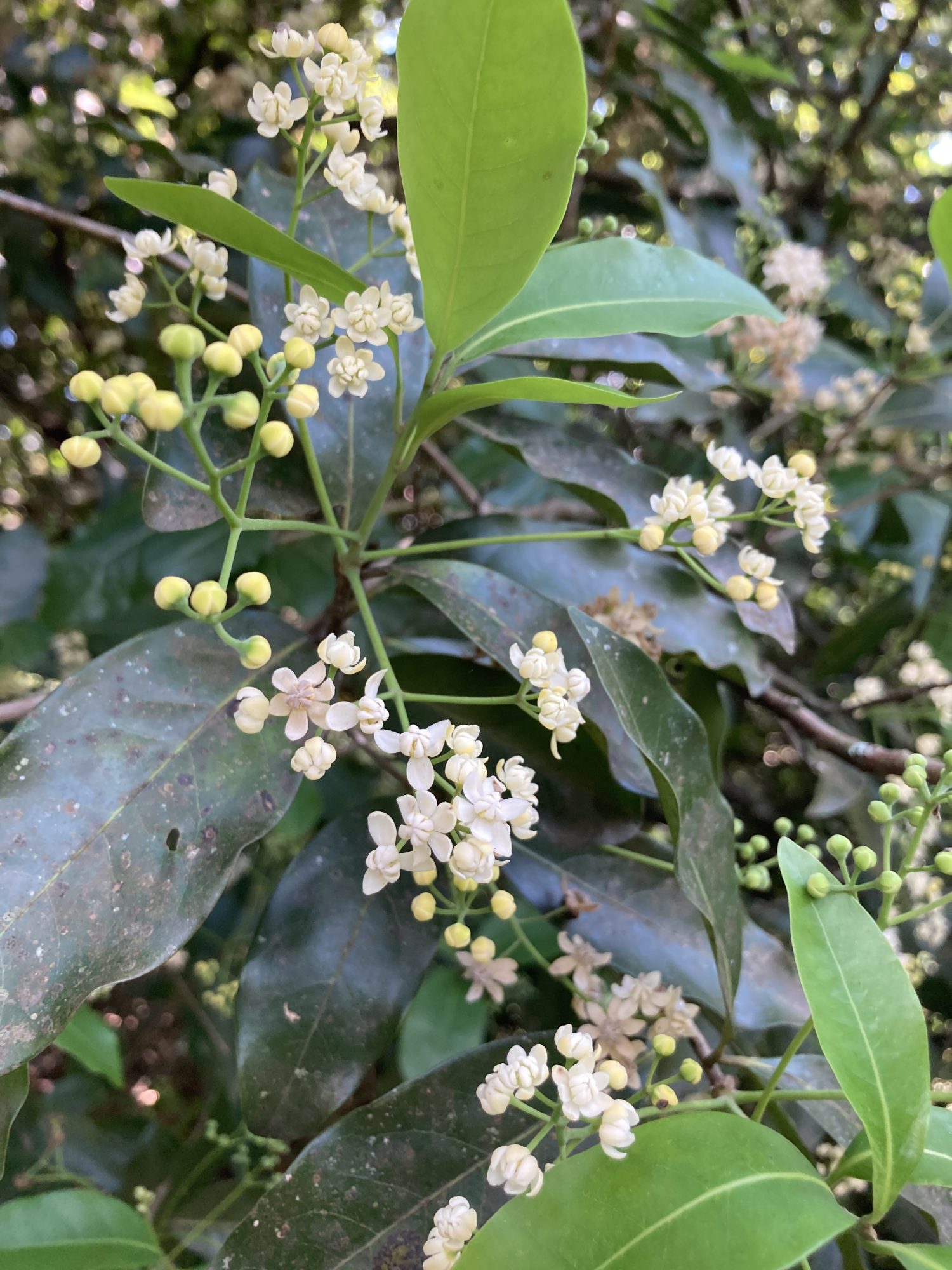
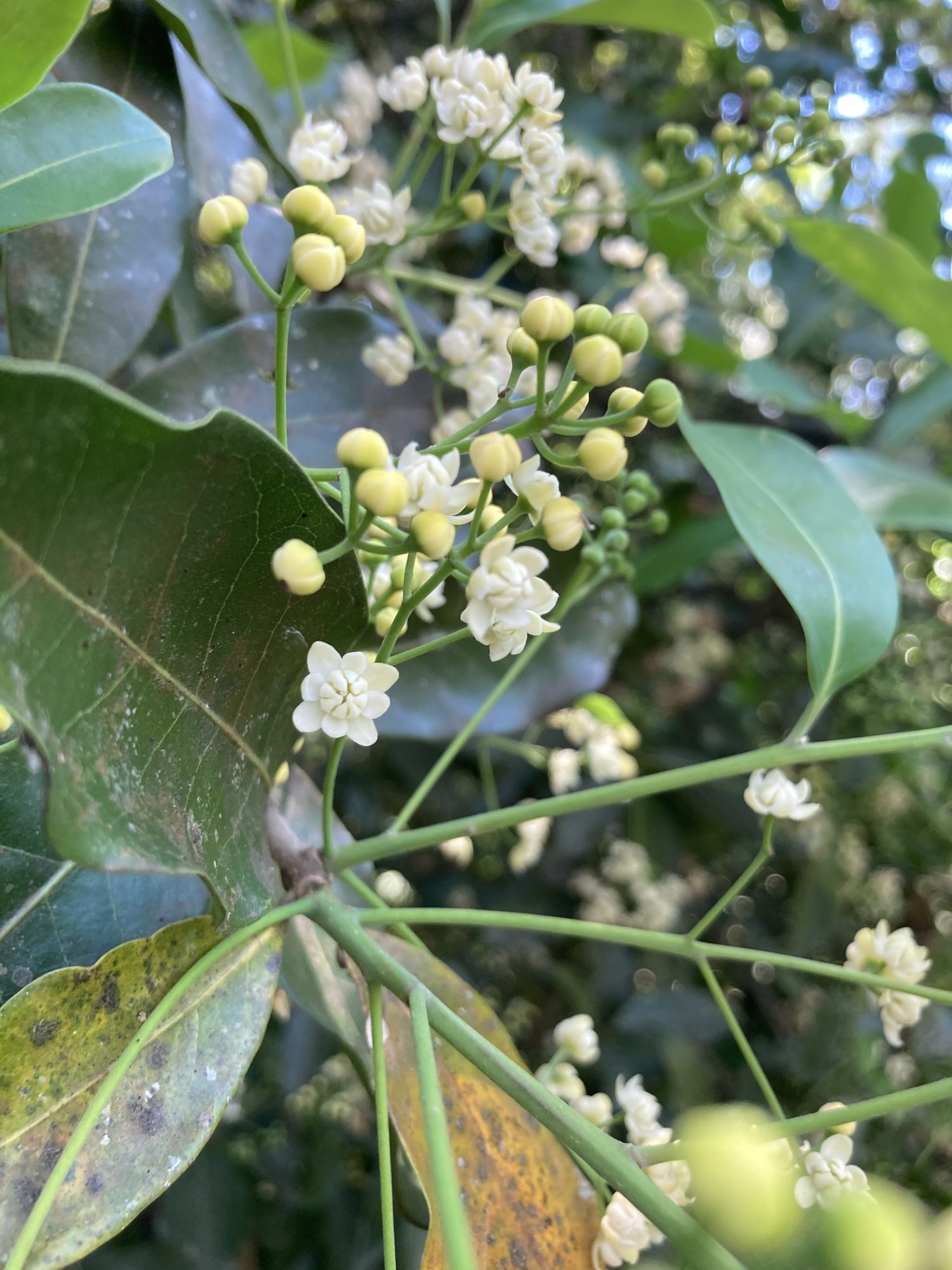
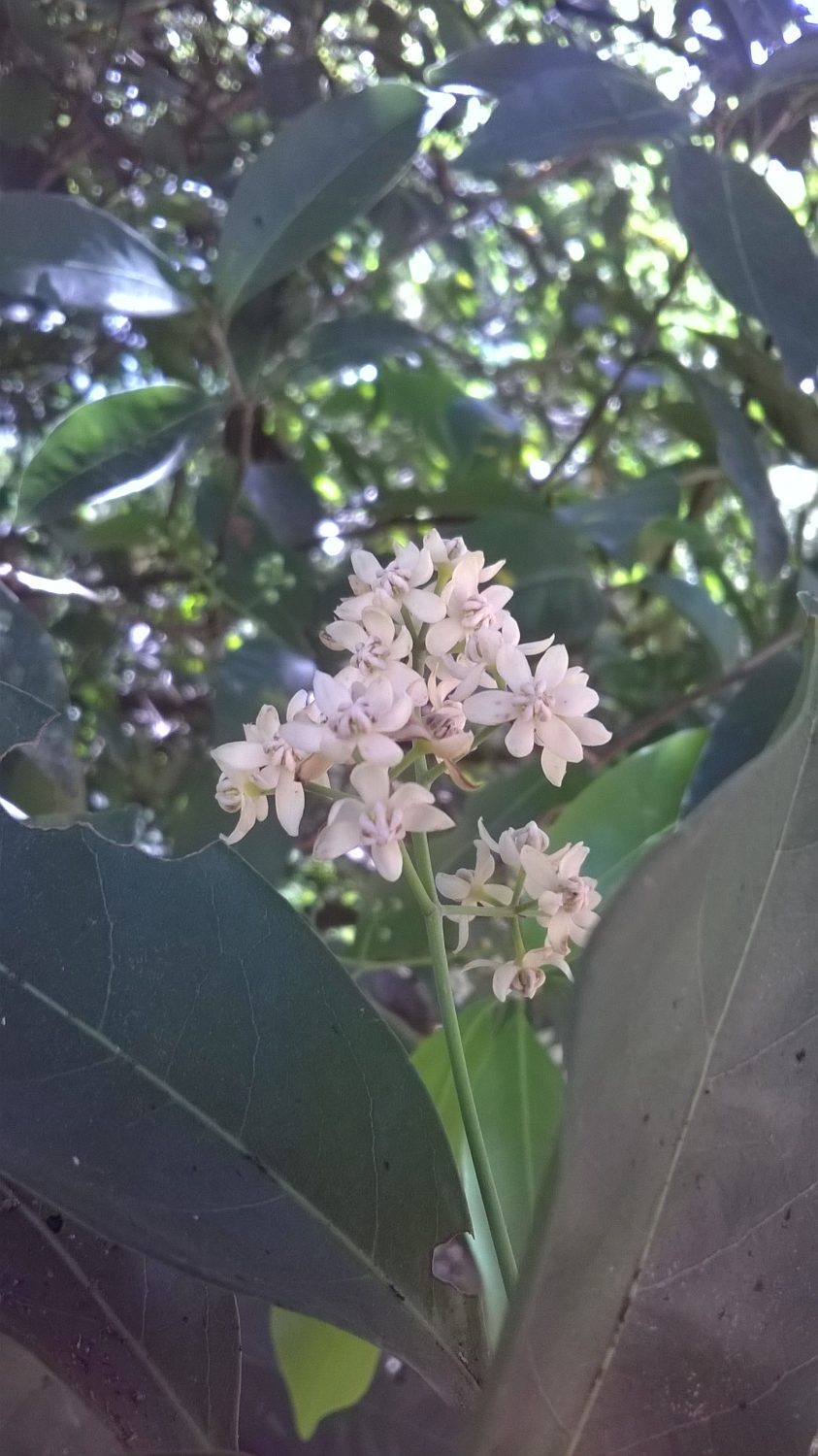
Flowers (1.5 cm) appear in small, terminal panicles of 10 or so blossoms each. They are off-white in color and composed primarily of six thick, pubescent petals. Six smaller and upright petal-like appendages cover the flowers center, where multiple, short stamens and single pistil reside. The sepals are fused into a small, cup-shaped calyx. This tree’s flowers emit a strong, pungent odor that is notable at some distance from the plant when blossoms are abundant. Ocotea is fertile on an annual basis, with most activity occurring from February through April but with sporadic flowers observable through September. Soon after fertilization, fruits begin to grow as both the ovary and calyx expand. Eventually, the calyx attains a diameter of 2 cm and a deep, bowl-like form with a raised and thickened, undulating rim.
The fruit becomes an olive-shaped and colored drupe (3 cm). Lodged deeply within the calyx, the unexposed base of the fruit is bright yellow in color. Upon ripening, the calyx changes from green to pink or red, becoming the fruit’s (if not the whole tree’s) most eye-catching characteristic. Ocotea trees generate relatively few of these single-seeded fruits and they are distributed thinly throughout the crown. Harvests last from July through early October, however empty calyxes may persist in the trees for some time after this.
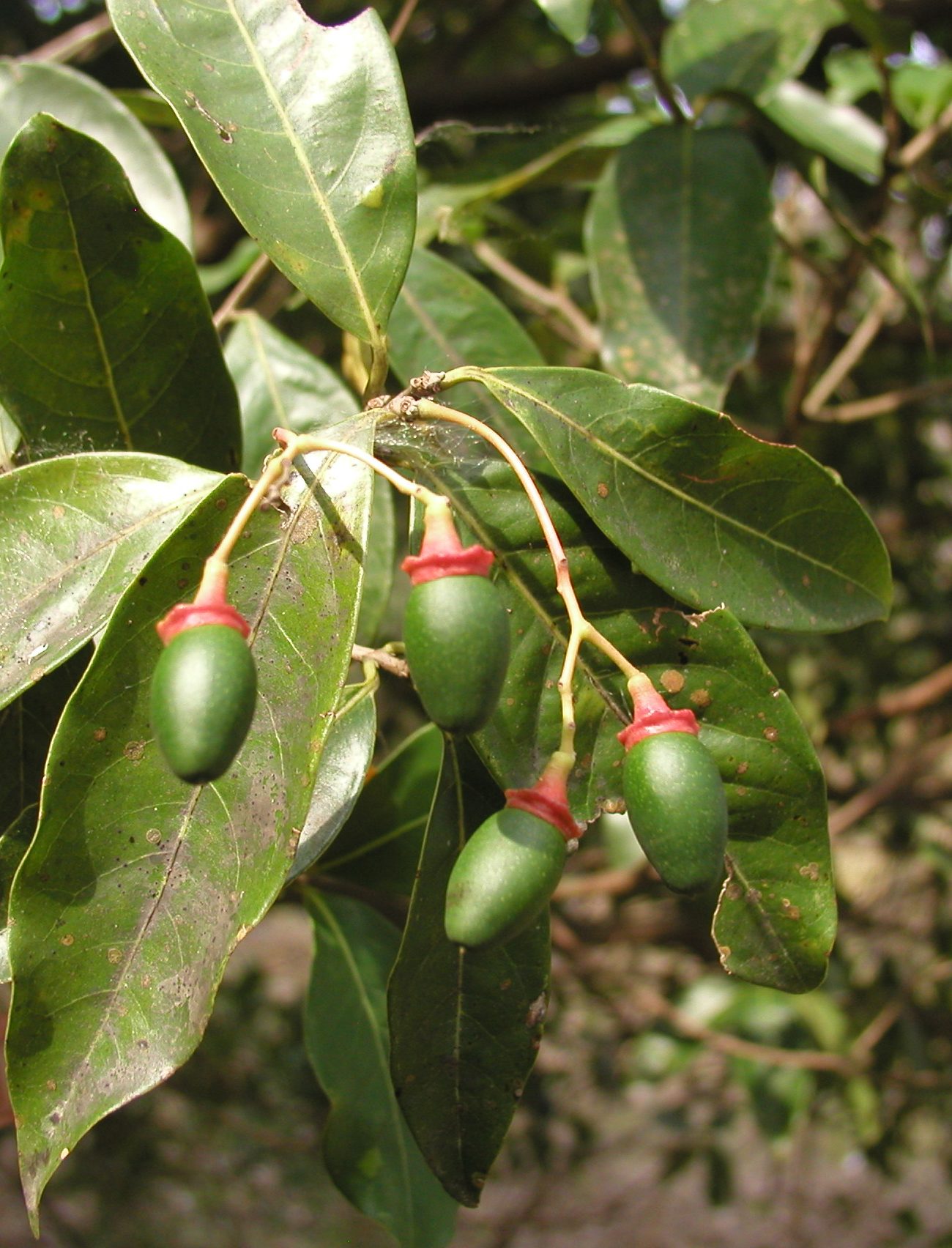
Similar Species: Canelo’s leaves, flowers, and fruits are similar to those of most other Lauraceaes present in Manuel Antonio. However, O. veraguensis differs from them is three important respects: it is the smallest in overall stature; it has the largest flowers; and it’s relatively massive fruit sports a calyx with a unique, undulating lip.
Natural History: Ocotea flowers are insect pollinated and its fruits are eaten and dispersed by mammals and large birds.
Uses: The bark of this species (as of many other Lauraceaes) is aromatic and reminiscent of cinnamon (hence the Spanish common name of “Canelo”). Cinnamon itself comes from the genus Cinnamomum. Canelo wood is reported to be dark brown, easy to work, and suitable for furniture, veneers, etc. (Allen, 1956).
Distribution: In MANP, Canelo is found thinly scattered alongside all the major trails, as well as in the forest and by streams. In Costa Rica, it grows all along the Pacific slope. It ranges from central Mexico to Panama.
 Trees of Costa Rica's Pacific Slope