Ormosia velutina Rudd
NENE
Fabaceae
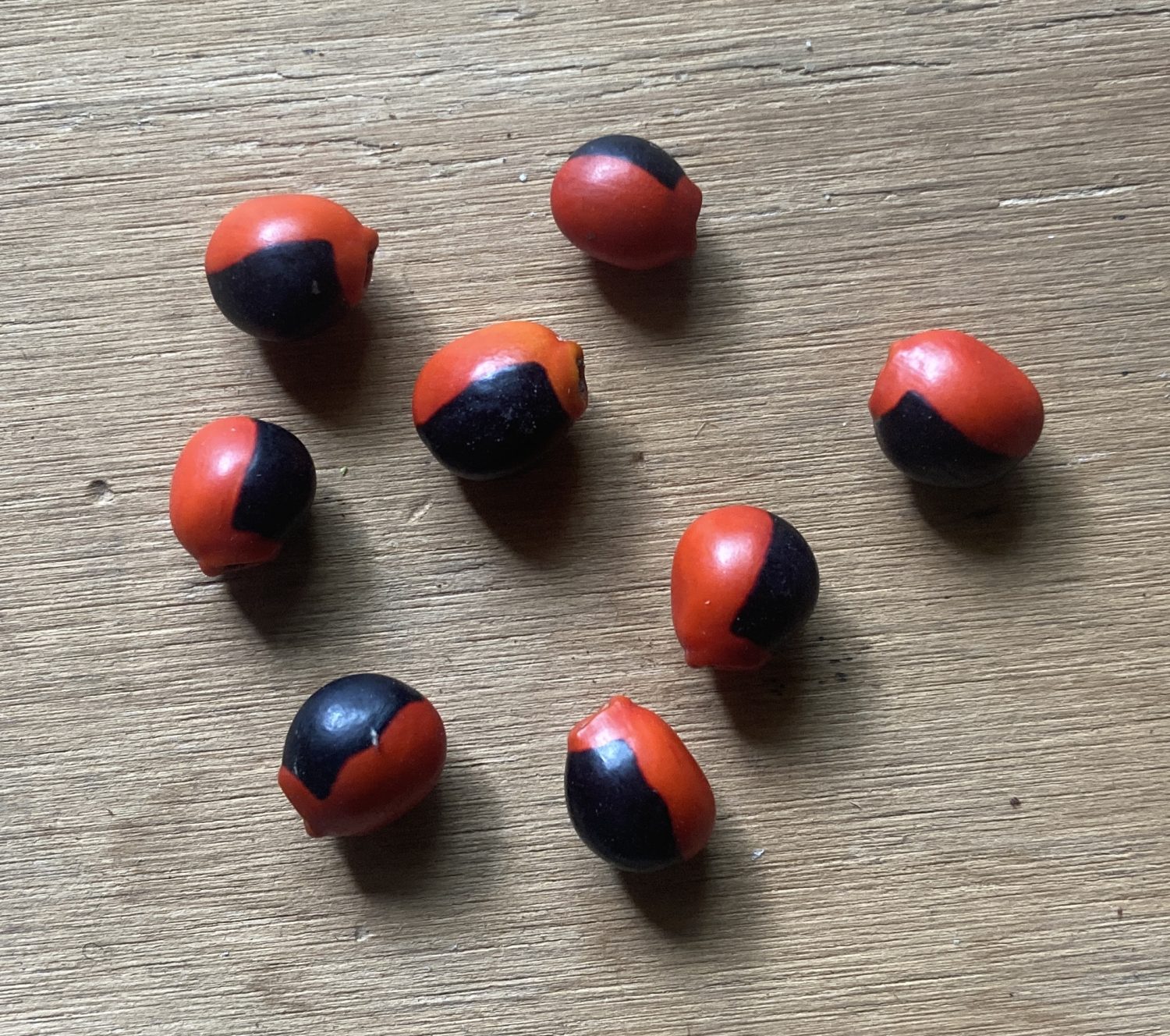
Rare evergreen canopy tree (25-35 m) occurring as widely scattered, isolated individuals amid dense stands of mature forest. This tree is the source of the popularly collected, brown and orange-mottled seeds commonly referred to as “Nenes”.
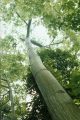
Description: Ormosia has a columnar, cylindrical trunk (1 m) that lacks buttresses and is clad in smooth, gray bark. Its stout branches spread out widely, producing a large, moderately dense, rounded crown. Leaves are large (60 cm by 35 cm), imparipinnately compound and alternate. Each of the nine to eleven leaflets is elliptically shaped with an abrupt, short drip-tip. Leaflet size is extremely variable – ranging from 24 cm by 9 cm to 15 cm by 5 cm. The lower surface of the blades is marked by prominent, elevated, pinnately arranged veins covered by fine, rust colored hairs. All foliage is shed from the trees in January and a fresh cover is regenerated immediately thereafter.
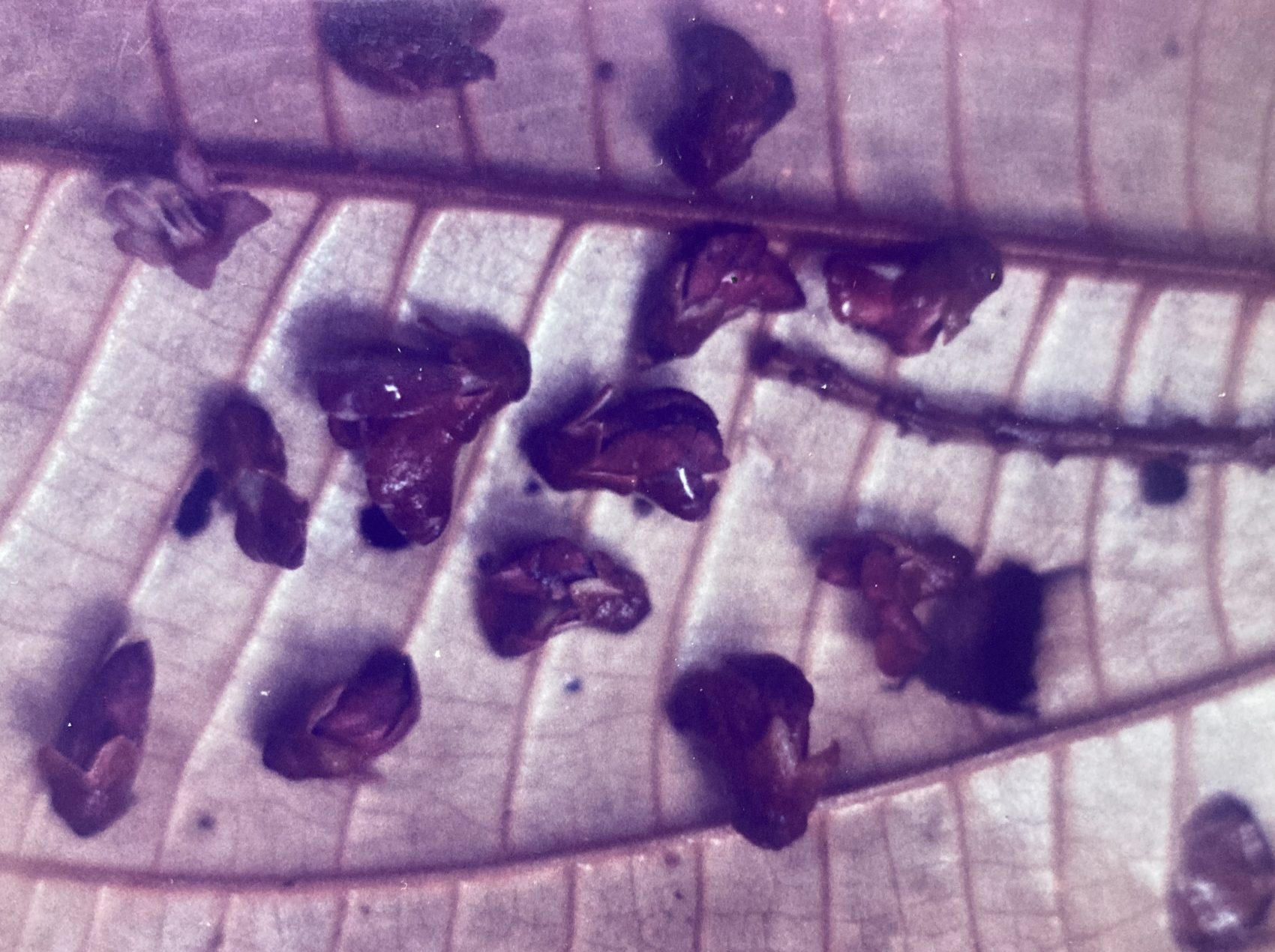
Flowers (1.5 cm long) appear in large, axillary panicles. Resembling the pea or bean flowers typical of many leguminous species, Ormosia blossoms have five unequal, maroon petals; a lobed, velvety, cup-shaped calyx; ten stamens; and a central pistil attached to a dark brown ovary. One larger petal, positioned superiorly, is wide and hoodlike, bearing a central green blotch on its surface. Inferior to it, another larger petal possesses a cup-like shape. Flowering occurs in May, but apparently only in alternate years: blossoms have been observed in 1989, 1991, 1993, and 1995.
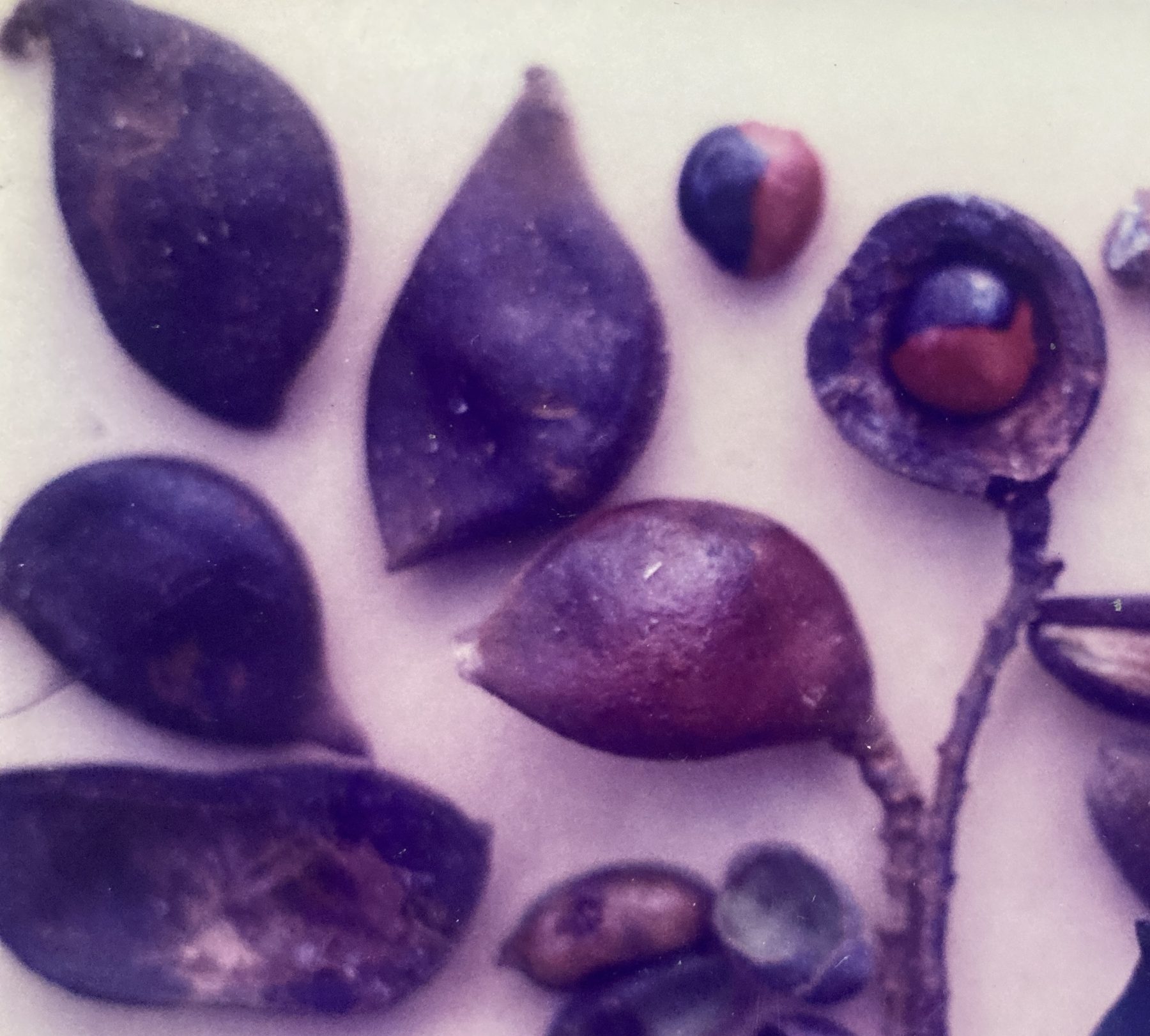
Fruits are thick-walled, somewhat flattened, woody pods (4 cm) that are held at the ends of the stiff flower-panicle stalks – well above and away from the tree crown. They are smooth-textured, glossy, and sport a reddish-brown hue when mature. Eventually, each pod splits longitudinally and exposes a single, rounded and bicolored seed (1 cm). Half brown and half orange, its distinctive coloration is unique and positively identifying. Harvests begin in September and last at least until November, during which time the pods slowly open. However, Ormosia seeds often remain in the canopy for months after this, resting in the open pods until the wind or some animal dislodges them – or until the pod rots and falls to earth. Once in the moist soil, the seed germinates immediately.
Similar Species: In Manuel Antonio National Park, only Lonchocarpus pentaphyllus has compound leaves of similar size and shape. It even has virtually identical, maroon-colored flowers. However, this tree is much smaller (reaching only sub-canopy proportions) and rarer, and its leaves lack the covering of fine hairs that are present in O. velutina. Spondias mombin, also bearing imparipinnately compound leaves (although quite dissimilar in form), has more abundant and much smaller leaflets per leaf than does Ormosia.
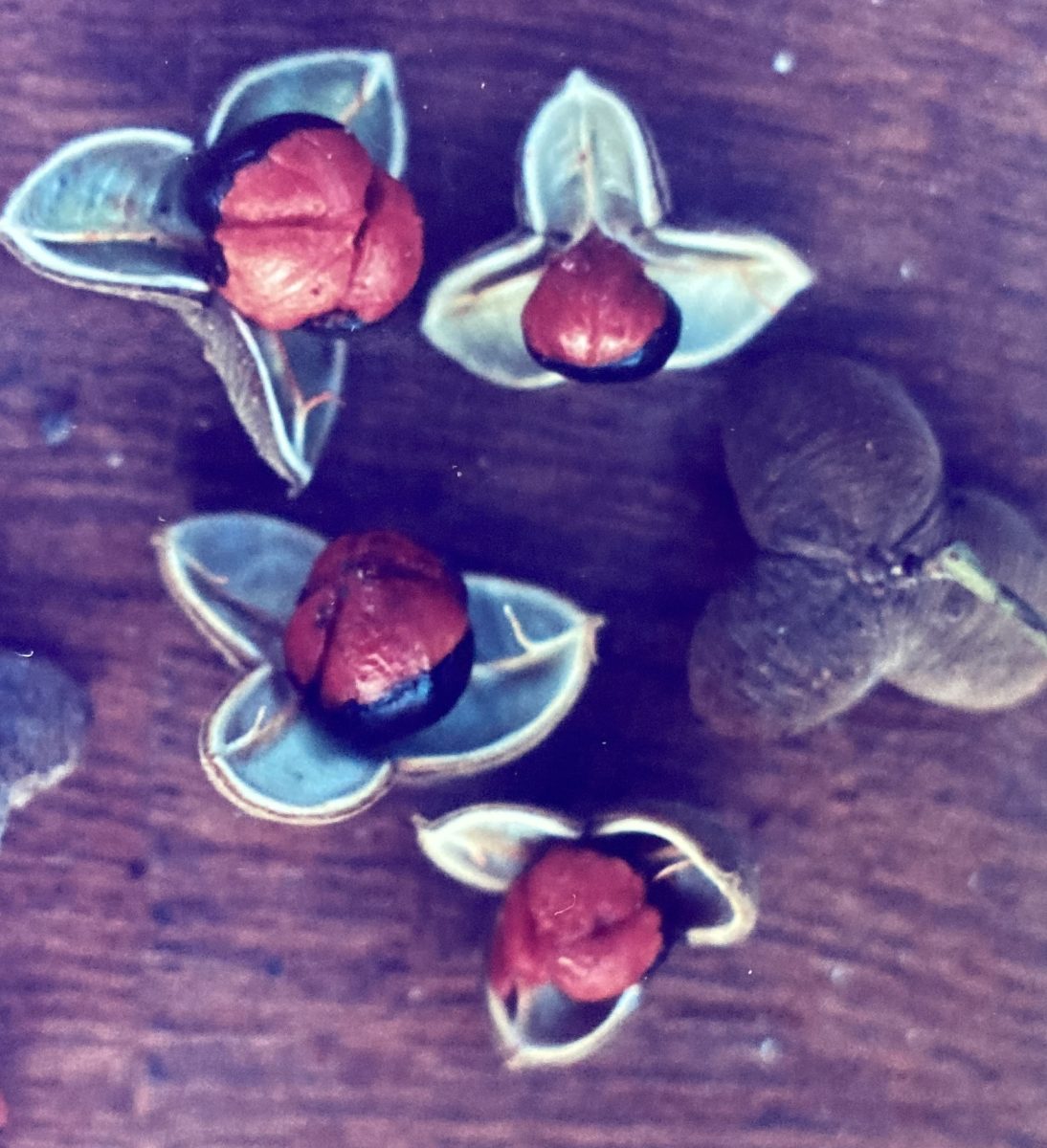
Natural History: Flowers are pollinated by insects. Seed dispersal is enigmatic. Generally, Ormosia fruits open in the trees and the seeds fall to the ground directly beneath the parent plant – so most seeds are not dispersed at all. Their curious color pattern does lead to some conjecture concerning a possible strategy that may work for some fruits. Many forest trees produce seeds that are enveloped in a thin, brightly colored (red, orange, or yellow), and nutritious layer of flesh called an aril (e.g. Virola sp., Trichilia sp., Copaifera aromatica, Pseudolmedia spuria, Slonea picapica). Animals, especially birds, will take the whole fruit, strip the seed of its aril – or even swallow the aril with its seed intact – and later drop the seed in new location. This is an extremely effective mode of tree propagation. Ormosia seeds lack an aril, but they do seem to mimic ariled seeds with their bright and highly visible color pattern (arils frequently cover only part of the seed, and the mottled coloration of Ormosia seeds suggests this habit). Perhaps, busy, food-seeking birds are sometimes fooled into taking Ormosia seeds momentarily – carrying them some distance before the ruse is detected and the seeds are discarded uneaten. If this occurs, Ormosia trees may share in the benefits of having ariled seeds without having to invest the energy necessary to produce them. It is interesting – and perhaps more than coincidental – that Ormosia shares it’s Manuel Antonio habitat with a pair of species of Trichilia (see T. pallida, T. glabra) whose half-orange, half-black – but truly ariled – seeds strongly resemble those of Ormosia. The red-seeded Poro (Erythrina berteroana) – another common Costa Rican leguminous tree – seems to share this dispersal strategy (as do other members of the Ormosia genus). In this species, long, tubular pods split longitudinally and open inside-out, exposing their bare, red seeds and retaining them in a highly visible position at the tips of the branches.
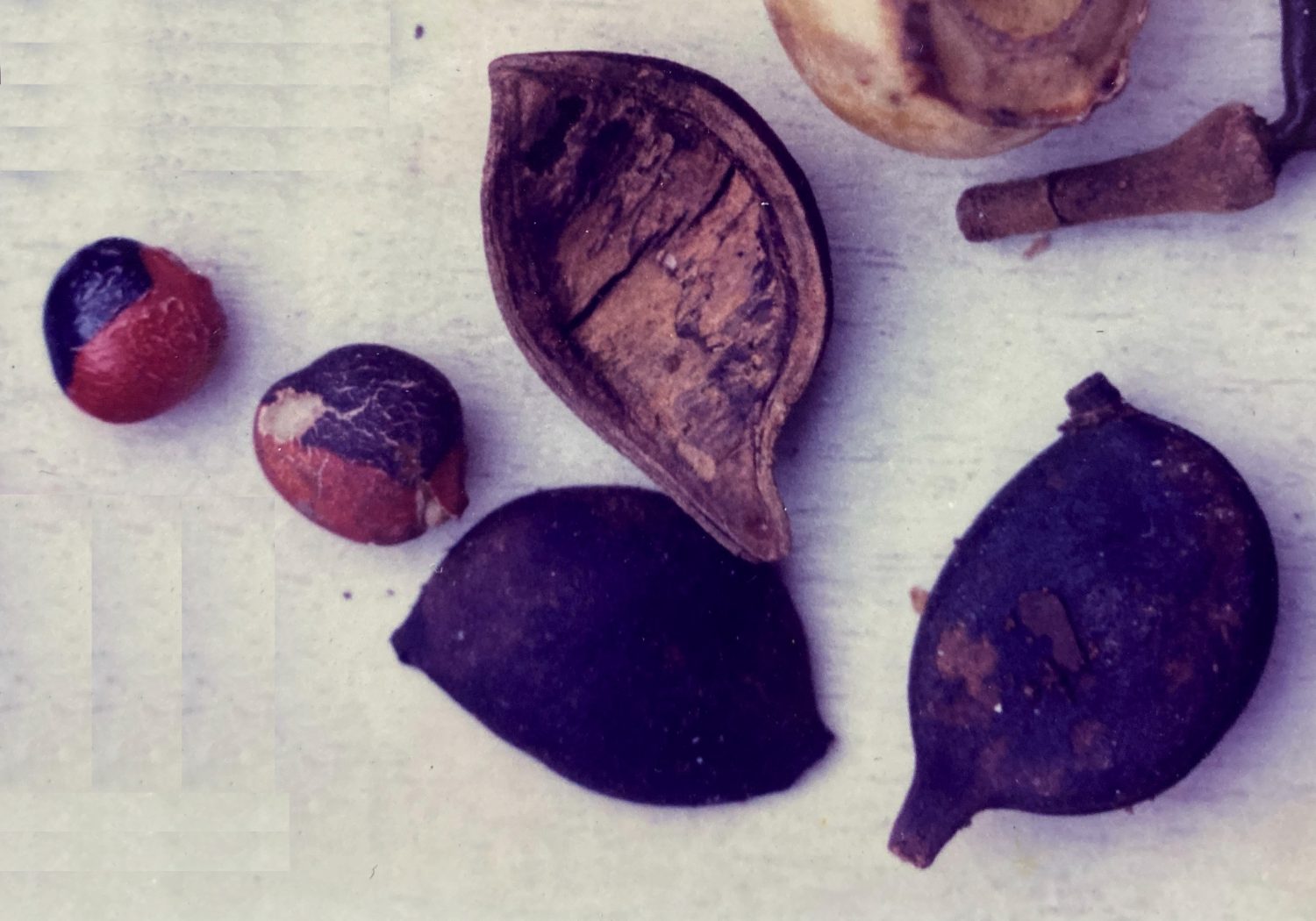
Uses: The interestingly patterned and attractive seeds are used by artisans in the fabrication of decorative jewelry and other trinkets.
Distribution: In MANP, Ormosia velutina is a true member of the climax, primary forest where it tends to be found on well drained soils like those typical of hills and ridges. It ranges from Belize to Costa Rica.
 Trees of Costa Rica's Pacific Slope