Peltogyne purpurea Pittier
Bignoniaceae Nazareno
PURPLE HEART
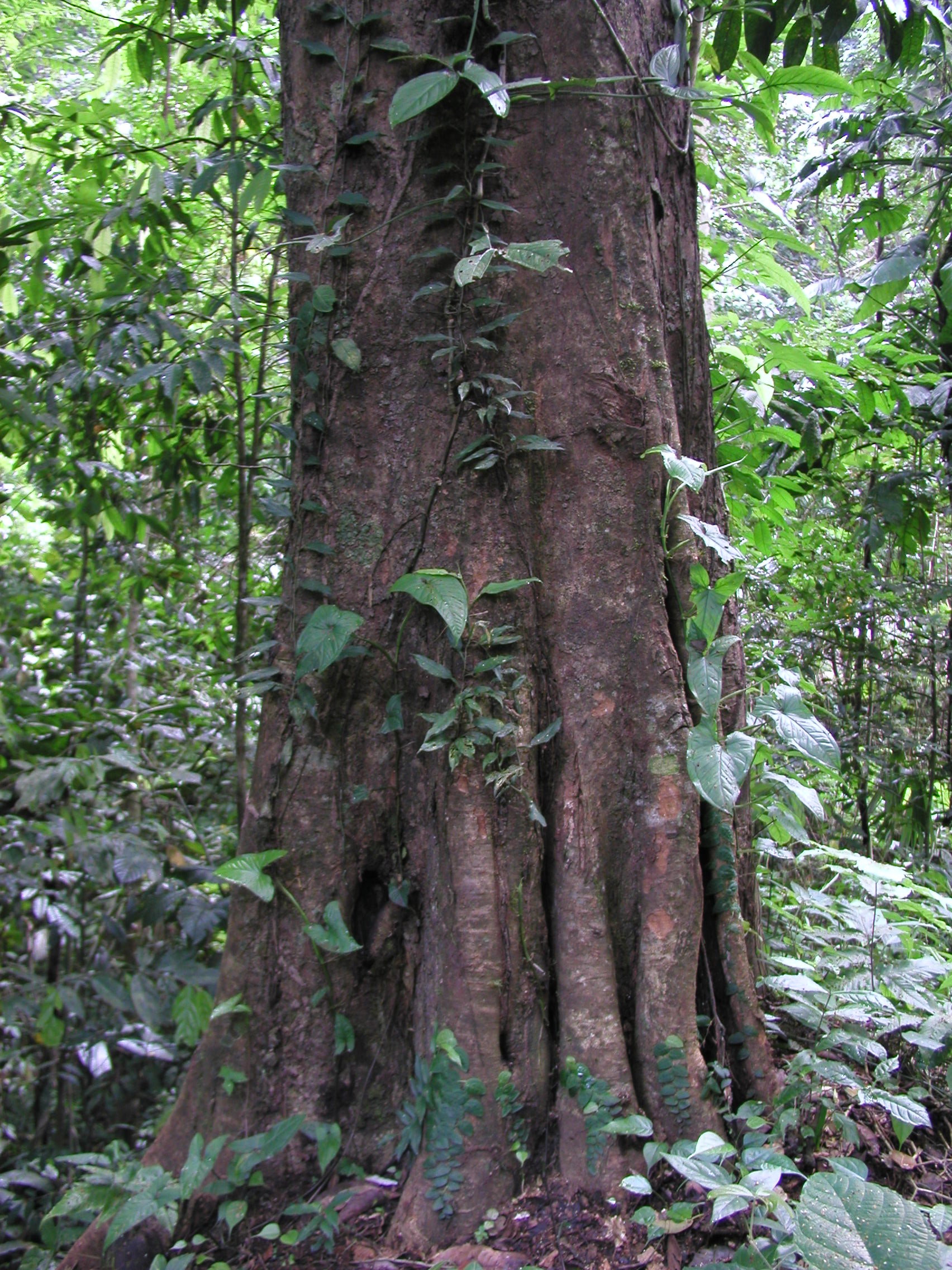
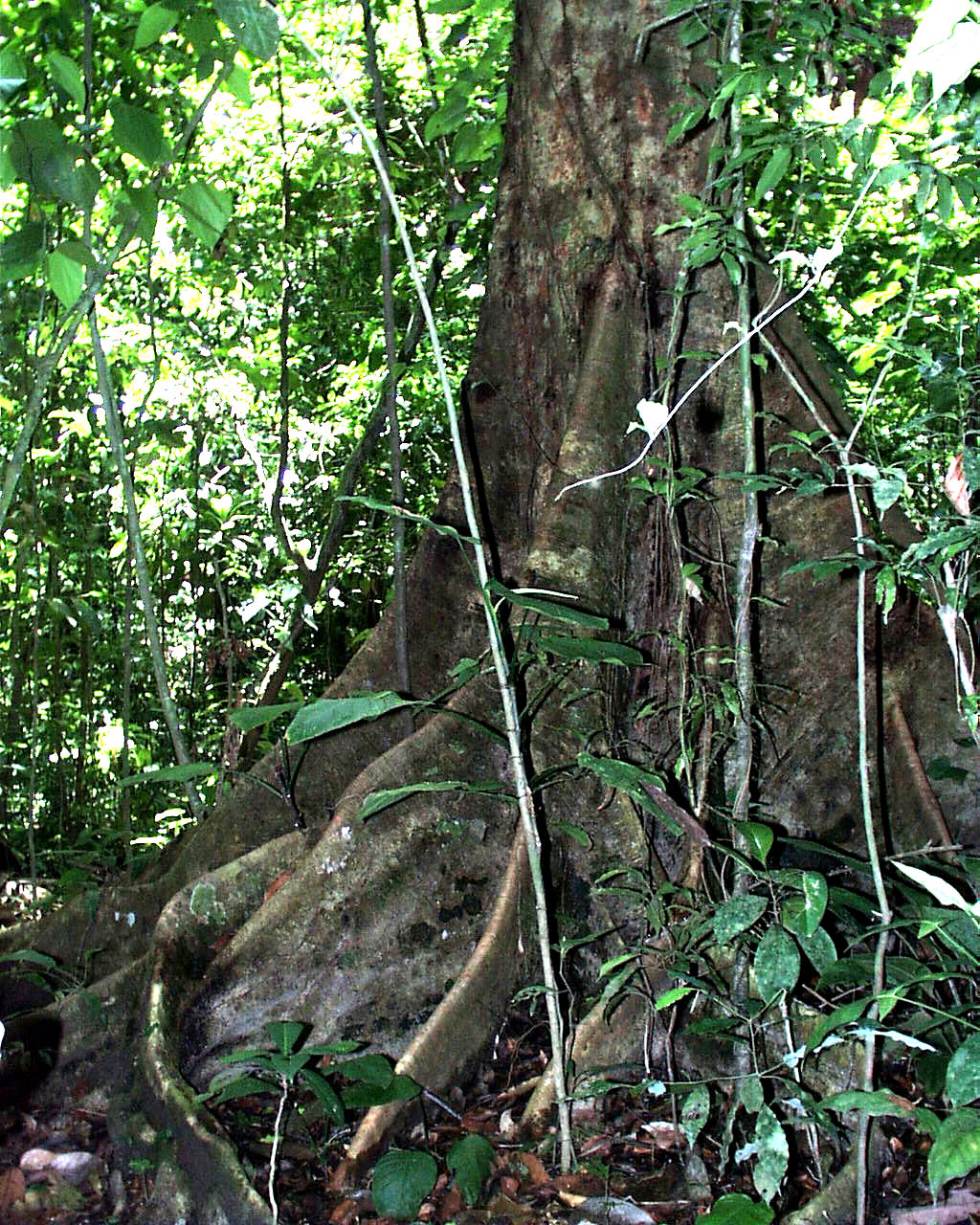
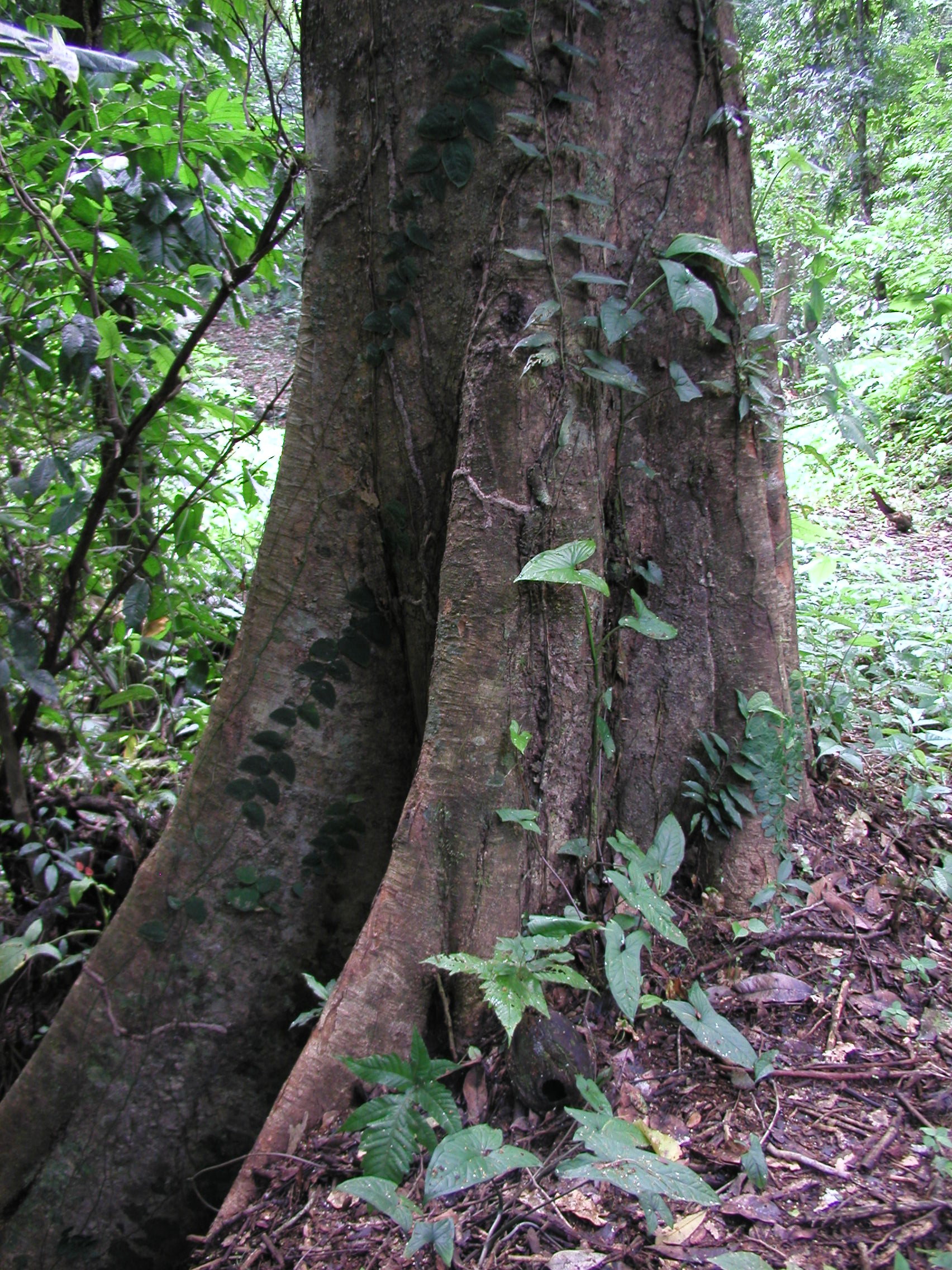
Tree: Rare, primary forest tree (30-40m) found in the humid lowlands of Costa Rica’s southwest Pacific coast. This species is notable for its towering, columnar bole and eye-catching, purple-colored heartwood.
Description: Nazareno has a straight, regular, columnar trunk (80-100cm) that extends upwards to the forest canopy and supports a modest, narrow crown. The bark is dark brown and smooth, accentuating the cylindrical shape of the bole. This regularity is ceases at the base of the trunk, where stout buttress roots emerge from the and disappear into the forest floor.
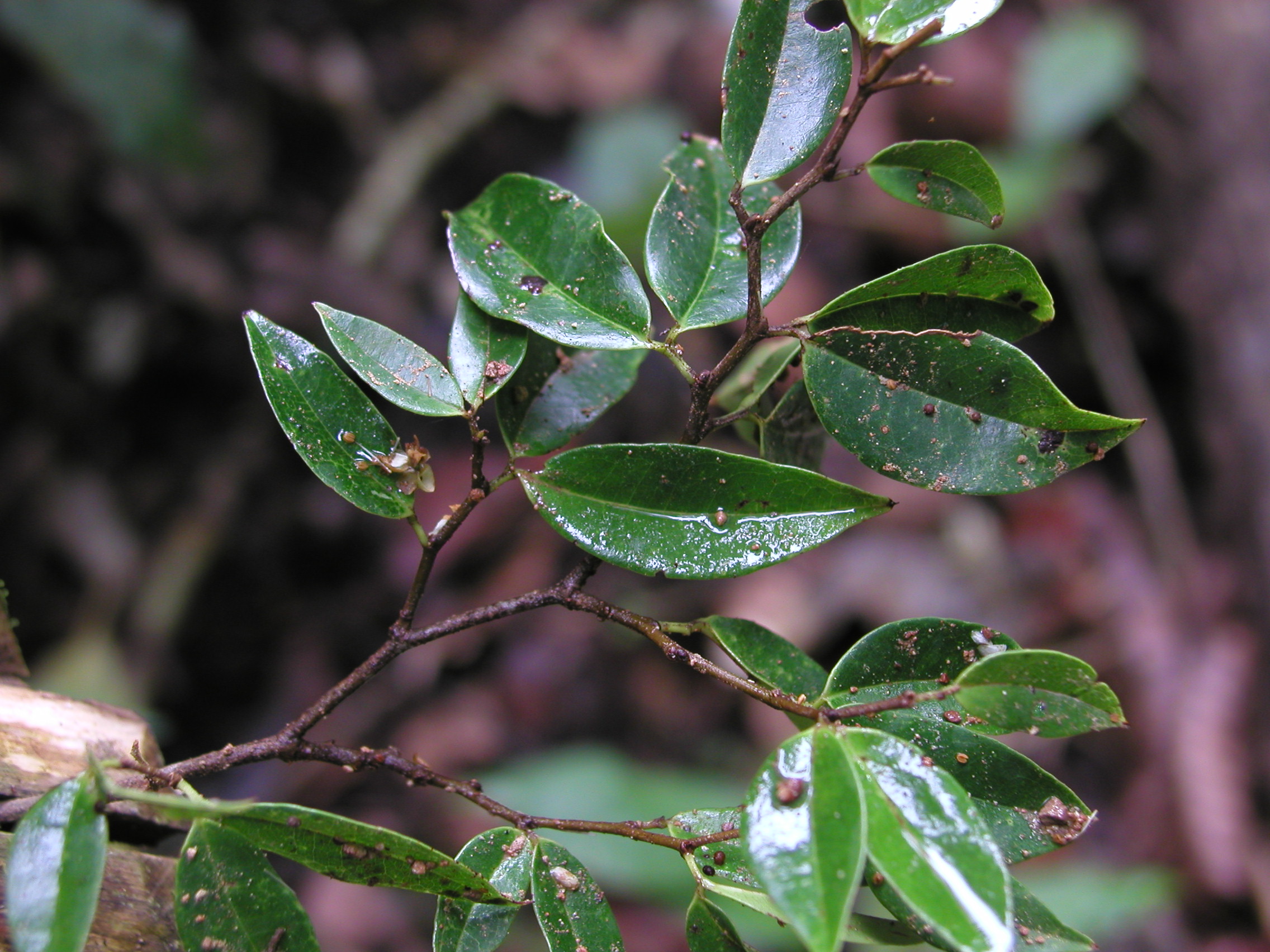
Nazareno leaves, supported by short petioles, are pinnately compound and alternately arranged at the corners of the zig-zagging twigs. Each leaf consists of a pair of asymmetrical, falcate leaflets (5cm by 2cm) that create a distinctive pattern likened by some to the footprint of a deer. (Note that the two Guapinol species described on this website share similarly shaped foliage.) Briefly deciduous, Nazareno trees shed their old leaves and generate fresh foliage early in the year (Allen, 56).
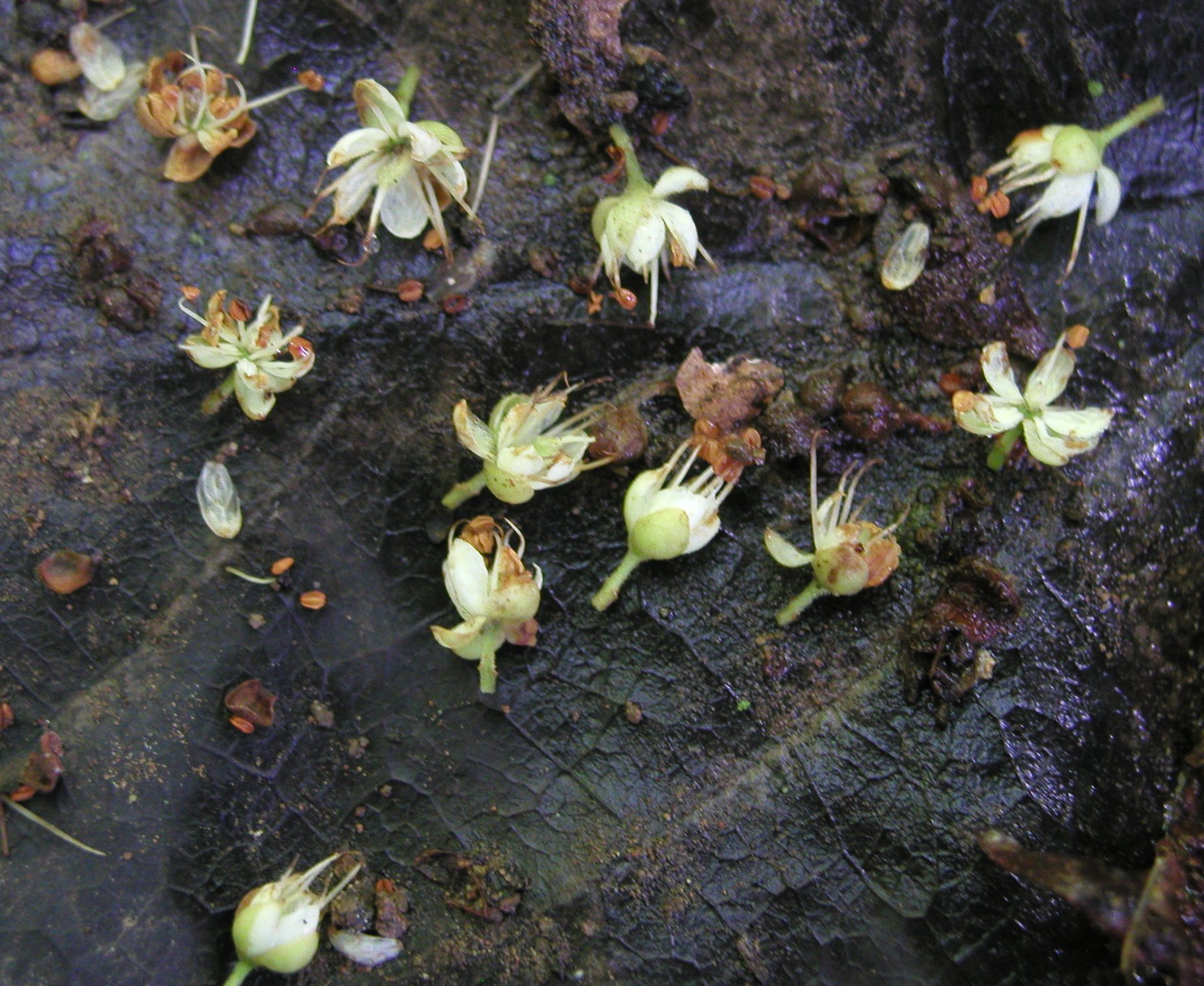
The small, pale, fragrant flowers (<1cm) are borne in subterminal panicles (Poveda, 75), and have been observed as late as October by the author. Reports from the Osa Peninsula, however, document flowering episodes beginning as early as April, occurring sporadically thereafter until around September (Vílchez-Alvarado, 2012). Each blossom consists of 5 cupped sepals and an equal number of white petals and brown-anthered stamens. At the center, a broad, flattened, pale-green pistil acts as a centerpiece. Fruits (3 x 1.5cm) are flat pods each carrying a single, oval seed (Poveda, 75; Croat, 78). These legumes take about 4 months to mature, and the seed is often seen dangling from the open pod by a string-like attachment. The seed pod bears some resemblance to a wing, which lead at least one source to conclude that the species is wind dispersed.
Similar Species: The fairly common Guapinol tree (Hymenea courbaril) boasts leaves of similar shape and composition to those of Nazareno, and the two trees share a similar habitat, however the Guapinol leaves are easily twice as large as those of Nazareno.
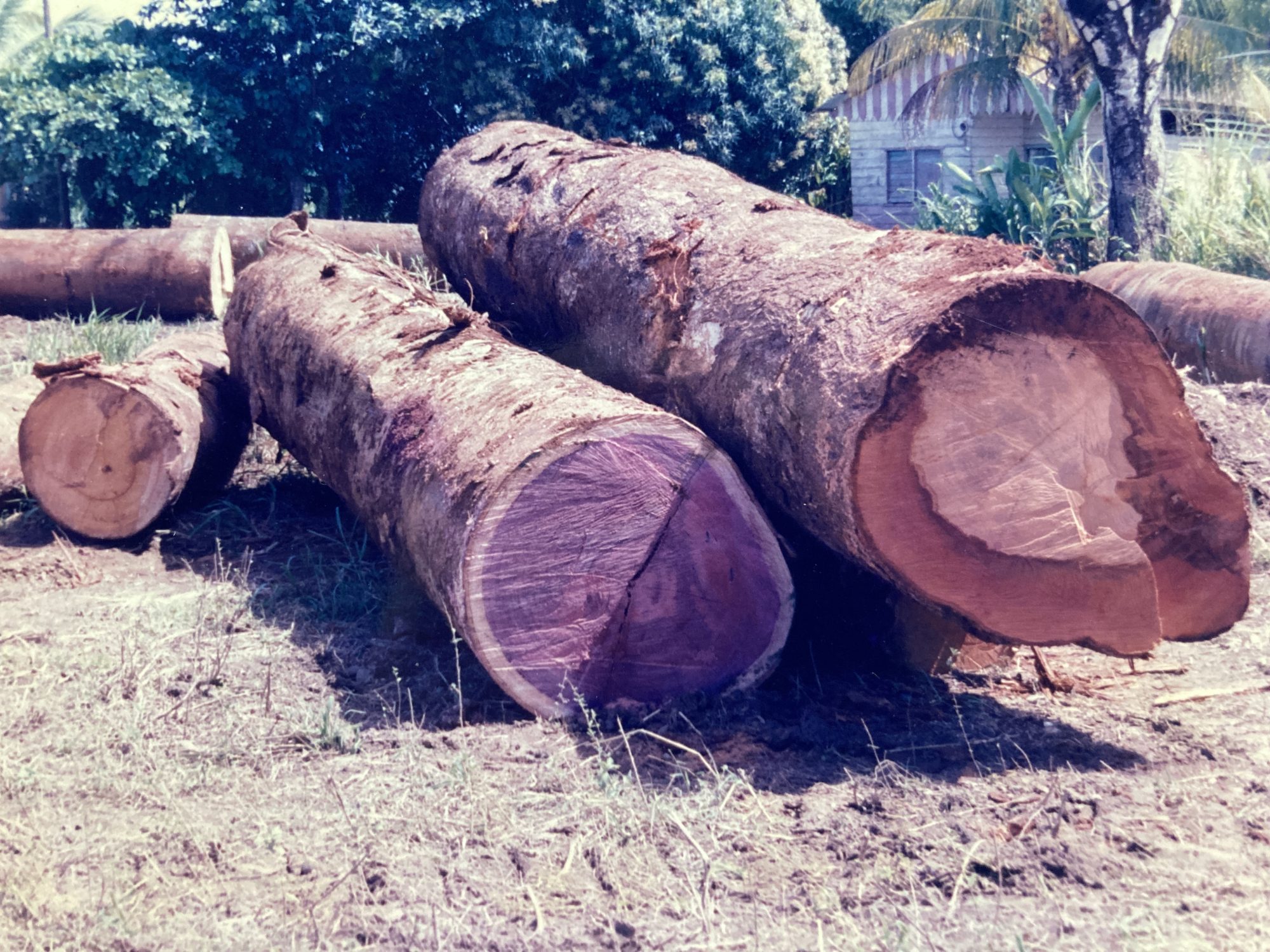
Uses: The unusual purple color of Nazareno heartwood, makes this tree a popular source of timber for floors and other types of artisanry. The wood is hard, resinous, and dense. With time and exposure to light, the vibrant purple color fades and takes on a more maroon hue. Over 20 other species occur within the Peltogyne genus, and apparently many of them also sport this intriguing wood color. Examples include Peltogyne mexicana and Peltogyne pubelcens.
Distribution: Particularly abundant in Costa Rica’s Osa Peninsula, the species ranges from Costa Rica (around Carara) to Colombia.
 Trees of Costa Rica's Pacific Slope