Pradosia atroviolaceae Ducke
Sapotaceae
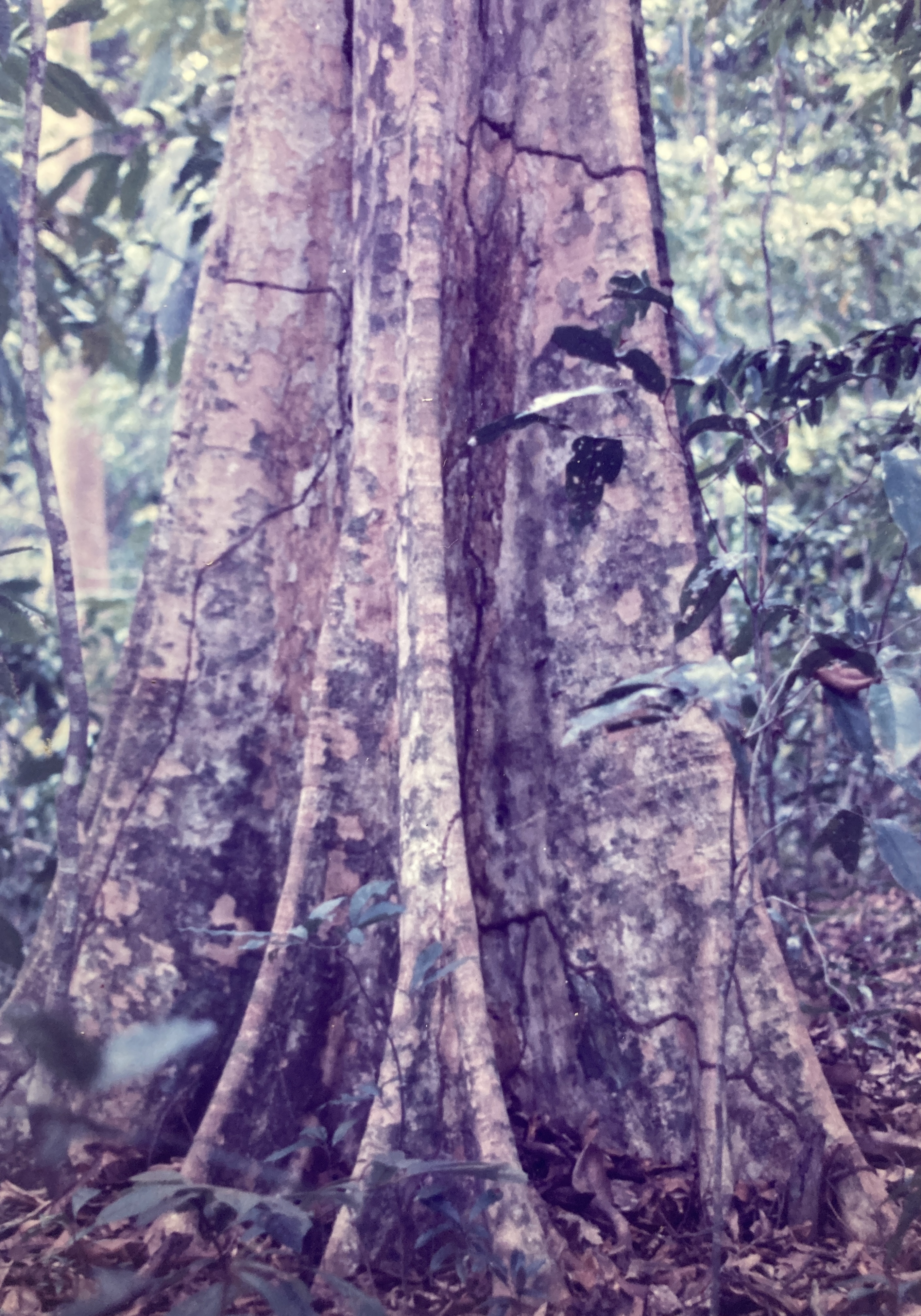
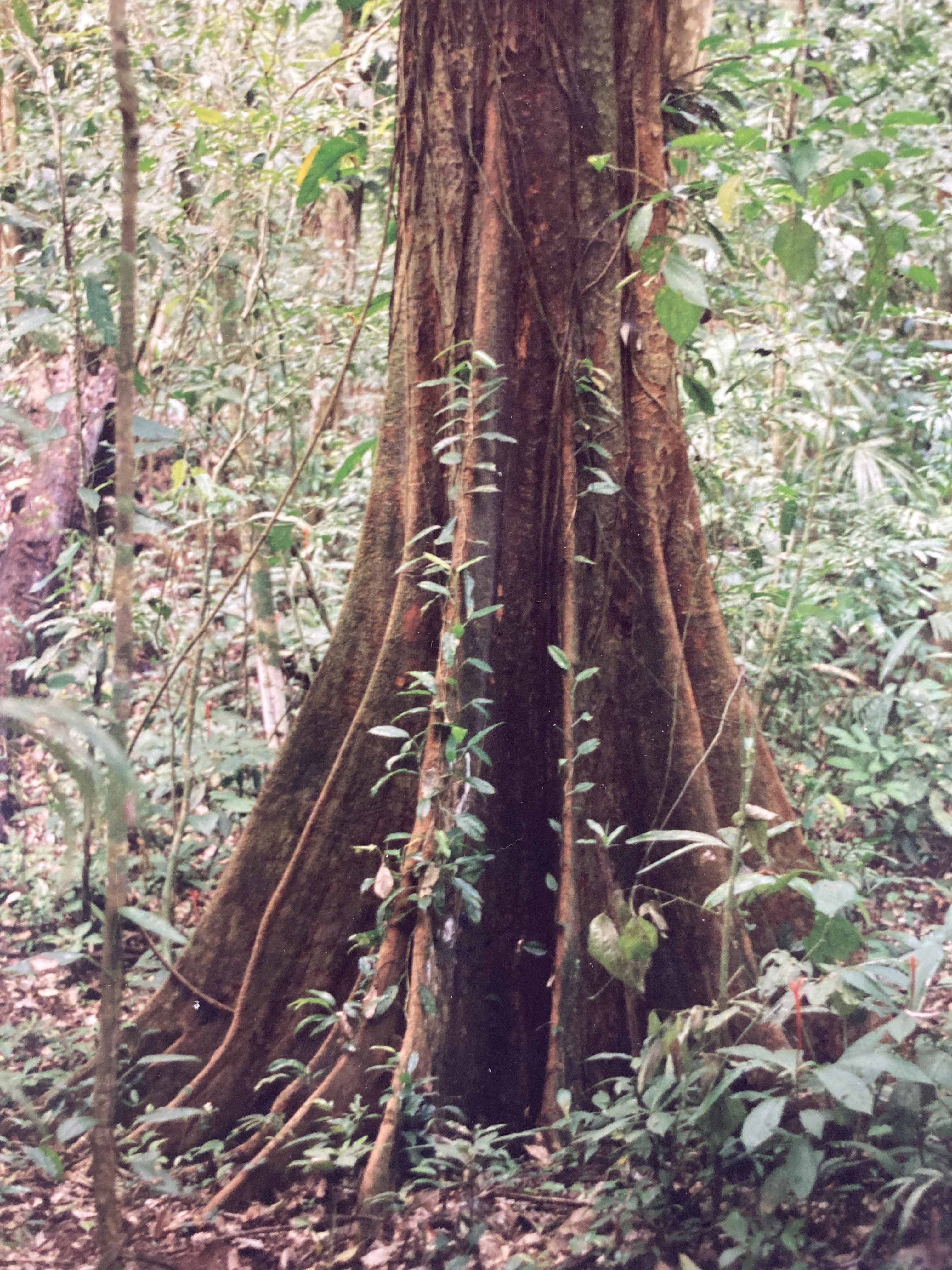
Occasional emergent evergreen tree (25-35 m) found widely distributed in all but the driest (beachside) primary forest ecosystems. The species is particularly prevalent along the crests of ridges where it appears to dominate the arboreal vegetation adapted to these prone sites. Easily one of the most impressive and magnificent of tropical forest trees, Pradosia is a massive, towering giant, sporting high, wall-like buttresses and a wide, spreading crown. Copious quantities of yellow fruits, fashioned after the typical Sapotaceae style, are produced in widely spaced intervals of several years.
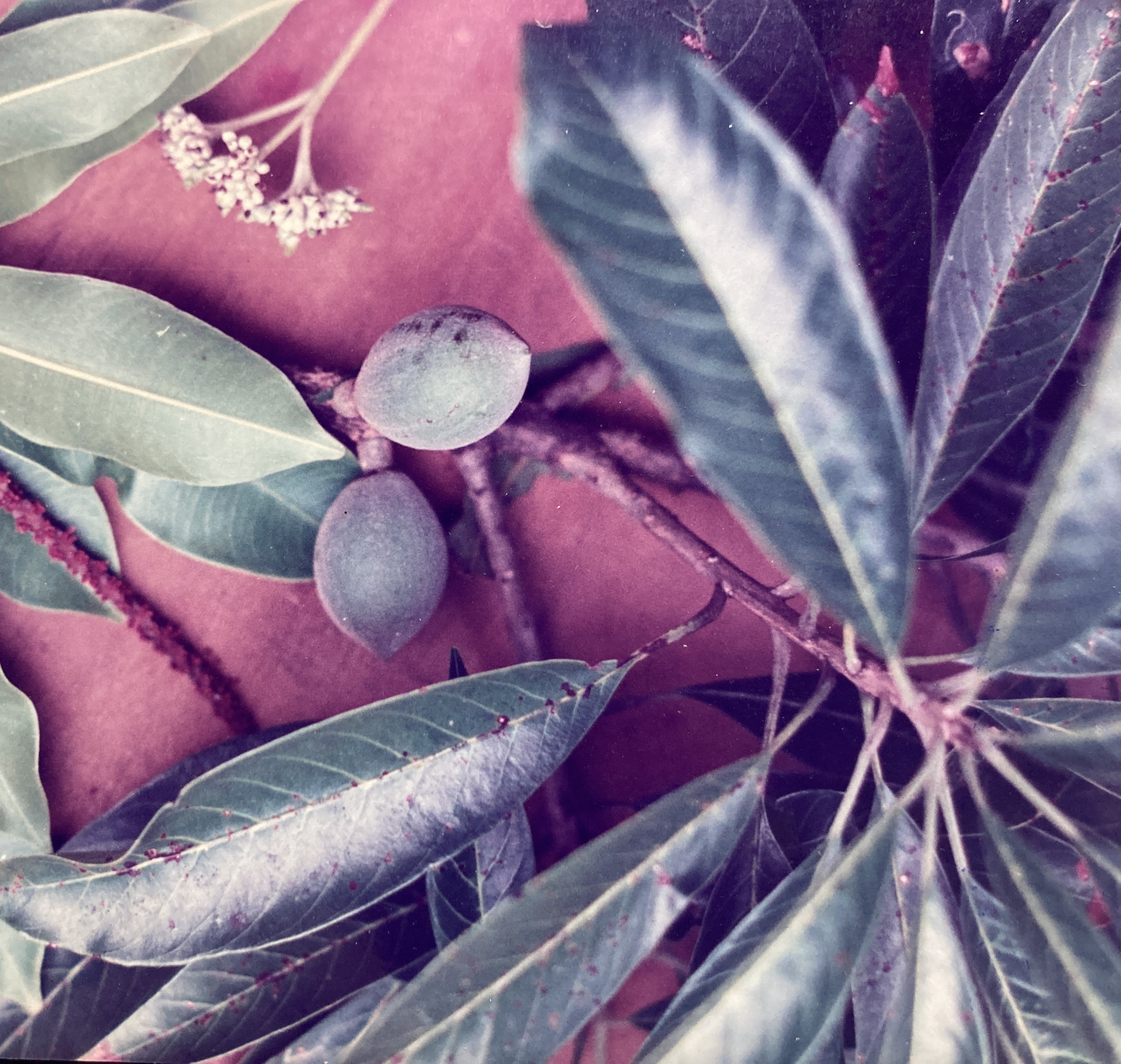
Description: The largest Pradosia trees boast massive trunks that typically measure well over a meter in diameter. Straight and columnar, the boles possess some of the most elaborate and well developed buttress roots to be seen in tropical forest trees. Those of the largest individuals are high (reaching 2 meters up the sides of the trees), relatively thin, wall-like structures that subdivide as they angle away from the trunk over several meters of forest floor. Younger – but still canopy – trees have steeper, less complex buttresses that merge with the soil near the bole. Pradosia bark is also quite distinctive. Largely flesh or creme colored, the cortex is mottled with patches of gray and orange. Here, scallop shaped plates of old, gray bark exfoliate, exposing areas of lighter, orangish bark underneath. In the oldest and largest trees, the process of exfoliation appears to slow down and the bark takes on a more uniform light gray or off-white color and a rougher texture. Restricted to the extreme upper portion of the bole, Pradosia’s massive limbs are long, elastic, and resilient structures that curve upwards at their extremes. They form a very wide, single-layered, umbrella-shaped crown of moderate density. The limbs are also mostly bare, with leaves found clustered in dense, whorl-like groupings only around branch tips. Simple and alternate, Pradosia leaves are narrowly elliptical in shape and quite variable in size, averaging 15 cm long by 4 cm wide. They have very long petioles (3 cm) and only moderately developed drip tips. Each thick, waxy blade is characteristically etched by a prominent, pinnate pattern of veins whose yellow color stands in stark contrast to the dark green of rest of the leaf. In December and January, the entire foliage cover is renewed as existing leaves turn yellow and are shed while new leaf growth begins.
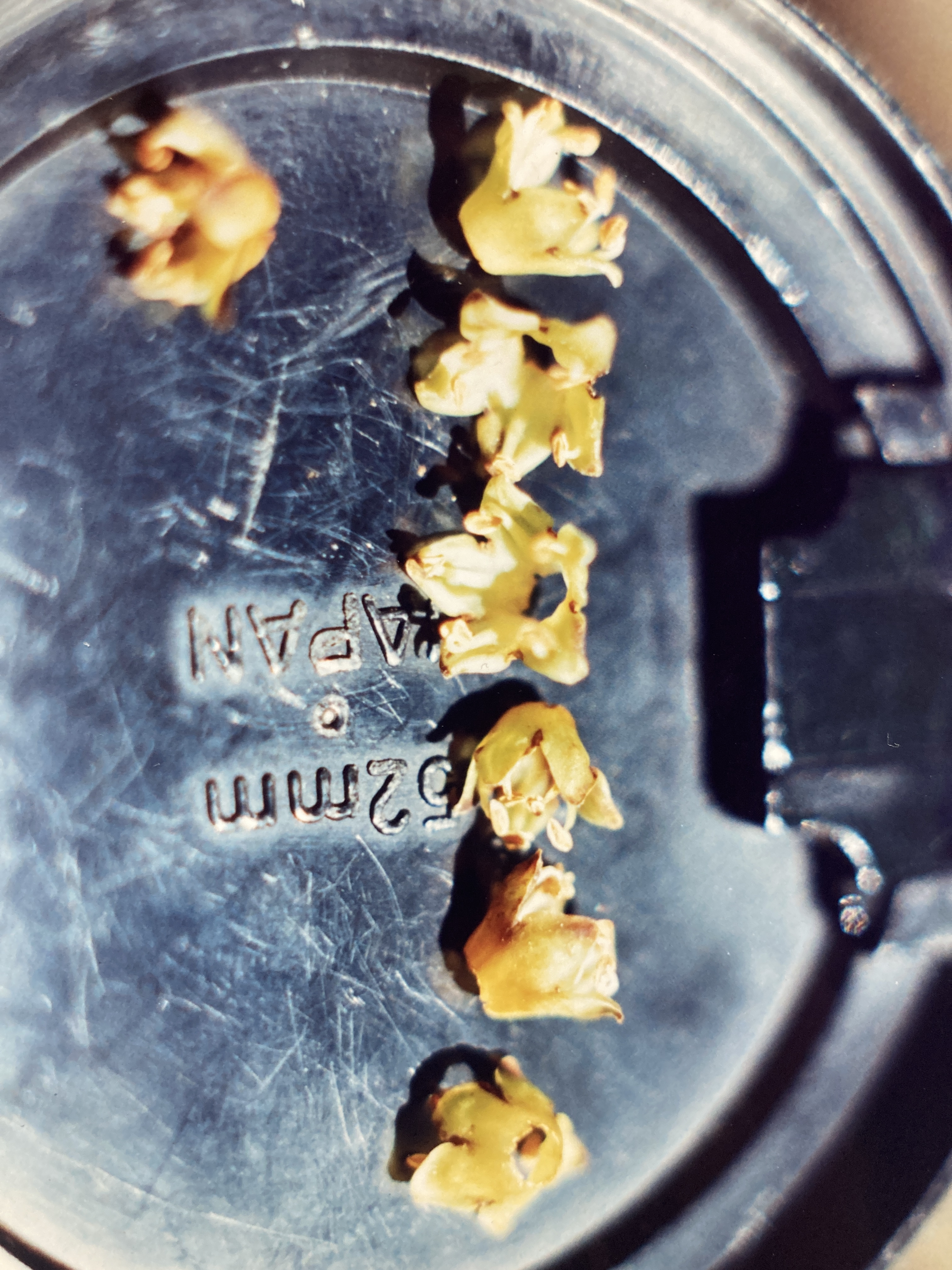
Axillar, Pradosia flowers appear from petiole scars along the bare portions of the twigs, behind the cluster of current leaves. Small but abundant, the blossoms (8 mm) are numerous enough to sheath the twigs in a mossy mantle of pale green. Each consists of a green corolla tube that divides into five, petal-like lobes and bearing five attached stamens. Flowering periods occur approximately every other year, though only a fragment of the population participates in any given fertile season. Irregular as well, the temporal occurrence of blossoms is variable. In general, flowering occupies a well synchronized two to three week period that may take place anytime between late November and early January.
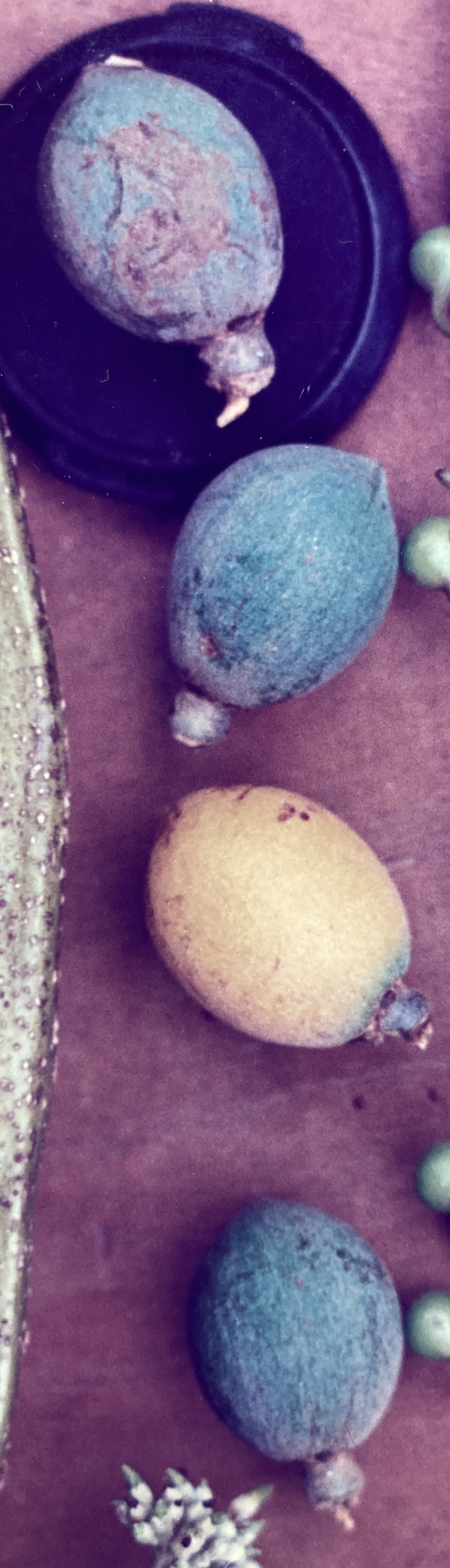
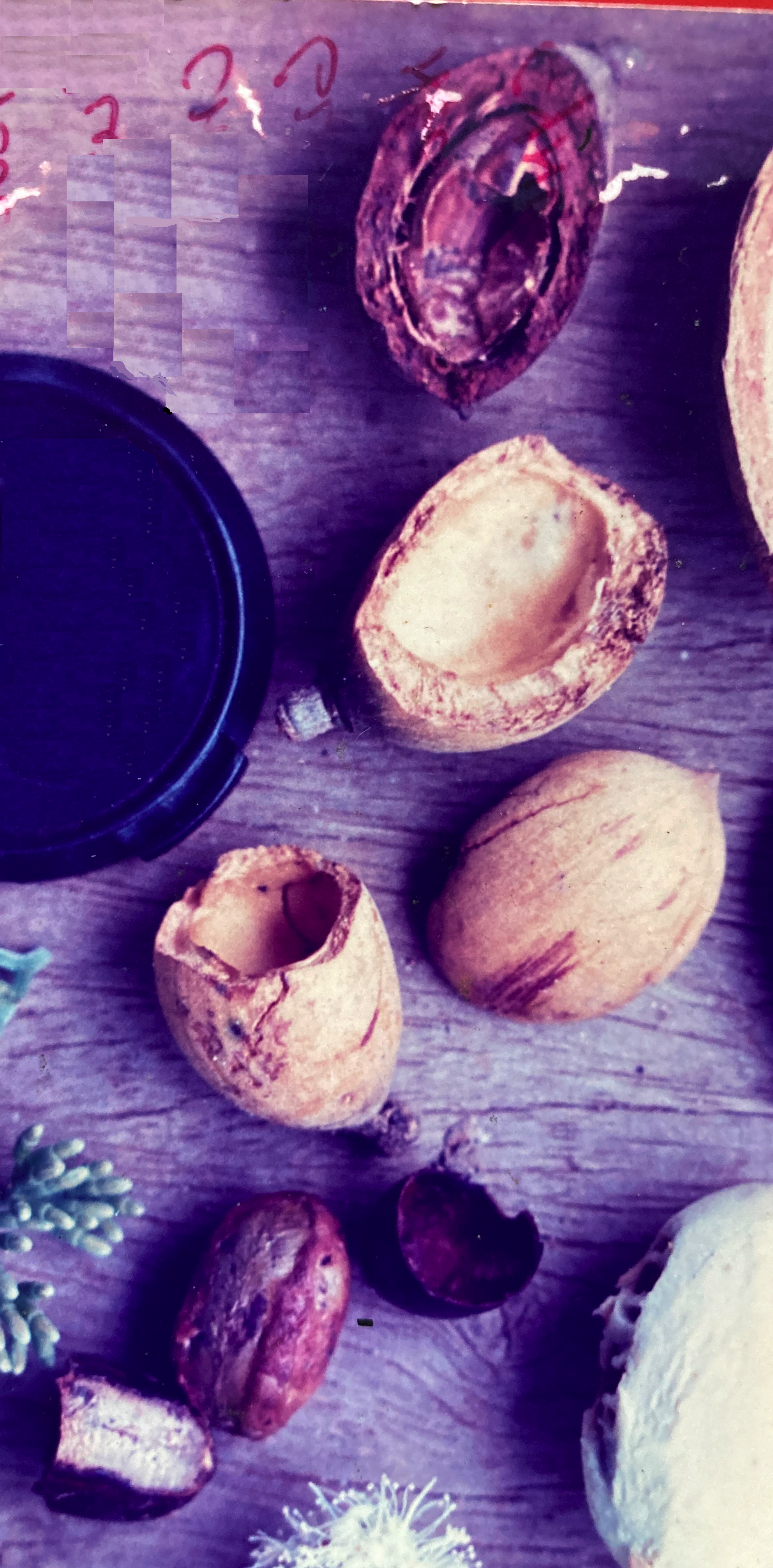
Fruits (5 cm by 3 cm) grow slowly, fastened to the twigs by short but stout, woody pedestals. Each eventually develops into a slightly falcate, ovoid berry that terminates in a more or less marked, distal point. Upon ripening, the fruit changes color from dull green to bright yellow. Inside its thick, woody rind, each fruit contains a single, large seed (2.5 cm by 1.5 cm) surrounded by a thin, milky, edible aril. Hard, brown, and glossy, the seed testa is marred only by a buff, longitudinal scar. Harvests are heavy and occur over and extended period of time lasting from June through August. In any given fertile year, only a small percentage of the Pradosia population produces fruit. Seed germination is immediate, with the first seedlings already 15 cm tall (and sporting thick, rose colored cotyledons and red-veined leaves) by August.
Similar Species: Pradosia‘s foliage is similar to that of Pouteria reticulata in both size and shape. However, the former tree’s leaves are much more densely clustered around branch tips and they possess yellow leaf veins that are lacking in the leaves of the latter. Furthermore, Pradosia has a much wider crown – typical of a true emergent species – than Pouteria, and it is the only tree in Manuel Antonio that exhibits pock-marked, exfoliating bark, mottled in pastel shades of creme and orange.
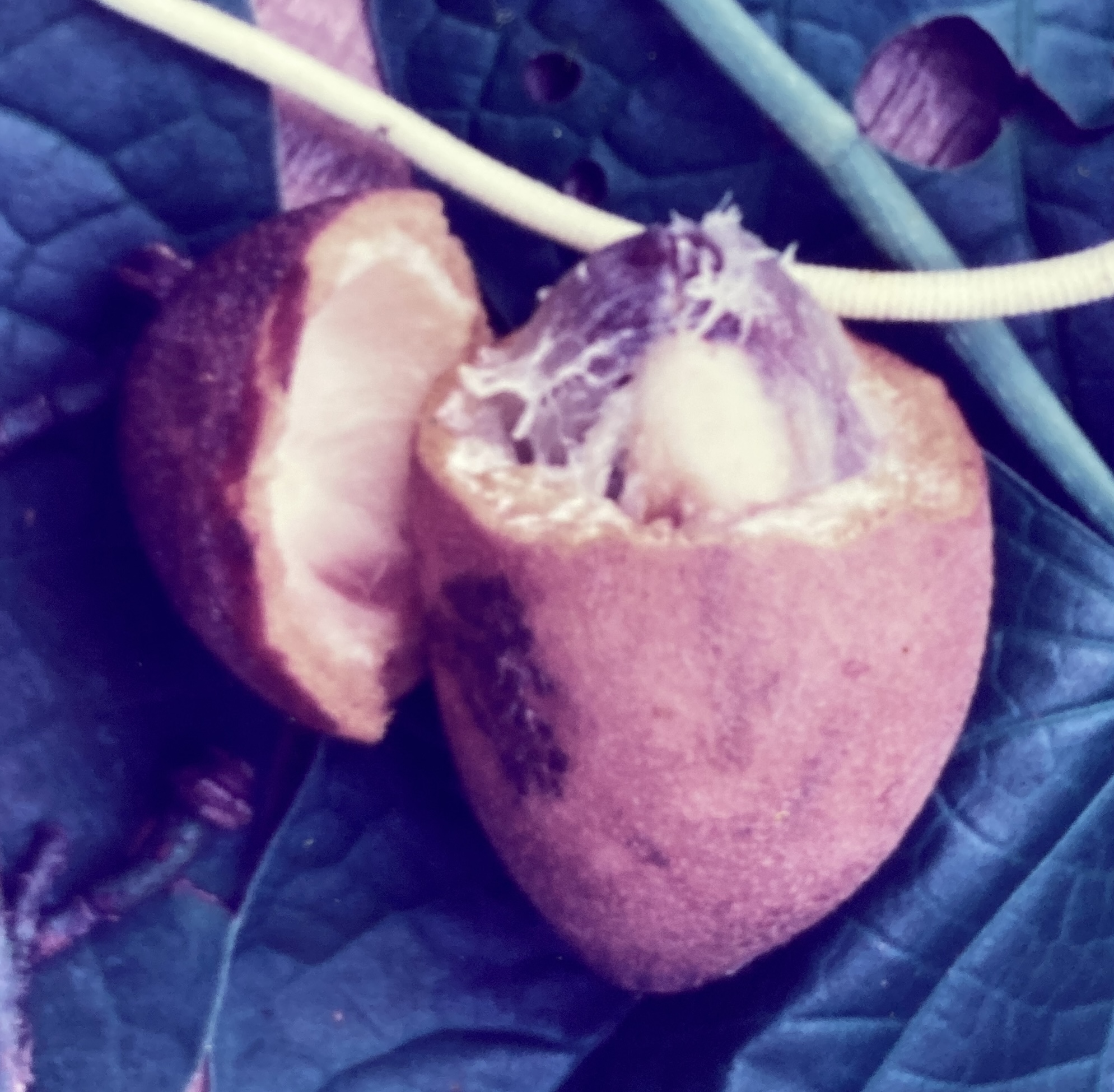
Natural History: Pradosia flowers are pollinated by bees and other insects. Its fruits are eaten and dispersed by arboreal mammals, especially monkeys. During harvests, the forest floor becomes covered with large numbers of split – but otherwise intact – fruit husks whose seeds have been removed. Apparently bitten in half, the drupes are preyed upon by animals seeking the sweet arils that cover the seeds. In many cases, the seeds are eaten as well – as is evidenced by the many empty shells that also litter the landscape beneath Pradosia crowns.
Elastic branches enable Pradosia to support the large numbers of massive fruits that occasionally burden its canopy. While it is common to see other forest trees loose great limbs under the extra load of a heavy harvest – or even during a violent storm – rarely is a Pradosia limb broken under any circumstance. Flexible and resilient, the branches of this species are well adapted to the periodic burden that they must endure.
When tropical storm Gert produced the exceptionally high winds and sustained, heavy rains that assaulted the Quepos area in September of 1993, the arboreal flora of the region fared poorly. Many – in some places most – of the tall trees were toppled, especially those located on exposed windward hillsides and ridges. Not all species were affected equally, however, and Pradosia trees came through the ordeal largely – and remarkably – unscathed. A storm adapted species, its flexible branches, wide buttresses, and open crown helped it to survive this natural calamity (see introduction on tropical storm Gert).
Pradosia‘s resistance to storms may help to explain the prevalence of this species along the crests and ridges of Manuel Antonio’s hills. Situated alongside the Pacific Ocean, strong storms like Gert affect the park with some – albeit low – frequency. Under such circumstances, coastal forests represent the first obstacles to gale force winds sweeping in from over the open water. Over decades and even centuries of periodic assaults, wind-resistant Pradosia trees would have been disproportionately well represented among storm survivors. Providing a selection pressure, the repeated occurrence of violent storms would thus have tended to increase the percentage of Pradosia trees on exposed sites. In this way, Pradosia – initially having arrived on the ridges by chance – would slowly have come to dominate the ecosystem.
Uses: Pradosia has edible, pleasant-tasting fruits.
Distribution: In Manuel Antonio National Park (MANP), Pradosia is widely scattered throughout all but the driest primary forests, though it is particularly abundant along ridges. The species is also known from Corcovado National Park, Punta Leona, and neighboring Panama. Reportedly, another isolated population of Pradosia trees exists in the lowland forests of the western Amazon, creating a very disjunct range for this species.
Images: Trunk Trunk2 Flower Fruit Fruit2 Fruit&Leaf Fruit & Seed
 Trees of Costa Rica's Pacific Slope