Tabebuia chrysantha (Jacq.) Nicholson
Bignoniaceae Corteza Amarilla, YELLOW TRUMPET TREE
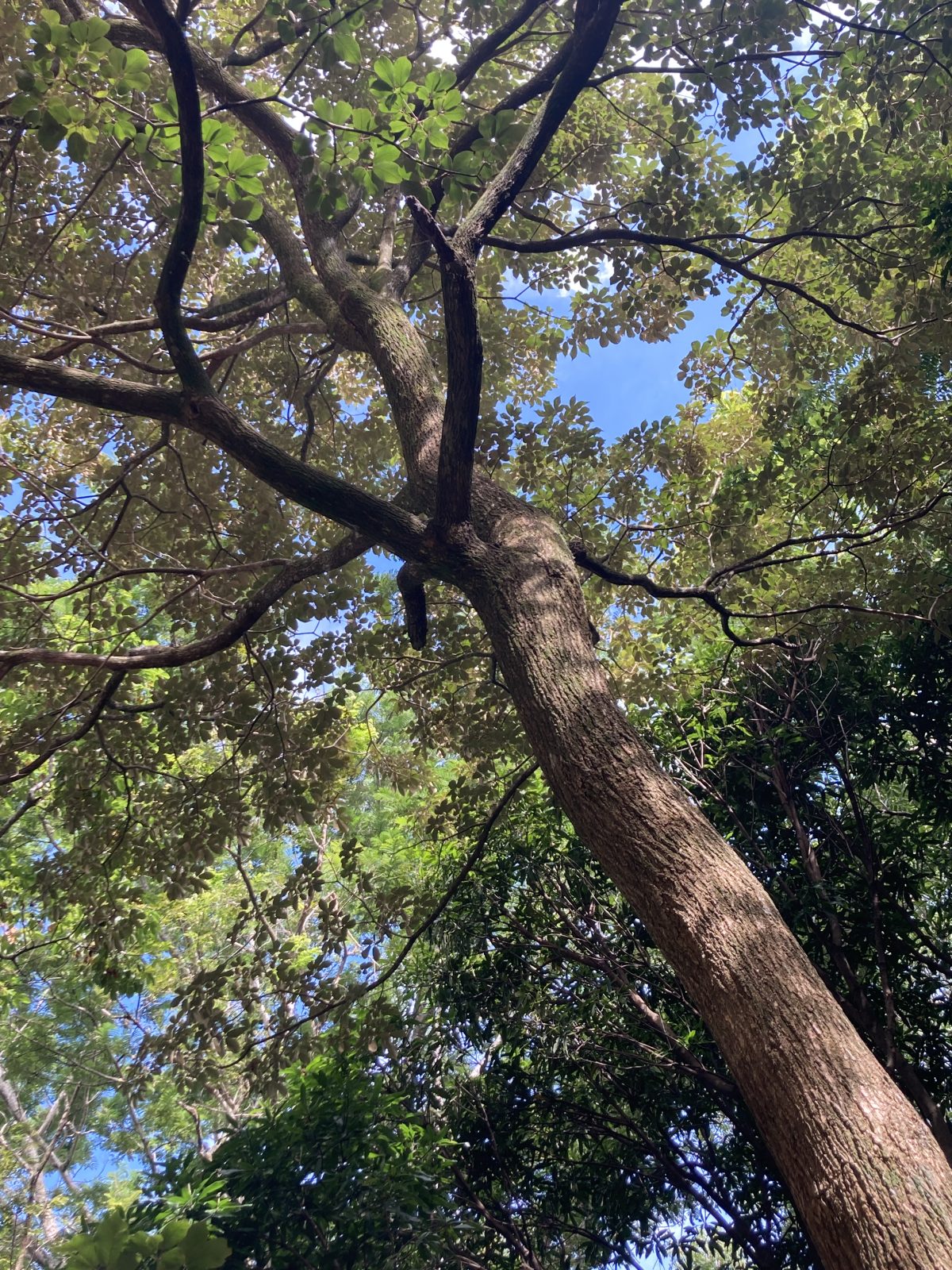
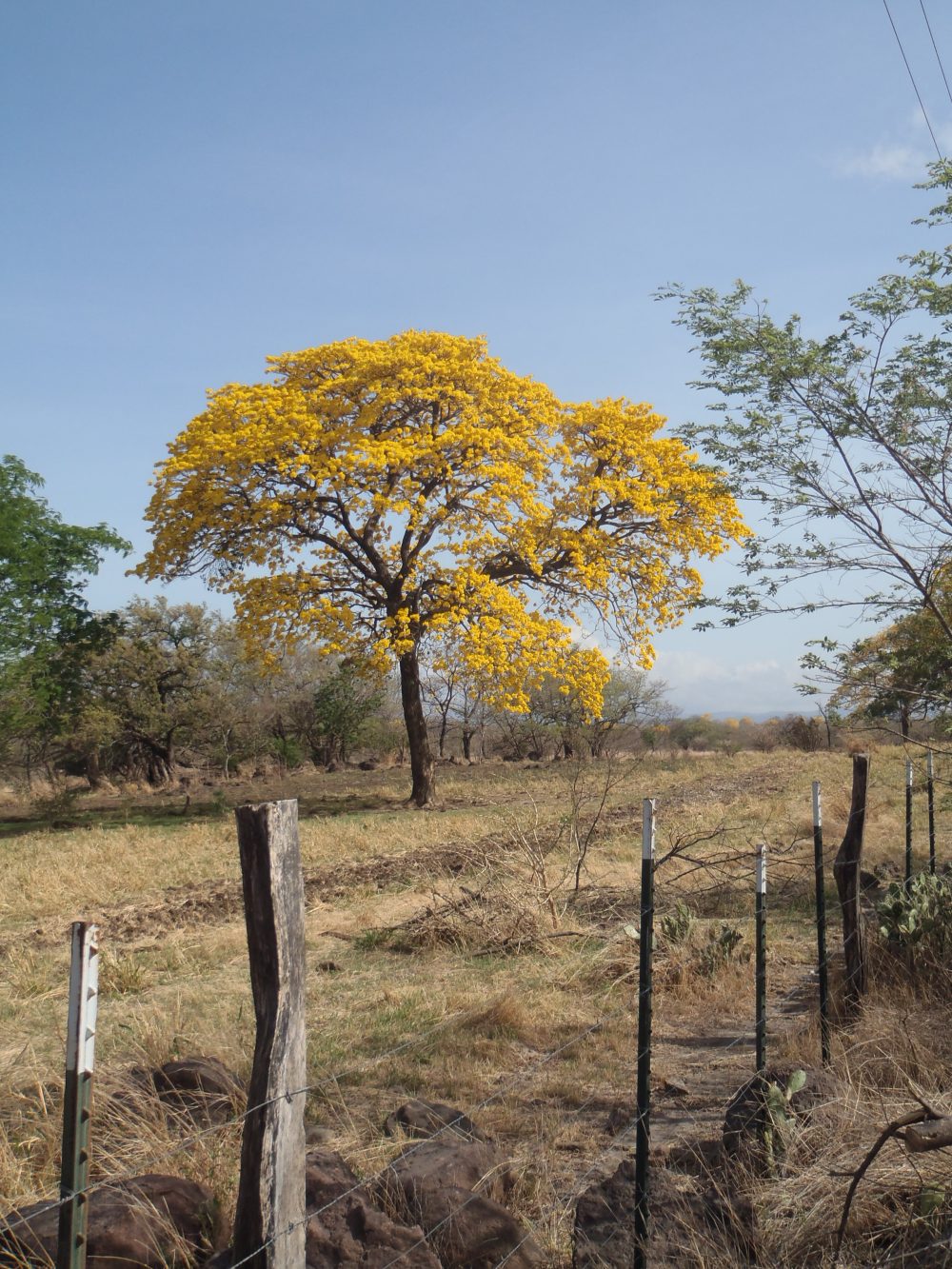
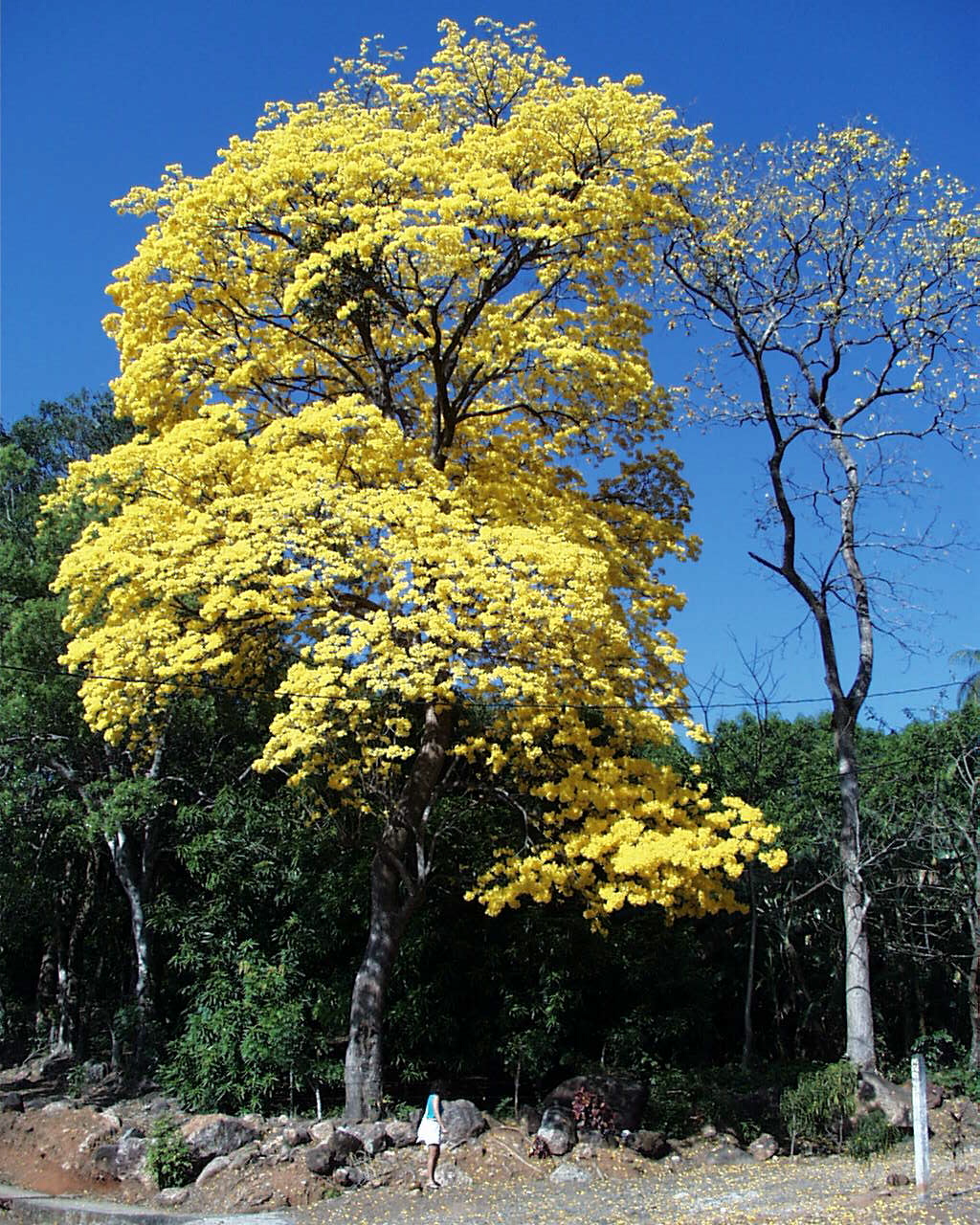
Tree: Occasional deciduous sub-canopy or canopy tree (20-30m) found most commonly in drier tropical forest habitats like those of Costa Rica’s Guanacaste provice. Like its close relative Roble de Sabana (Tabebuia rosea), Corteza is best known for its brilliant displays of showy flowers that take place late in the dry season. Unlike Roble de Sabana, Corteza sports bright yellow blossoms (instead of pink) and boasts a much more ephemeral floral display.
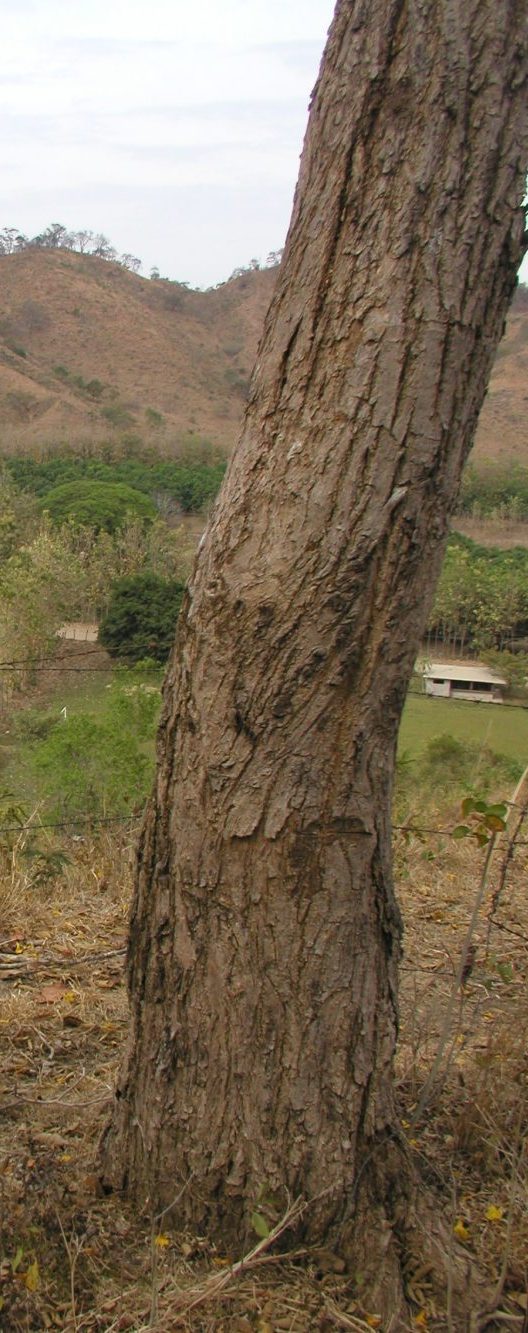
Description: Corteza has an often irregular, bending trunk that is covered by light-colored, yellowish-brown bark. Textured with shallow fissures, this bark is one of the most useful identifying features of this species. Rarely, large trees may reach 60 or 70 cm in diameter. Branches, emerging from the bole nearly horizontally, generate a fairly open crown.
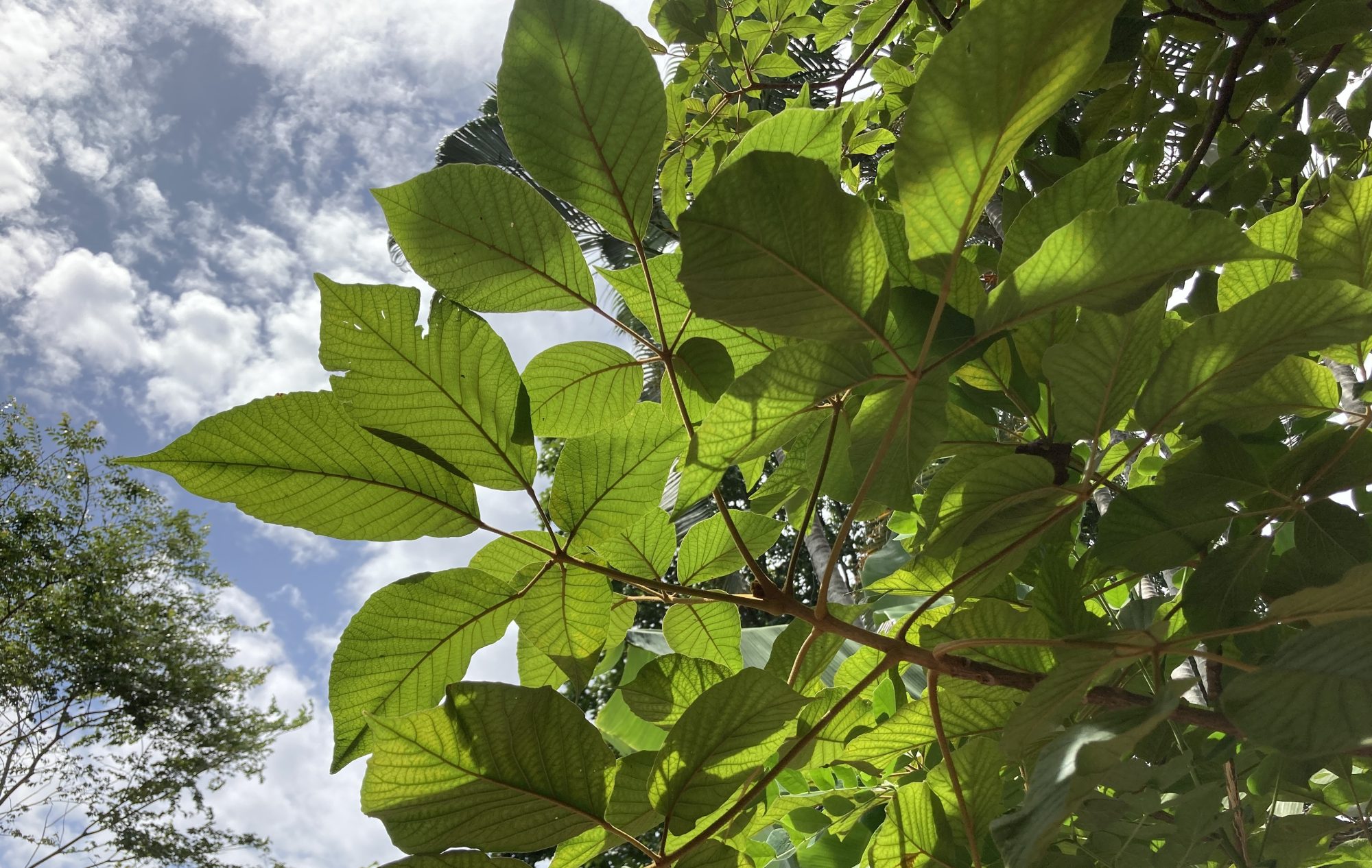
Corteza leaves (20 to 25cm in length) are palmately compound and opposite. These leaves share their unique shape with other members of the Tabebuia genus. Each is composed of a long petiole (12 cm) supporting five, elliptical leaflets of varying size: the three distal leaflets (10 cm by 5 cm on 4 cm petioles) being about twice the size of the proximal two (6 cm by 4 cm on 2 cm petioles). A thick golden pubescence covers leaf veins, petioles and the distal portions of twigs. Foliage is often retained far into the dry season, and is only shed shortly before flowering occurs. Trees then remain devoid of leaves until the rains resume in May. (As with Roble, the exact timing of these events varies between individual trees and is strongly influenced by the microclimate and soil characteristics experienced by each tree.)
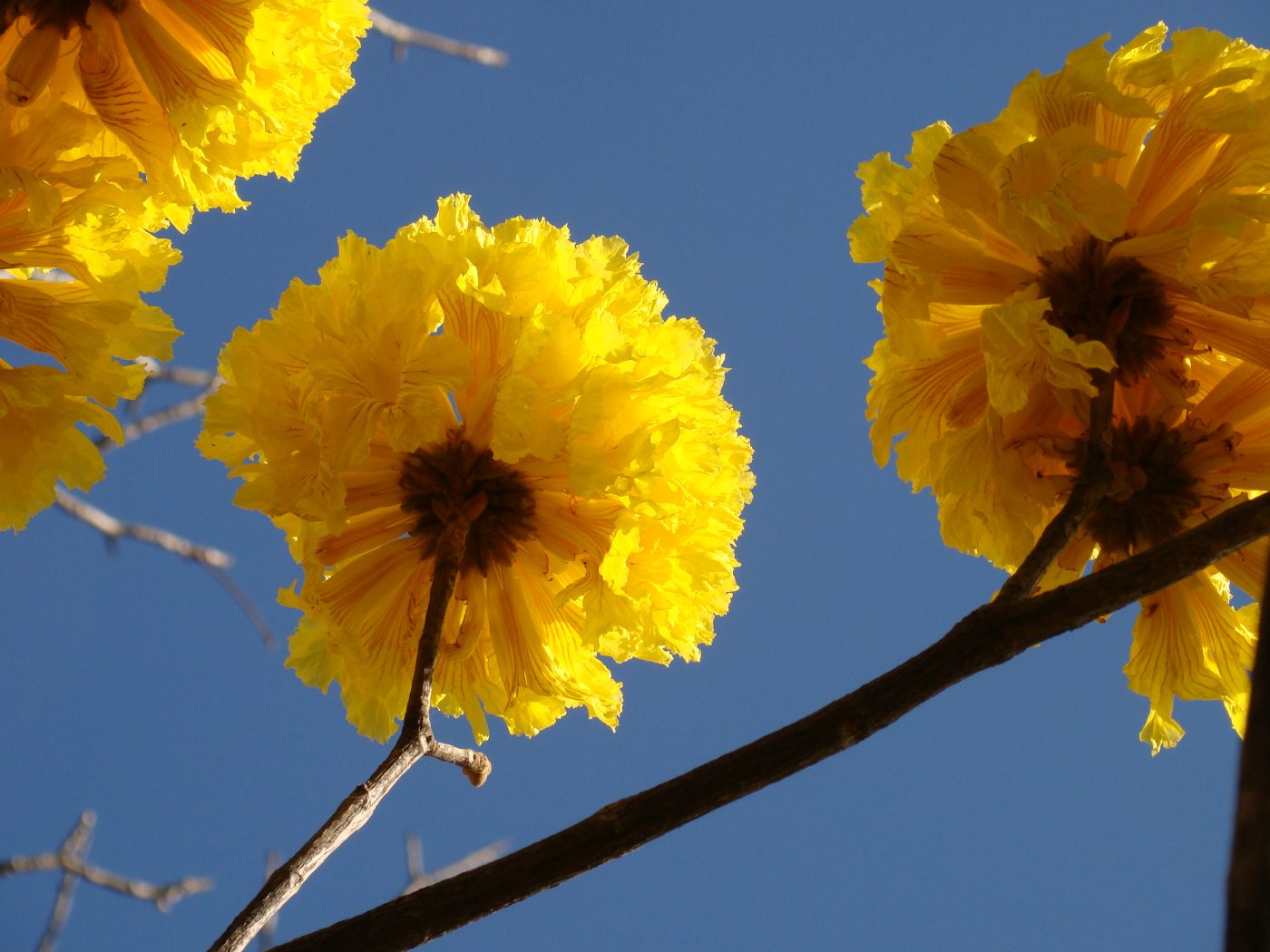
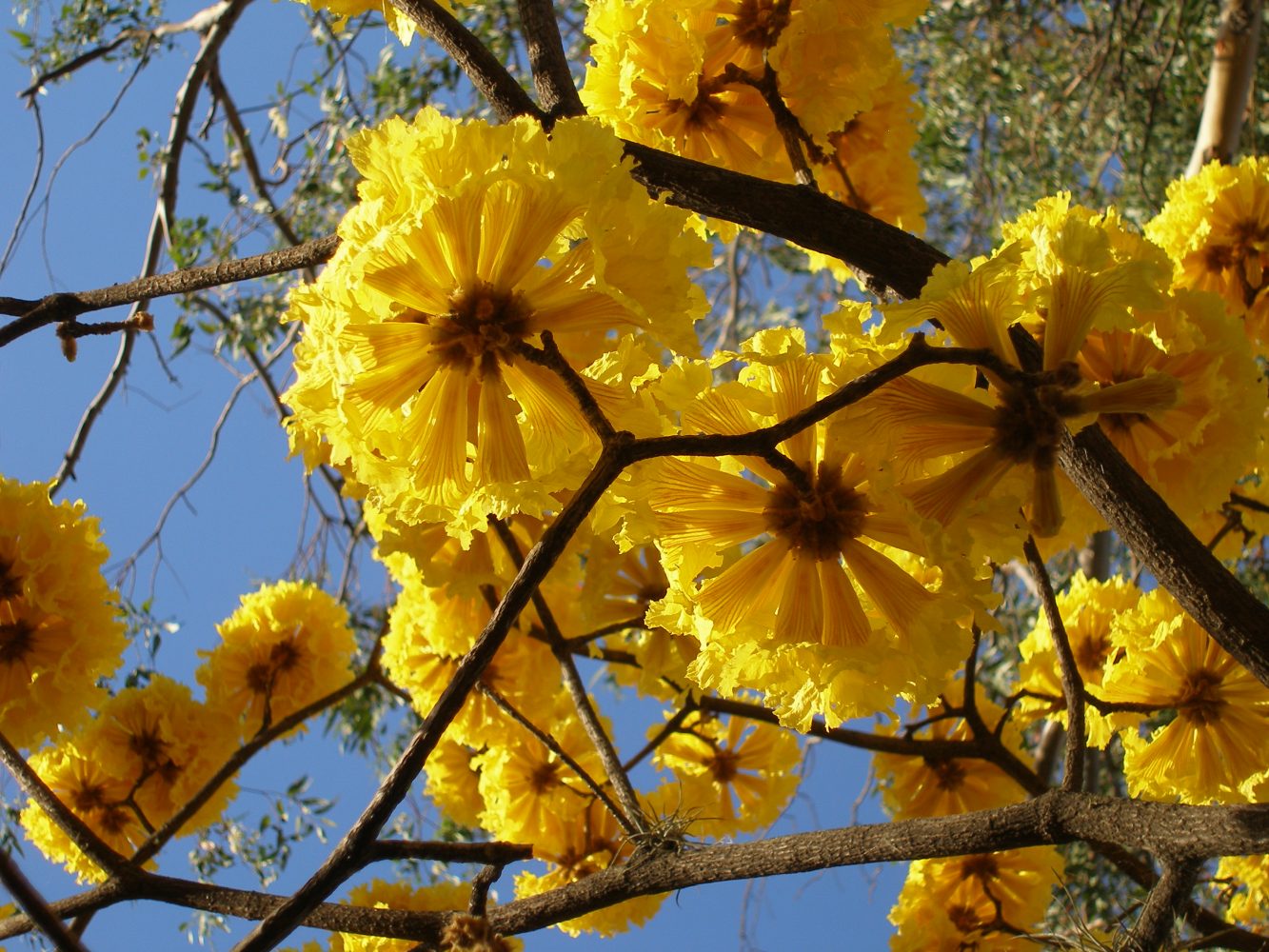
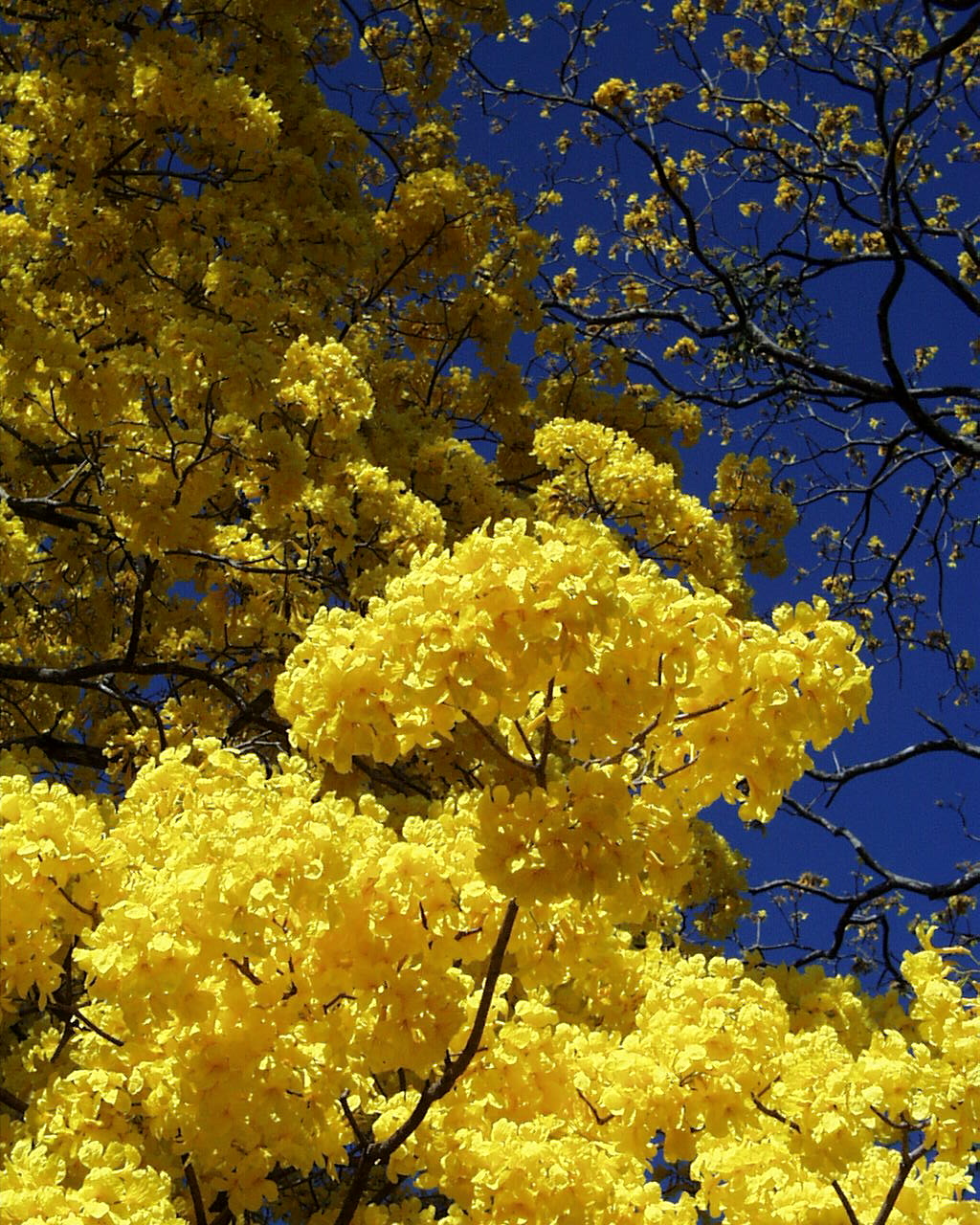
Flowers (8cm by 7cm) are produced in large, terminal panicles during the dry season. Bright yellow, each is dominated by a showy, trumpet-shaped corolla that is formed from the five fused petals. Five stamens and a central pistil adorn the blossom’s yellow center and the whole structure is supported by a cup-shaped calyx. Trees may flower sporadically any time from February to May, but groups of trees in the same region will flower simultaneously. Often, trees will undergo two or three bursts of flowering over the course of the dry season. Each flowering episode is short lived, with blossoms generally lasting less than a week. It is difficult to overstate the beauty of flowering Corteza trees, as their crowns take on a dramatic, brilliant, rich yellow color. Seen against the deep-blue dry season sky, these trees make a memorable spectacle. When in flower, individual Corteza trees can easily be identified from a distance, brightly dotting the forest with their brilliant canopies.
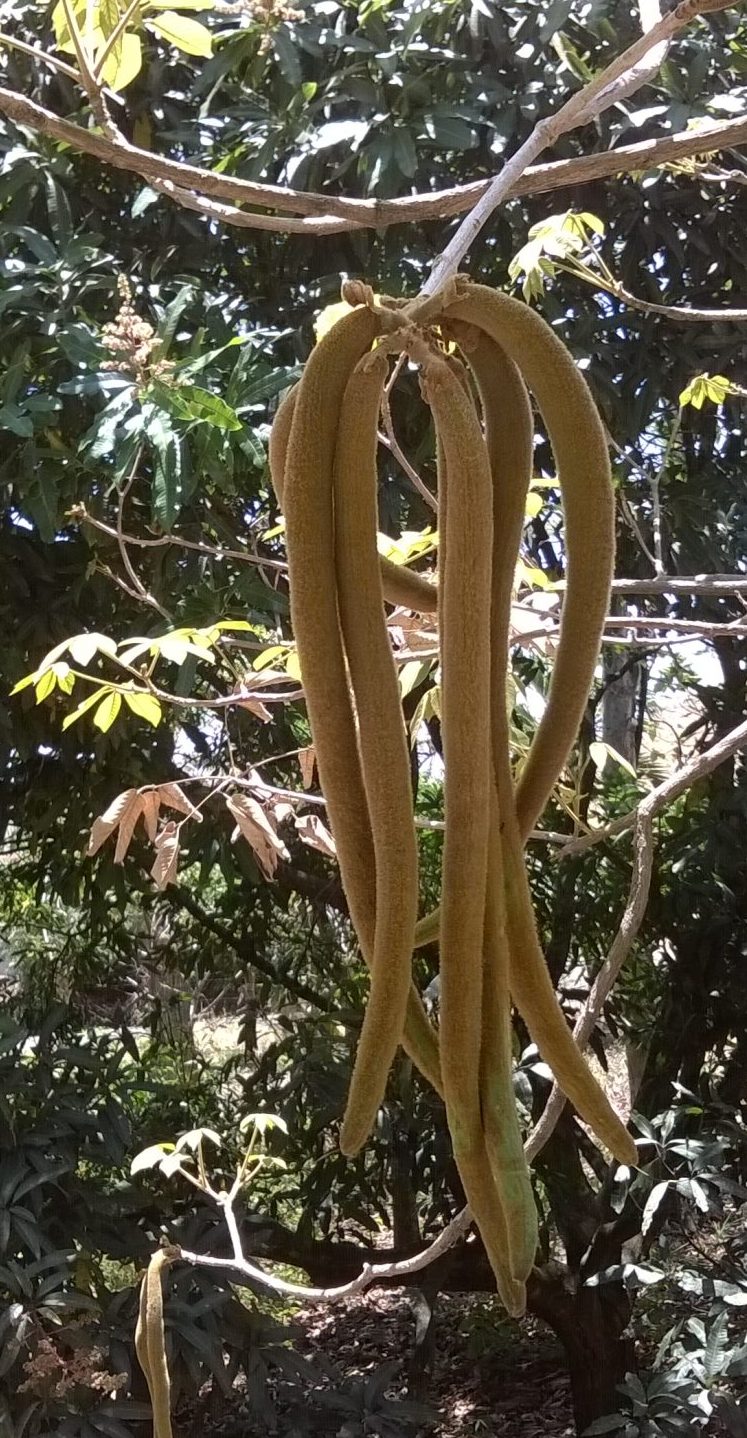
Fruits (25cm long by 1.0cm in diameter) emerge from the spent flower calyxes, growing quickly as long, cyclindrical capsules that can be seen dangling from the ends of the branches. Each is densely covered by the same golden pubescence that coats the petioles and twigs. When mature (from April to June), the capsules split longitudinaly, releasing hundreds of tightly-packed, flat, winged seeds (2.0cm by 0.60cm) to be dispered by the late, dry-season winds.
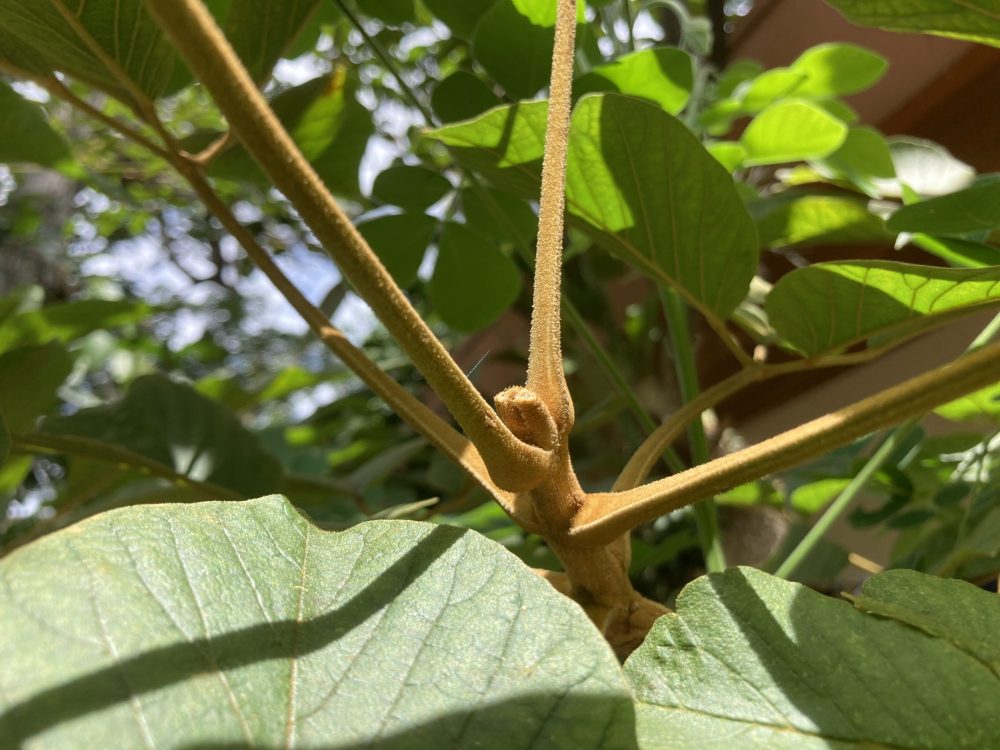
Similar Species: The asymmetrical leaf pattern produced by Roble’s five unequal leaflets is uniquely characteristic of, and common to, all of the five or so species of Tabebuia that are found in Costa Rica. Roble de Sabana (Tabebuia rosea) is the most common of these species, but its leaves and petioles lack the thick pubescence characteristic of Cortezas, and its flowers are pink.
Natural History: According to Sullivan (98), Corteza flowers are frequented by a variety of bees, wasps, flies, and hummingbirds, with the former serving as pollinators for the tree. The flowers themselves are eaten by howler and spider monkeys, as well as by squirrels and lizards, serving these animals as a dry-season source of water. The immature fruit seeds are removed from the capsules and are consumed by white-faced monkeys.
According to this same source, the onset of mass flowering events is triggered by an unseasonal, sporadic rainfall or a snap of cooler weather during the usually hot, dry season. The strategy of producing myriad, ephemeral flowers on all mature trees simultaneously is thought to guarantee that many flowers will survive unscathed and live to produce seeds – there being simply to many blossoms to be eaten in such a short time by the local fauna.
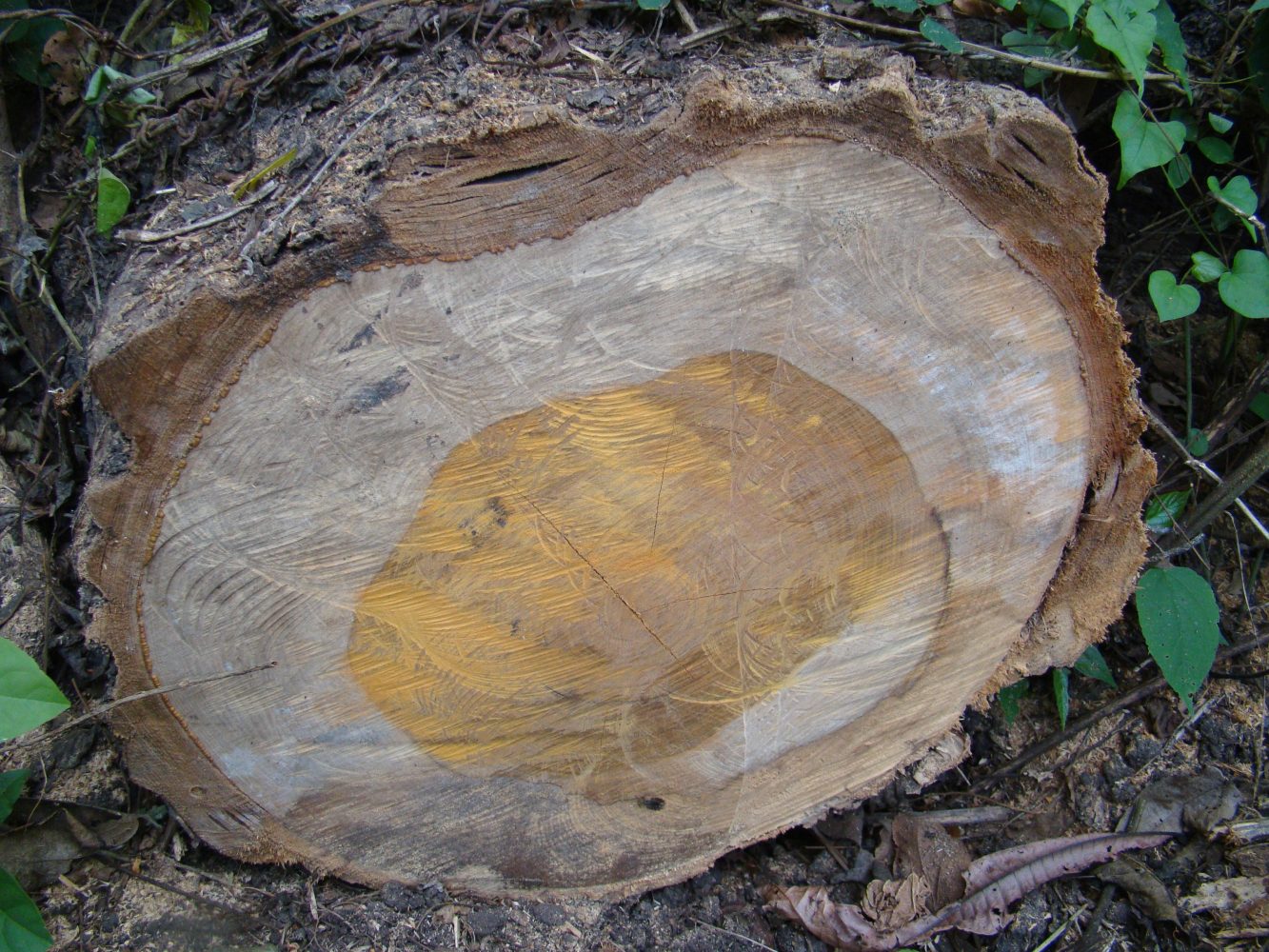
Uses: Aside from its obvious use as an ornamental, Corteza trees also produce a durable, insect-resistant, and hard wood. The heartwood contrasts with the sapwood, sporting a deep yellow color. Corteza wood has been used in furniture manufacture, for flooring, in Costarican Ox-carts as well as for railroad ties (Sullivan, 98).
Distribution: Though absent from Manuel Antonio National Park, this species is a characteristic component of the dry tropical forest found in northwest Costa Rica. Corteza trees are also found scattered through the remnant natural vegetation of the Central Valley. Corteza ranges from Mexico to Bolivia and Brazil.
Images: Tree Tree2 Tree3 Tree4 Trunk Leaf Leaf2 Flower Flower2 Fruit Wood
 Trees of Costa Rica's Pacific Slope